Best Gigabit Wifi Repeaters: 10 Spec-Based Picks
As an Amazon Associate we earn from qualifying purchases. Links on this page are affiliate links.
Finding the best gigabit wifi repeaters requires focusing on port speeds and wireless standards. We compared 10 options using only the specifications published on their listings. The Linksys AC750 Dual-Band Gigabit Extender leads because it offers Gigabit wired connectivity for broad home coverage. This guide helps you decide which device matches your network needs. You will see how each model handles wired expansion and wireless range. These picks prioritize technical specs over marketing claims. Read on to see how each product fits your setup.
Quick picks
The best fit for you
- You need broad home coverage with wired ports Linksys AC750 Dual-Band Gigabit Extender It covers up to 6,500 square feet with Gigabit ports.
- You want to expand wired connections across five devices Tenda 5-Port Gigabit Switch It provides five dedicated Gigabit Ethernet ports for wired expansion.
- You need high-speed Wi-Fi 6 for modern networks TP-Link AX3000 Wi-Fi 6 Range Extender It delivers AX3000 speeds with versatile Gigabit connectivity options.
- You require outdoor Wi-Fi 6 with PoE support BrosTrend AX3000 Outdoor WiFi 6 Extender It offers rugged outdoor coverage with Gigabit PoE connectivity.
Our 10 picks
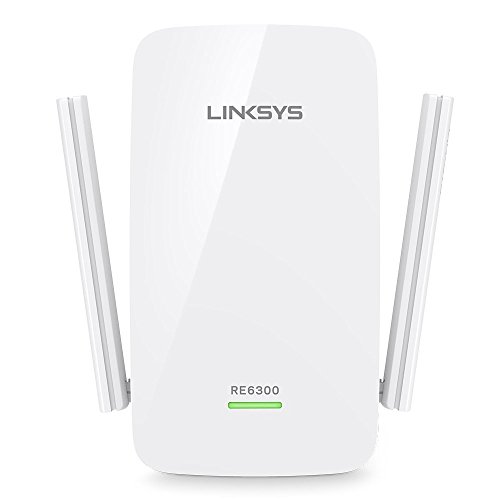
Linksys AC750 Dual-Band Gigabit Extender
Best for: Gigabit wired connectivity and broad home coverage
- Port Speed
- Gigabit (what this guide is about)
- Speed Rating
- AC750 (N300 + AC433 Mbps)
- Frequency Bands
- Dual-Band
- Coverage Area
- Up to 6,500 sq ft
- Ethernet Ports
- Gigabit
- Operating Modes
- Range Extender, Repeater
This renewed Linksys dual-band Wi-Fi range extender expands your network coverage up to 6,500 square feet. It features a dedicated Gigabit Ethernet port for high-speed wired devices alongside dual-band wireless throughput reaching N300 on 2.4 GHz and AC433 on 5 GHz. Setup uses push-button pairing and Spot Finder technology. It suits you if you need reliable wired connection speed and expanded coverage for dual-band devices.
Pros
- Gigabit Ethernet port for high-speed wired network bridging
- Coverage reach rated up to 6,500 square feet
- Push Button Connect pairing with Spot Finder technology
- Dual-band operation supporting N300 plus AC433 Mbps
Cons
- Certified refurbished unit limited to a 90-day warranty
- Wireless throughput peaks at AC433 Mbps on 5 GHz
Good fit if
- You want a Gigabit Ethernet port for a wired connection.
- You need to cover up to 6,500 square feet across multiple rooms or floors.
- You prefer setup with push-button pairing and Spot Finder technology.
Skip if
- You prefer brand-new equipment instead of a renewed unit with a 90-day warranty.
- You need wireless transfer speeds higher than AC433 Mbps on 5 GHz.
Verdict: Linksys AC750 Dual-Band Gigabit Range Extender delivers Gigabit wired connectivity and broad coverage up to 6,500 square feet for standard dual-band setups. Its AC433 and N300 wireless ceiling makes it practical for basic dead-zone elimination rather than bandwidth-heavy traffic.

Tenda 5-Port Gigabit Switch
Best for: expanding wired connections across five Gigabit ports
- Port Speed
- Gigabit (what this guide is about)
- Ethernet Ports
- 5-Port Gigabit
- Management Type
- Unmanaged
- Dimensions
- 3.94 × 2.52 × 0.98 inches
- Weight
- 6 ounces
The Tenda 5-Port Gigabit Switch provides five Gigabit Ethernet ports in an unmanaged setup for your local wired network. Measuring roughly 3.94 inches long and weighing under 0.38 pounds, this compact unit expands your wired connectivity without requiring configuration. It suits you if you need to connect multiple wired devices across five dedicated ports at Gigabit speeds.
Pros
- Five Gigabit Ethernet ports
- Unmanaged setup with no configuration required
- Compact footprint measuring 3.94 by 2.52 inches
- Lightweight build weighing 0.375 pounds
Cons
- No wireless repeating or Wi-Fi radio capabilities listed
- Unmanaged hardware lacks traffic controls and management settings
Good fit if
- You need five Gigabit Ethernet ports to expand your wired network connections.
- You prefer an unmanaged switch that requires no setup or management.
Skip if
- You need a wireless Wi-Fi repeater to boost wireless coverage.
- You require managed switch controls to configure your network.
Verdict: Tenda 5-Port Gigabit Switch delivers basic wired expansion with five dedicated Gigabit ports in a compact, lightweight footprint. It offers straightforward unmanaged networking without wireless repeating functions.

TP-Link AX1800 Dual-Band WiFi 6 Extender
Best for: AX1800 Wi-Fi 6 gigabit network expansion
- Port Speed
- Gigabit (what this guide is about)
- Wi-Fi Standard
- WiFi 6
- Speed Rating
- AX1800 (up to 1.8 Gbps)
- Frequency Bands
- Dual Band
- Coverage Area
- Up to 1,500 sq. ft.
- Ethernet Ports
- 1 Gigabit
This plug-in dual-band Wi-Fi 6 extender adds up to 1,500 square feet of coverage and supports up to 30 devices. It features an AX1800 rating, delivering up to 1,201 Mbps on 5 GHz and 574 Mbps on 2.4 GHz bands. A dedicated gigabit Ethernet port provides wired access for a PC, console, or switch. It suits you if you need reliable Wi-Fi 6 coverage expansion or a gigabit-connected access point.
Pros
- One gigabit Ethernet port for wired connections
- Dual-band Wi-Fi 6 speeds up to 1,201 Mbps on 5 GHz and 574 Mbps on 2.4 GHz
- Coverage rated up to 1,500 square feet and 30 devices
- Includes Access Point mode and OneMesh compatibility
Cons
- Single gigabit Ethernet port restricts wired expansion to one device
- Dual-band setup lacks a dedicated third band for wireless backhaul
Good fit if
- You want AX1800 Wi-Fi 6 speeds paired with a gigabit wired port.
- You use a TP-Link OneMesh router for unified network roaming.
- You need to cover up to 1,500 square feet and 30 connected devices.
Skip if
- You need multiple physical Ethernet ports for wired hardware.
- You require AX3000 or higher wireless throughput.
Verdict: TP-Link AX1800 Dual-Band Wi-Fi 6 Extender delivers dependable Wi-Fi 6 speeds and gigabit wired connectivity for up to 1,500 square feet. It provides a simple setup for homes needing stable coverage across up to 30 devices.
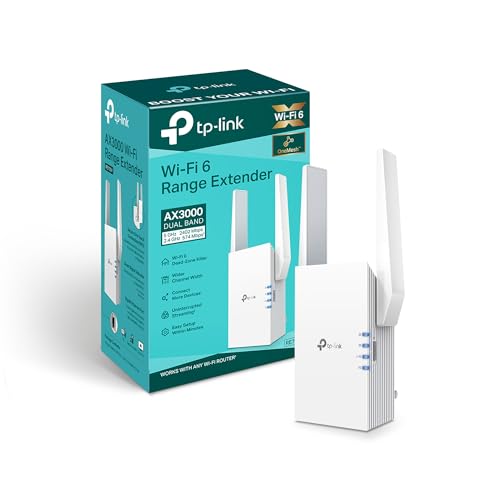
TP-Link AX3000 Wi-Fi 6 Range Extender
Best for: high-speed Wi-Fi 6 coverage expansion
- Port Speed
- Gigabit (what this guide is about)
- Wi-Fi Standard
- Wi-Fi 6
- Speed Rating
- AX3000
- Frequency Bands
- Dual-Band
- Ethernet Ports
- Gigabit Port
- Operating Modes
- Range Extender, AP Mode
This TP-Link dual-band range extender expands your network using the Wi-Fi 6 standard with an AX3000 speed rating. It includes a built-in Gigabit Ethernet port to connect wired devices or run the unit in Access Point mode. It also supports OFDMA, Beamforming, and OneMesh technology. This unit suits you if you want fast wireless throughput and flexible deployment to eliminate dead zones across your home.
Pros
- Wi-Fi 6 support with AX3000 speed rating
- Dedicated Gigabit Ethernet port
- Includes Access Point operating mode
- Supports OFDMA, Beamforming, and OneMesh
Cons
- Only one Gigabit Ethernet port provided
- Dual-band only, lacking a third dedicated backhaul band
- Large physical profile measuring 8 by 6 by 4 inches
Good fit if
- You need AX3000 Wi-Fi 6 speeds to match a modern wireless router.
- You want an extender that can switch to wired Access Point mode.
- You use compatible OneMesh hardware for seamless roaming.
Skip if
- You need multiple Gigabit Ethernet ports for several wired devices.
- You require a tri-band model to preserve maximum wireless backhaul bandwidth.
Verdict: TP-Link AX3000 Wi-Fi 6 Range Extender delivers fast dual-band Wi-Fi 6 speeds and versatile Gigabit connectivity in repeater or access point configurations. It provides high-bandwidth wireless performance for modern home networks without adding unneeded complexity.

Tenda AC1200 Dual-Band Gigabit Extender
Best for: basic dual-band coverage with Gigabit connectivity
- Port Speed
- Gigabit (what this guide is about)
- Speed Rating
- AC1200
- Frequency Bands
- Dual Band
- Coverage Area
- Up to 1500 sq.ft.
- Ethernet Ports
- 1x Gigabit
- Operating Modes
- Range Extender, AP
The Tenda AC1200 Dual-Band Gigabit Range Extender adds Wi-Fi coverage across spaces up to 1,500 square feet. It provides dual-band Wi-Fi speeds reaching 867 Mbps on 5 GHz and 300 Mbps on 2.4 GHz. A built-in Gigabit Ethernet port allows wired connections or lets you switch the device into Access Point mode. It suits you if you need a dual-band extender with a dedicated Gigabit physical link.
Pros
- Gigabit Ethernet port supports high-speed wired connections or AP mode
- Dual-band speeds reach up to 867 Mbps on 5 GHz and 300 Mbps on 2.4 GHz
- Two 3dBi external antennas provide coverage up to 1,500 sq.ft.
Cons
- Uses Wi-Fi 5 (AC1200) instead of Wi-Fi 6 standards
- Includes only a single Ethernet port
Good fit if
- You need a Gigabit port for wired backhaul in AP mode or connecting a console.
- You want dual-band coverage for a space up to 1,500 square feet.
Skip if
- You need Wi-Fi 6 capability for higher multi-device throughput.
- You need multiple wired Gigabit ports for a desk setup.
Verdict: Tenda AC1200 Dual-Band Gigabit Range Extender pairs an AC1200 dual-band signal with a physical Gigabit port for home network expansion. It provides a straightforward way to extend coverage up to 1,500 square feet.

Tenda AX1500 WiFi 6 Range Extender
Best for: entry-level Wi-Fi 6 coverage with gigabit connectivity
- Port Speed
- Gigabit (what this guide is about)
- Wi-Fi Standard
- WiFi 6
- Speed Rating
- AX1500
- Frequency Bands
- Dual Band
- Coverage Area
- 1500 sq.ft
- Operating Modes
- Range Extender, Access Point, Repeater
The Tenda AX1500 Dual-Band Wi-Fi 6 Extender expands your home wireless network up to 1,500 square feet. It delivers dual-band AX1500 speeds with up to 1,201 Mbps on the 5 GHz band and 300 Mbps on 2.4 GHz. You get a built-in Gigabit Ethernet port to connect a wired device or configure Access Point mode. It supports MU-MIMO, OFDMA, and up to 30 connected devices using two 5dBi external antennas.
Pros
- Gigabit Ethernet port for wired devices or Access Point mode
- Dual-band Wi-Fi 6 speeds up to 1201 Mbps on 5 GHz and 300 Mbps on 2.4 GHz
- Two 5dBi high-gain external antennas covering up to 1500 sq.ft
- Supports MU-MIMO and OFDMA for handling 30+ devices
Cons
- Only one Gigabit Ethernet port provided
- 2.4 GHz wireless throughput capped at 300 Mbps
Good fit if
- You need a dedicated Gigabit port for wired bridging or Access Point operation.
- You want entry-level Wi-Fi 6 coverage for up to 1500 square feet and 30 devices.
Skip if
- You require more than one physical Ethernet connection.
- You need higher wireless bandwidth than AX1500 speeds offer.
Verdict: Tenda AX1500 Dual-Band Wi-Fi 6 Extender delivers Wi-Fi 6 coverage and a Gigabit Ethernet port for setups needing basic multi-device expansion. It handles up to 30 clients across 1500 square feet without unnecessary complexity.

WAVLINK AX3000 Five-Antenna Home Extender
Best for: high-bandwidth Wi-Fi 6 streaming and gaming
- Port Speed
- Gigabit (what this guide is about)
- Wi-Fi Standard
- Wi-Fi 6
- Speed Rating
- AX3000
- Frequency Bands
- Dual-Band
- Ethernet Ports
- 1x Gigabit
- Operating Modes
- Repeater, Access Point, Router
The WAVLINK AX3000 Wi-Fi 6 Extender expands your home network with dual-band wireless speeds up to 2402 Mbps on 5 GHz and 573 Mbps on 2.4 GHz. It features 160MHz channel support, five high-gain external antennas with beamforming, and a Gigabit Ethernet port for wired connectivity or Access Point mode. This fits your setup if you need fast local throughput across multiple rooms.
Pros
- AX3000 dual-band Wi-Fi 6 support
- Up to 2402 Mbps on 5 GHz with 160MHz channels
- Five external antennas with beamforming
- Gigabit Ethernet port with Access Point mode
Cons
- Single Ethernet port limits wired connections
- External antenna design requires clearance
Good fit if
- You want Wi-Fi 6 speeds up to 2402 Mbps on the 5 GHz band.
- You need a wired Gigabit port for Access Point mode.
- You want 160MHz channel width for compatible clients.
Skip if
- You need multiple physical Ethernet ports for wired gear.
- You prefer a compact plug-in unit without external antennas.
Verdict: WAVLINK AX3000 Wi-Fi 6 Extender delivers 160MHz Wi-Fi 6 speeds and a Gigabit port for repeater or Access Point duty. It provides strong wireless capacity for high-bandwidth home devices.

BrosTrend AX3000 Outdoor WiFi 6 Extender
Best for: outdoor installations needing Gigabit PoE connectivity
- Port Speed
- Gigabit (what this guide is about)
- Wi-Fi Standard
- Wi-Fi 6
- Speed Rating
- AX3000
- Frequency Bands
- Dual-Band
- Ethernet Ports
- Gigabit PoE
- Operating Modes
- Extender, AP, AP + Repeater
The BrosTrend Outdoor WiFi 6 Extender delivers AX3000 dual-band coverage to outdoor areas like yards, patios, and workshops. It features a Gigabit Ethernet port with Power over Ethernet (PoE) support, allowing you to supply network data and power over a single cable. Built with IP65 weather resistance and 4 internal signal amplifiers, it operates in temperatures from -22 °F to 140 °F across repeater and access point modes.
Pros
- Gigabit Ethernet port with PoE support
- IP65 weather-resistant casing rated from -22 °F to 140 °F
- Dual-band Wi-Fi 6 speeds up to 2402 Mbps on 5 GHz and 574 Mbps on 2.4 GHz
- Supports Repeater, Access Point, and AP + Repeater operational modes
Cons
- Tall 15.24-inch profile requires dedicated vertical mounting clearance
- Coverage depends directly on existing signal levels at the mounting location
Good fit if
- You need outdoor Wi-Fi coverage powered via Ethernet cabling.
- You require an IP65-rated enclosure built for extreme temperatures.
- You want flexible configuration between repeater and access point modes.
Skip if
- You only need an indoor plug-in range extender.
- You lack adequate vertical clearance for a 15.24-inch exterior unit.
Verdict: BrosTrend Outdoor WiFi 6 Extender provides rugged outdoor Wi-Fi 6 coverage backed by versatile Gigabit PoE connectivity.

CINAMON AX3000 Dual-Band WiFi 6 Extender
Best for: single-device wired gaming and Wi-Fi 6 expansion
- Port Speed
- Gigabit (what this guide is about)
- Wi-Fi Standard
- Wi-Fi 6
- Speed Rating
- AX3000
- Frequency Bands
- Dual-Band
- Coverage Area
- Up to 12,000 sq ft
- Ethernet Ports
- Gigabit Ethernet
This dual-band Wi-Fi 6 extender pairs an AX3000 wireless rating with a dedicated Gigabit Ethernet port. You get theoretical coverage up to 12,000 square feet and capacity for up to 120 connected devices. The physical Gigabit port lets you connect a gaming console or PC directly to bypass wireless latency. It suits you if you need high-bandwidth local connections and wired stability for gaming or streaming in distant rooms.
Pros
- AX3000 Wi-Fi 6 speed rating on dual-band frequencies
- Gigabit Ethernet port for wired console or PC connection
- Supports up to 120 simultaneously connected devices
- WPS button and browser-based configuration options
Cons
- Only one Gigabit Ethernet port provided
- Dual-band design lacks a dedicated third backhaul band
Good fit if
- You need a wired Gigabit connection for a console or desktop PC.
- You have Wi-Fi 6 client devices requiring AX3000 dual-band throughput.
- You manage a smart home with dozens of connected devices.
Skip if
- You need multiple wired Gigabit Ethernet ports for several devices.
- You prefer a tri-band system with an isolated wireless backhaul channel.
Verdict: CINAMON AX3000 Dual-Band WiFi 6 Extender delivers fast Wi-Fi 6 speeds and a dependable Gigabit port for stationary gaming rigs. It provides substantial coverage and multi-device capacity for busy home networks.

Drunken Wi-Fi 6 Dual-Band Gigabit Extender
Best for: Large homes needing Wi-Fi 6 Gigabit expansion
- Port Speed
- Gigabit (what this guide is about)
- Wi-Fi Standard
- Wi-Fi 6
- Frequency Bands
- Dual-Band (2.4 GHz, 5 GHz)
- Coverage Area
- 18,888 sq ft
- Ethernet Ports
- 1 Gigabit Ethernet
- Intended Use
- Home
The Drunken Wi-Fi 6 Dual-Band Gigabit Extender expands your home wireless network. It features Wi-Fi 6 connectivity, dual-band support across 2.4 GHz and 5 GHz, and a dedicated Gigabit Ethernet port for wired hardware. Rated to cover up to 18,888 square feet and handle 99+ devices, this unit suits you if you need to bring high-speed networking and modern WPA3 encryption to a large property.
Pros
- Wi-Fi 6 dual-band operation on 2.4 GHz and 5 GHz
- One Gigabit Ethernet port for wired connectivity
- WPA3 wireless encryption standard
- Supports connections for 99+ devices
Cons
- Only one Ethernet port provided
- Dual-band only, lacking a third dedicated backhaul band
Good fit if
- You need a Wi-Fi 6 repeater with a Gigabit wired port.
- You want WPA3 security on an extended network.
- You connect dozens of smart home devices across a large space.
Skip if
- You need multiple wired Gigabit Ethernet ports.
- You require tri-band wireless architecture.
Verdict: Drunken Wi-Fi 6 Dual-Band Gigabit Extender provides Wi-Fi 6 dual-band coverage, modern WPA3 security, and a Gigabit port for high-demand home devices.
Specifications side by side
| Spec | Linksys AC750 Dual-Band Gigabit Extender | Tenda 5-Port Gigabit Switch | TP-Link AX1800 Dual-Band WiFi 6 Extender | TP-Link AX3000 Wi-Fi 6 Range Extender | Tenda AC1200 Dual-Band Gigabit Extender | Tenda AX1500 WiFi 6 Range Extender | WAVLINK AX3000 Five-Antenna Home Extender | BrosTrend AX3000 Outdoor WiFi 6 Extender | CINAMON AX3000 Dual-Band WiFi 6 Extender | Drunken Wi-Fi 6 Dual-Band Gigabit Extender |
|---|---|---|---|---|---|---|---|---|---|---|
| Wi-Fi Standard | not specified | not specified | WiFi 6 | Wi-Fi 6 | not specified | WiFi 6 | Wi-Fi 6 | Wi-Fi 6 | Wi-Fi 6 | Wi-Fi 6 |
| Speed Rating | AC750 (N300 + AC433 Mbps) | not specified | AX1800 (up to 1.8 Gbps) | AX3000 | AC1200 | AX1500 | AX3000 | AX3000 | AX3000 | not specified |
| Frequency Bands | Dual-Band | not specified | Dual Band | Dual-Band | Dual Band | Dual Band | Dual-Band | Dual-Band | Dual-Band | Dual-Band (2.4 GHz, 5 GHz) |
| Coverage Area | Up to 6,500 sq ft | not specified | Up to 1,500 sq. ft. | not specified | Up to 1500 sq.ft. | 1500 sq.ft | not specified | not specified | Up to 12,000 sq ft | 18,888 sq ft |
| Ethernet Ports | Gigabit | 5-Port Gigabit | 1 Gigabit | Gigabit Port | 1x Gigabit | not specified | 1x Gigabit | Gigabit PoE | Gigabit Ethernet | 1 Gigabit Ethernet |
| Operating Modes | Range Extender, Repeater | not specified | Repeater, Access Point (AP) | Range Extender, AP Mode | Range Extender, AP | Range Extender, Access Point, Repeater | Repeater, Access Point, Router | Extender, AP, AP + Repeater | Range Extender, Repeater | not specified |
| Antenna Count | not specified | not specified | 2 | not specified | 2 | 2 | 5 | not specified | not specified | not specified |
| Placement | not specified | not specified | not specified | not specified | not specified | not specified | not specified | Outdoor, IP65 | not specified | not specified |
| Frequency Band | Dual-Band | not specified | Dual-Band | Dual-Band | Dual-Band | Dual-Band | Dual-Band | not specified | Dual-Band | Dual-Band |
| Number of Ports | not specified | 5 Ports | not specified | not specified | not specified | not specified | not specified | not specified | not specified | not specified |
| PoE Support | not specified | not specified | not specified | not specified | not specified | not specified | not specified | PoE | not specified | not specified |
| Use Case | not specified | not specified | not specified | not specified | not specified | not specified | not specified | not specified | Gaming, Streaming | not specified |
| Port Speed | Gigabit | Gigabit | Gigabit | Gigabit | Gigabit | Gigabit | Gigabit | Gigabit | Gigabit | Gigabit |
| Management Type | not specified | Unmanaged | not specified | not specified | not specified | not specified | not specified | not specified | not specified | not specified |
| Intended Use | not specified | not specified | not specified | not specified | Home | Home | Home | Outdoors | Home | Home |
| Operating Mode | not specified | not specified | Access Point Mode | Access Point Mode | not specified | Access Point Mode | Access Point Mode | not specified | not specified | not specified |
| Dimensions | 3.43 × 2.36 × 4.76 inches | 3.94 × 2.52 × 0.98 inches | 6.23 × 3.83 × 1.81 inches | 8 × 6 × 4 inches | 1.26 × 2.83 × 6.34 inches | 4.6 × 3.5 × 0.1 inches | 1.65 × 2.9 × 6.4 inches | 3.27 × 3.27 × 15.2 inches | not specified | not specified |
| Weight | 6.4 ounces | 6 ounces | 9.6 ounces | 10.9 ounces | 6.4 ounces | 3.53 ounces | not specified | 14.4 ounces | not specified | not specified |
| Size | re6300-rm3 For US Only | 5×1G Ports | not specified | not specified | S | AV1000 | not specified | 3.27 x 3.27 x 15.24 in | not specified | not specified |
| Color | For Canada Only | Grey | White | White | White | Gigabit Kit | Pure White | White | dull black | White glossy |
| Model | RE6300-RM | TEG1005D | RE605X | not specified | A18Pro | A23 | not specified | AX3000 Outdoor WiFi 6 Extender | not specified | not specified |
If you deploy coverage to an outbuilding, compare the best saunas with WiFi Control by their wireless specifications.
How to choose the right one
-
Check Wi-Fi standards
Look for Wi-Fi 6 support if you have many devices. The TP-Link AX1800 and AX3000 use this standard for better efficiency. Older AC models like the Linksys AC750 work for basic needs. Wi-Fi 6 handles more simultaneous connections without slowing down. Choose the newer standard for modern homes with many screens and gadgets. Stick to AC only if you have few devices and need simple coverage.
-
Review speed ratings
Higher numbers mean faster potential speeds. The AX3000 models from TP-Link and WAVLINK offer high bandwidth for streaming. The AX1800 provides a balanced speed for most users. Lower ratings like AC750 suit light tasks. Match the rating to your internet plan. Do not buy a high-speed extender if your plan is slow. Ensure the rating supports your daily activities like video calls or gaming.
-
Count the ports
Most extenders have one Gigabit port. The Tenda 5-Port Gigabit Switch stands out with five ports. Use it if you need to wire multiple devices. A single port connects one computer or console. Consider your wired device count before buying. If you only have one device, a standard extender is enough. If you have several, look for multi-port options or switches.
-
Assess coverage area
Check the square footage claims. The Linksys AC750 covers up to 6,500 square feet. The TP-Link AX1800 covers 1,500 square feet. Place the extender halfway between your router and dead zone. Larger homes need broader coverage. Smaller spaces work with compact units. Verify the claimed area matches your floor plan. Overestimating coverage leads to weak signals in distant rooms.
-
Verify PoE support
Power over Ethernet simplifies outdoor installs. The BrosTrend AX3000 supports PoE for outdoor use. It runs on a single cable for power and data. This is ideal for patios or gardens. Indoor units usually plug into a wall socket. Check if your location has power access. If not, choose a PoE-compatible device. It reduces clutter and wiring complexity for exterior installations.
Frequently asked questions
What is the difference between a gigabit repeater and a regular extender?
A gigabit repeater includes at least one Ethernet port capable of 1,000 Mbps speeds. Standard extenders often use slower Fast Ethernet ports limited to 100 Mbps. Using a gigabit model ensures your wired connections do not bottleneck your network speed, matching the full capacity of your internet plan.
Do I need Wi-Fi 6 for a gigabit repeater?
Wi-Fi 6 is not strictly required for gigabit ports, but it improves performance for multiple devices. Models like the TP-Link AX3000 use Wi-Fi 6 for better efficiency and handling. Older AC models like the Linksys AC750 work for basic needs but lack the advanced capacity of modern Wi-Fi 6 standards.
Can a gigabit repeater work as a wired access point?
Yes, many models support Access Point mode for wired backhaul connections. The TP-Link AX1800 and WAVLINK AX3000 explicitly offer this operating mode. This setup connects the extender directly to your router via Ethernet, eliminating wireless signal loss and providing a stable, high-speed connection for connected devices.
Is a PoE extender better for outdoor use?
PoE extenders simplify outdoor installations by powering the device through the Ethernet cable. The BrosTrend AX3000 Outdoor model supports PoE for rugged outdoor use. This removes the need for separate power adapters outside, making it a practical choice for covering patios or yards with gigabit-capable Wi-Fi 6.
How many devices can a gigabit repeater handle?
Capacity depends on the Wi-Fi standard and processing power. Wi-Fi 6 models like the Tenda AX1500 and TP-Link AX1800 are designed to handle up to 30 clients efficiently. Older AC models may struggle with high device counts, making Wi-Fi 6 a better choice for busy home networks.
What is the maximum coverage area for these extenders?
Coverage varies significantly by model and environment. The Linksys AC750 claims coverage up to 6,500 square feet for broad home use. Most other models, such as the Tenda AC1200 and Tenda AX1500, target smaller areas around 1,500 square feet. Placement relative to your main router is critical for reaching these limits.
Can I use a gigabit switch instead of a repeater?
A switch expands wired ports but does not extend wireless coverage. The Tenda 5-Port Gigabit Switch provides five dedicated Gigabit ports for wired devices. It lacks wireless repeating functions, so it only helps if you need more Ethernet connections rather than solving dead zones in your home.