15 Best Mesh Wifi Systems Under $300, Compared
As an Amazon Associate we earn from qualifying purchases. Links on this page are affiliate links.
Choosing among the best mesh wifi systems under $300 requires evaluating wireless standards, port speeds, and broadcast area. This guide compares 15 products strictly using the specifications published on their official listings.
The TP-Link Deco 7 Dual-Band WiFi 7 3-Pack takes the top spot because it pairs Wi-Fi 7 operation with 2.5G backhaul capabilities and 6,600 square feet of coverage. Use this factual breakdown to decide which frequency bands, node counts, and wired interfaces match your home layout.
Quick picks
The best fit for you
- You need Wi-Fi 7 coverage across large spaces TP-Link Deco 7 Dual-Band WiFi 7 3-Pack This three-pack provides dual-band Wi-Fi 7 connectivity, 2.5G backhaul support, and 6,600 square feet of coverage.
- You want dedicated hardware prioritized for gaming ASUS ROG Rapture Tri-Band Mesh System This tri-band Wi-Fi 6 system features 2.5 Gbps ports and traffic acceleration built for low latency.
- You have Ethernet cabling installed in your ceilings TP-Link Deco PoE WiFi 6 3-Pack These units feature Power over Ethernet support and multi-gigabit ports for wired ceiling mounting.
- You manage more than 200 connected network devices Tenda Nova Tri-Band WiFi 6E Mesh 3-Pack It delivers tri-band Wi-Fi 6E hardware with capacity for over 200 devices across 7,300 square feet.
Our 15 picks

TP-Link Deco 7 Dual-Band WiFi 7 3-Pack
Best for: large homes wanting multi-gigabit Wi-Fi 7 coverage
- Wi-Fi Standard
- WiFi 7
- Speed Rating
- 5 Gbps
- Coverage Area
- 6,600 sq. ft.
- Frequency Bands
- Dual-Band
- Pack Size
- 3 Pack
- Port Speed
- 2.5G
This TP-Link three-pack mesh system brings dual-band Wi-Fi 7 connectivity to your home network. It covers up to 6,600 square feet, supports over 150 devices, and delivers combined speeds up to 5 Gbps across 5 GHz and 2.4 GHz bands. Built-in 2.5G Ethernet ports enable wired backhaul alongside wireless backhaul. It suits you if you need wide coverage for multi-gigabit connections and high device counts without complicated network setup.
Pros
- Covers up to 6,600 square feet and handles over 150 devices
- 2.5G Ethernet supports simultaneous wired and wireless backhaul
- Delivers 4-stream Wi-Fi 7 speeds up to 5 Gbps across two bands
- Includes built-in VPN client and VPN server functionality
Cons
- Dual-band design lacks a dedicated 6 GHz frequency band
- Requires a separate broadband modem to operate
Good fit if
- You want whole-home Wi-Fi 7 coverage across spaces up to 6,600 square feet.
- You plan to connect units using 2.5G wired Ethernet backhaul.
- You need network-level VPN client or server support for your devices.
Skip if
- You require tri-band Wi-Fi 7 with dedicated 6 GHz channel access.
- You need an all-in-one mesh router that includes an integrated modem.
Verdict: TP-Link Deco 7 Dual-Band WiFi 7 3-Pack delivers expansive 6,600-square-foot coverage and 2.5G backhaul capabilities for multi-device homes. It provides an efficient entry into Wi-Fi 7 networking if you do not require a third 6 GHz frequency band.

TP-Link Deco Tri-Band WiFi 6E 3-Pack
Best for: homes needing 6 GHz Wi-Fi and 2.5G ports
- Wi-Fi Standard
- Wi-Fi 6E
- Speed Rating
- AXE4900
- Coverage Area
- Up to 2,900 sq. ft.
- Frequency Bands
- Tri-Band
- Pack Size
- 3-Pack
- Port Speed
- 2.5 Gbps
This TP-Link Deco Tri-Band WiFi 6E 3-Pack provides whole-home wireless coverage up to 2,900 square feet and handles up to 200 connected devices. It uses tri-band Wi-Fi 6E across six streams, reaching speeds up to 4.9 Gbps. Each unit includes one 2.5 Gbps port alongside two Gigabit Ethernet ports for wired hardware. You get dedicated 6 GHz bandwidth suited for multi-device households streaming and gaming.
Pros
- Tri-band Wi-Fi 6E with 6 GHz support up to 4.9 Gbps
- One 2.5 Gbps port and two Gigabit ports on every unit
- Supports up to 200 connected devices
- Three-node system covering up to 2,900 sq. ft.
Cons
- Coverage rating of 2,900 sq. ft. is limited for a three-node kit
- Only one multi-gigabit port per node
Good fit if
- You have Wi-Fi 6E client devices ready to use the 6 GHz band.
- You need a 2.5 Gbps Ethernet port on each node for fast wired links.
- You manage a high-density network with up to 200 devices.
Skip if
- You need coverage for spaces larger than 2,900 sq. ft.
- You require more than one 2.5 Gbps port on each mesh unit.
Verdict: TP-Link Deco Tri-Band WiFi 6E 3-Pack delivers 2.5 Gbps wired ports and tri-band 6E connectivity for up to 200 devices across 2,900 square feet. It provides a solid high-speed setup for compact multi-story or single-level homes needing 6 GHz access.

TP-Link Deco Dual-Band WiFi 7 3-Pack
Best for: large homes needing multi-gigabit wired ports
- Wi-Fi Standard
- Wi-Fi 7
- Speed Rating
- BE3600
- Coverage Area
- Up to 6,500 sq. ft
- Frequency Bands
- Dual-Band
- Pack Size
- 3-Pack
- Port Speed
- 2.5 Gbps
This three-pack mesh system brings Wi-Fi 7 networking to your home with combined dual-band speeds up to 3.6 Gbps. Each node features two 2.5 Gbps Ethernet ports for multi-gigabit wired backhaul or local connections. The setup covers up to 6,500 square feet and handles up to 150 devices. It suits you if you want multi-gigabit wired capability and Wi-Fi 7 features across a large home without upgrading to tri-band hardware.
Pros
- Two 2.5 Gbps ports on every node
- Up to 6,500 square feet of coverage across three units
- Supports Wi-Fi 7 Multi-Link Operation and 4K-QAM
- Built-in VPN client and server support
Cons
- Dual-band operation without access to a 6 GHz band
- Only two wired Ethernet ports on each unit
Good fit if
- You want multi-gigabit Ethernet ports on every mesh node.
- You need to cover up to 6,500 square feet with three units.
- You connect up to 150 devices across a unified home network.
Skip if
- You require tri-band connectivity with the 6 GHz band.
- You need more than two wired LAN ports per node without an external switch.
Verdict: TP-Link Deco Dual-Band WiFi 7 3-Pack delivers multi-gigabit wired ports and extensive wireless coverage for large spaces. Its dual-band setup keeps operation straightforward, though it lacks the 6 GHz spectrum found on higher-tier Wi-Fi 7 systems.

Amazon eero Pro 6E 2-Pack
Best for: mid-sized homes using Wi-Fi 6E devices
- Wi-Fi Standard
- Wi-Fi 6E
- Speed Rating
- 2.3 Gbps
- Coverage Area
- 4,000 sq. ft.
- Pack Size
- 2-pack
- Port Speed
- 2.5 Gbps
- Device Capacity
- 100+
The Amazon eero Pro 6E 2-Pack is a Wi-Fi 6E whole-home mesh system. It covers up to 4,000 square feet and supports over 100 connected devices. Each node provides access to the 6 GHz band and includes a 2.5 Gbps Ethernet port for internet plans up to 2.5 Gbps. Wireless speeds reach up to 1.6 Gbps. It suits you if you want multi-gigabit wired support and lower network latency.
Pros
- Access to the 6 GHz band for Wi-Fi 6E devices
- Includes a 2.5 Gbps Ethernet port for multi-gigabit connections
- Covers up to 4,000 square feet across two units
- Supports over 100 connected devices
Cons
- Maximum wireless speed is limited to 1.6 Gbps
- Two-node coverage tops out at 4,000 square feet
Good fit if
- You have an internet plan up to 2.5 Gbps and need a 2.5 Gb port.
- You need mesh coverage for an area up to 4,000 square feet.
- You use Wi-Fi 6E devices that can access the 6 GHz band.
Skip if
- You need coverage for spaces larger than 4,000 square feet without buying extra units.
- You need wireless transfer speeds above 1.6 Gbps.
Verdict: Amazon eero Pro 6E 2-Pack delivers Wi-Fi 6E connectivity, 4,000 square feet of coverage, and a 2.5 Gbps Ethernet port in a balanced two-piece setup.

NETGEAR Orbi 770 Tri-Band WiFi 7 Satellite
Best for: expanding an existing Orbi 770 mesh network
- Wi-Fi Standard
- WiFi 7
- Speed Rating
- Up to 11 Gbps
- Coverage Area
- Up to 2,750 sq ft
- Frequency Bands
- Tri-band
- Pack Size
- 1 Pack
This is a single-unit add-on satellite designed to expand an existing NETGEAR Orbi 770 Series setup. It brings WiFi 7 performance with tri-band operation and total network speeds reaching up to 11 Gbps. A single satellite adds up to 2,750 square feet of coverage to your system. It suits you if you already own an Orbi 770 base router and need extra range for high-bandwidth streaming or gaming.
Pros
- Tri-band WiFi 7 with speeds up to 11 Gbps
- Adds up to 2,750 square feet of coverage
- Enhanced Backhaul maintains speeds across devices
- Backwards compatible with WiFi 6 and WiFi 5 devices
Cons
- Cannot function as a standalone router
- Requires an existing Orbi 770 Series system
- Restricted to US use only
Good fit if
- You already operate an Orbi 770 Series network and have dead zones.
- You need up to 2,750 square feet of additional tri-band coverage.
- You want seamless roaming on an existing Orbi WiFi 7 setup.
Skip if
- You need a standalone router to start a brand new network.
- You own a mesh system other than the Orbi 770 Series.
- You live outside the United States.
Verdict: NETGEAR Orbi 770 Tri-Band WiFi 7 Satellite expands an existing Orbi 770 setup by 2,750 square feet with 11 Gbps multi-gigabit capability. It offers high throughput for large homes but requires an existing 770 base unit to work.
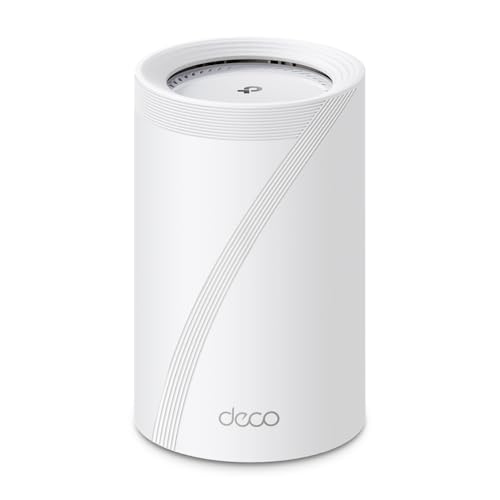
TP-Link Deco Tri-Band Wi-Fi 7 Router (1-Pack)
Best for: standalone multi-gigabit Wi-Fi 7 setups
- Wi-Fi Standard
- Wi-Fi 7
- Speed Rating
- BE14000
- Coverage Area
- Up to 3,100 sq. ft.
- Frequency Bands
- Tri-Band
- Pack Size
- 1-Pack
- Port Speed
- 10 Gbps
View on Amazon: TP-Link Deco Tri-Band Wi-Fi 7 Router (1-Pack)
This single-unit mesh router delivers tri-band Wi-Fi 7 coverage up to 3,100 square feet for over 200 devices. It features an eight-stream design with combined speeds up to 14 Gbps across 6 GHz, 5 GHz, and 2.4 GHz bands. Hardware includes one 10 Gbps port, one 2.5 Gbps port, one 1 Gbps port, and a USB 3.0 port. It suits you if you need multi-gigabit wired connectivity.
Pros
- Dedicated 10 Gbps and 2.5 Gbps Ethernet ports for multi-gigabit wired setups
- Tri-band Wi-Fi 7 speeds reaching up to 8,647 Mbps on the 6 GHz band
- Equipped with a USB 3.0 port for external connectivity
- Supports over 200 connected devices across 3,100 square feet
Cons
- Includes only a single unit rather than a multi-node pack
- Coverage limited to 3,100 square feet without purchasing additional units
Good fit if
- You have an internet plan exceeding 1 Gbps and need a 10 Gbps WAN or LAN port.
- You want tri-band Wi-Fi 7 capabilities including 6 GHz band support.
- You need a router with a built-in USB 3.0 port.
Skip if
- You need multiple mesh satellites out of the box to cover a larger space.
- You live in a home larger than 3,100 square feet that requires immediate multi-room coverage.
Verdict: TP-Link Deco Tri-Band Wi-Fi 7 Router (1-Pack) provides tri-band Wi-Fi 7 speeds and a 10 Gbps port in a single standalone unit. It serves homes up to 3,100 square feet needing high-bandwidth wired and wireless capacity.
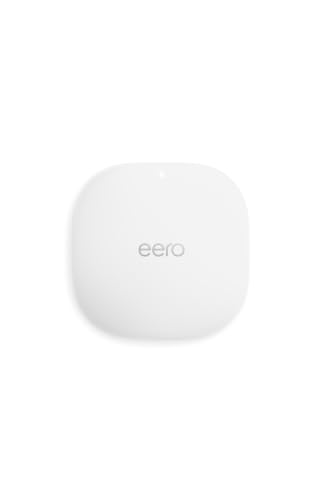
Amazon eero PoE 6 Dual-Band Access Point
Best for: wired PoE ceiling and wall installations
- Wi-Fi Standard
- Wi-Fi 6
- Speed Rating
- 1.6 Gbps
- Coverage Area
- 2,000 sq. ft.
- Frequency Bands
- Dual-band
- Device Capacity
- 100+
- PoE Support
- PoE
The Amazon eero PoE 6 is a dual-band Wi-Fi 6 access point powered via Power over Ethernet. It delivers wireless speeds up to 1.6 Gbps and covers up to 2,000 square feet while supporting over 100 devices. Because it mounts directly to walls or ceilings without an AC power cord, it suits you if you have existing Ethernet wiring and want clean ceiling-mounted coverage.
Pros
- Powered via Power over Ethernet without needing a separate power cord
- Covers up to 2,000 square feet and handles 100+ connected devices
- Mounts flush to ceilings or walls
- Supports Wi-Fi 6 wireless speeds up to 1.6 Gbps
Cons
- AC adapter is not included in the box
- Requires existing PoE infrastructure to supply power
- Limited to dual-band rather than tri-band wireless
Good fit if
- You have PoE network drops run to your ceilings or walls.
- You want an access point that mounts overhead without visible power cables.
- You run an existing eero mesh network and want wired expansion.
Skip if
- You lack PoE switches or PoE injectors to power the unit.
- You need a router with an included standard wall outlet adapter.
Verdict: Amazon eero PoE 6 Dual-Band Access Point provides reliable Wi-Fi 6 coverage for homes wired with Power over Ethernet. It delivers clean ceiling and wall installations without standard power bricks.

TP-Link Deco XE75 Pro 3-Pack
Best for: Large homes needing 2.5 Gbps multi-gigabit Wi-Fi 6E
- Wi-Fi Standard
- WiFi 6E
- Speed Rating
- AXE5400
- Coverage Area
- Up to 7,200 sq ft
- Frequency Bands
- Tri-Band
- Pack Size
- 3-Pack
- Port Speed
- 2.5 Gbps
This TP-Link Deco system is a tri-band Wi-Fi 6E mesh setup that includes three units covering up to 7,200 square feet. It delivers total wireless bandwidth up to 5,400 Mbps across 6 GHz, 5 GHz, and 2.4 GHz bands. Each node features one 2.5 Gbps port and two 1 Gbps ports. This system suits you if you have a multi-gigabit internet plan and need dedicated 6 GHz connectivity for up to 200 devices.
Pros
- Tri-band AXE5400 speeds across 6 GHz, 5 GHz, and 2.4 GHz bands
- One 2.5 Gbps port and two 1 Gbps ports per node
- Covers up to 7,200 square feet with three units
- Supports up to 200 connected devices
Cons
- Requires a separate modem to function
- Only one 2.5 Gbps port per unit
- 2.4 GHz band speed reaches up to 574 Mbps
Good fit if
- You have an internet plan up to 2.5 Gbps
- You need coverage for spaces up to 7,200 square feet
- You want a dedicated 6 GHz band for compatible devices or backhaul
Skip if
- You need multiple 2.5 Gbps ports on each node
- You want a router with a built-in cable modem
Verdict: TP-Link Deco Tri-Band WiFi 6E 3-Pack provides whole-home Wi-Fi 6E coverage across 7,200 square feet with dedicated 6 GHz backhaul support. It connects directly to multi-gigabit connections using its 2.5 Gbps Ethernet port.

TP-Link Deco PoE WiFi 6 3-Pack
Best for: homes with ceiling or wall Ethernet wiring
- Wi-Fi Standard
- WiFi 6
- Speed Rating
- AX3000
- Coverage Area
- up to 6,500 sq.ft
- Frequency Bands
- Dual-Band
- Pack Size
- 3-Pack
- Port Speed
- 2.5 Gigabit
This three-pack mesh system provides dual-band Wi-Fi 6 coverage up to 6,500 square feet and connects up to 150 devices. Each unit features two 2.5 Gbps Ethernet ports and supports Power over Ethernet, letting you run power and wired backhaul through ceiling or wall network cables. It fits your home if you want multi-gigabit wired flexibility alongside AX3000 wireless speeds without needing wall outlets near every node.
Pros
- Two 2.5 Gbps Ethernet ports on every unit
- PoE+ power input alongside standard DC power
- Up to 6,500 square feet of coverage across three units
- AX3000 speeds reaching 2402 Mbps on 5 GHz and 574 Mbps on 2.4 GHz
Cons
- Dual-band design lacks a dedicated third wireless backhaul band
- PoE+ switch is not included for Ethernet-powered setups
Good fit if
- You have Ethernet cabling installed in your walls or ceilings.
- You need 2.5 Gbps wired ports to eliminate network bottlenecks.
- You want whole-home coverage for up to 150 connected devices.
Skip if
- You require tri-band support or newer Wi-Fi 6E or Wi-Fi 7 standards.
- You need PoE operation without purchasing an external PoE switch.
Verdict: TP-Link AX3000 PoE Mesh 3-Pack delivers dual-band Wi-Fi 6 with multi-gigabit ports and flexible ceiling-mount power options. It provides a solid wired backhaul solution for homes with existing network cabling.

Google Nest Wifi Pro 2-Pack Wi-Fi 6E Mesh System
Best for: tri-band Wi-Fi 6E whole-home coverage
- Wi-Fi Standard
- Wi-Fi 6E
- Coverage Area
- Up to 4400 square feet
- Frequency Bands
- Three bands
- Pack Size
- 2 Pack
- Intended Use
- Home
- Dimensions
- 5.16 × 4.65 × 3.35 inches
View on Amazon: Google Nest Wifi Pro 2-Pack Wi-Fi 6E Mesh System
The Google Nest Wifi Pro is a Wi-Fi 6E tri-band mesh system designed for whole-home networking. This 2-pack setup operates across 2.4 GHz, 5 GHz, and 6 GHz bands to cover homes up to 4,400 square feet. It automatically prioritizes traffic like video calls and monitors itself to resolve common issues. It suits you if you need modern 6 GHz coverage across a mid-sized home without managing complex settings.
Pros
- Tri-band support across 2.4 GHz, 5 GHz, and 6 GHz frequencies
- Provides up to 4,400 square feet of coverage with two routers
- Self-diagnoses and automatically fixes common network issues
- Includes secure boot and protective software updates
Cons
- Incompatible with previous generations of Google Wifi or Nest Wifi
- Coverage limited to 4,400 square feet unless extra units are added
Good fit if
- You need up to 4,400 square feet of Wi-Fi 6E coverage across two units.
- You want tri-band operation across 2.4 GHz, 5 GHz, and 6 GHz bands.
- You prefer automated network optimization and self-monitoring features.
Skip if
- You plan to integrate nodes with older Google Wifi or Nest Wifi hardware.
- You need to cover a home exceeding 4,400 square feet out of the box.
Verdict: Google Nest Wifi Pro 2-Pack Wi-Fi 6E Mesh System delivers tri-band 6 GHz connectivity and covers spaces up to 4,400 square feet. It is a solid choice for modern homes, provided you do not need backwards compatibility with older Google mesh devices.

ASUS ZenWiFi Dual-Band WiFi 7 3-Pack
Best for: large homes needing multi-gigabit dual-band Wi-Fi 7
- Wi-Fi Standard
- WiFi 7
- Speed Rating
- 5000 Mbps
- Coverage Area
- up to 6800 sq.ft.
- Frequency Bands
- Dual-band
- Pack Size
- 3 Pack
- Port Speed
- 2.5G
This 3-pack mesh system equips your home with dual-band Wi-Fi 7 networking, delivering total throughput up to 5000 Mbps. It covers spaces up to 6,800 square feet using four internal antennas per unit. The hardware features 2.5G port connectivity alongside built-in AiProtection Pro security tools, dedicated IoT network support, and AiMesh compatibility. It suits you if you need wide whole-home wireless coverage with multi-gigabit wired backhaul capability.
Pros
- Dual-band Wi-Fi 7 speeds up to 5000 Mbps with MLO and 4K-QAM
- Covers up to 6,800 square feet with three units
- Equipped with 2.5G port speed
- Includes AiProtection Pro security and Smart Home Master SSIDs
Cons
- Uses dual-band Wi-Fi 7 rather than tri-band
- Rated strictly for indoor environments
Good fit if
- You need coverage for indoor spaces up to 6,800 square feet.
- You want 2.5G wired connectivity on a Wi-Fi 7 network.
- You already own compatible ASUS routers to use with AiMesh.
Skip if
- You require tri-band connectivity with a dedicated 6 GHz band.
- You need outdoor-rated networking hardware.
Verdict: ASUS ZenWiFi Dual-Band WiFi 7 3-Pack delivers expansive 6,800-square-foot coverage and 2.5G port speeds for modern multi-gigabit homes. It provides strong dual-band Wi-Fi 7 capacity alongside robust integrated security tools.
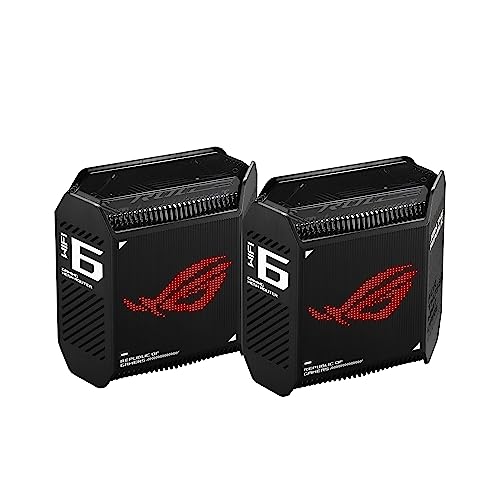
ASUS ROG Rapture Tri-Band Mesh System
Best for: homes needing dedicated gaming bandwidth prioritization
- Wi-Fi Standard
- WiFi 6
- Speed Rating
- AX10000
- Coverage Area
- 5,800 sq ft
- Frequency Bands
- Tri-Band
- Pack Size
- 2-Pack
- Port Speed
- 2.5 Gbps
This two-pack mesh system pairs AX10000 throughput with Wi-Fi 6 tri-band connectivity. You get a dedicated 5 GHz backhaul channel, nine internal antennas per unit, and a 2.5 Gbps WAN port for multi-gigabit internet connections. Built-in triple-level game acceleration prioritizes gaming traffic automatically. It suits you if you need low-latency gaming priority and wired speed aggregation across up to 5,800 square feet without upgrading your devices to Wi-Fi 7.
Pros
- AX10000 speed rating across tri-band Wi-Fi 6
- 2.5 Gbps WAN port and LAN aggregation support
- 5,800 square feet coverage via nine internal antennas
- AiProtection security suite with lifetime subscription included
Cons
- Uses Wi-Fi 6 without access to 6 GHz channels
- Two-node pack covers fewer discrete zones than three-node kits
Good fit if
- You want a 2.5 Gbps WAN port and LAN aggregation for wired gear.
- You need built-in triple-level game acceleration for priority traffic.
- You want up to 5,800 square feet covered by two hardware nodes.
Skip if
- You require the 6 GHz band introduced by Wi-Fi 6E and Wi-Fi 7.
- You need three or more physical units to cover separate floors.
Verdict: ASUS ROG Rapture Tri-Band WiFi 6 Mesh 2-Pack delivers high AX10000 throughput and 2.5 Gbps wired connectivity for low-latency gaming. Its dedicated backhaul and traffic acceleration optimize performance without requiring Wi-Fi 7 hardware.

Linksys Velop Micro 7 Dual-Band Mesh 3-Pack
Best for: app-free setup across large homes
- Wi-Fi Standard
- Wi-Fi 7
- Speed Rating
- BE5000
- Coverage Area
- 6600 sq.ft.
- Frequency Bands
- Dual-Band
- Pack Size
- 3-Pack
- Port Speed
- 2.5G
The Linksys Velop Micro 7 is a dual-band Wi-Fi 7 mesh system that comes in a three-pack covering up to 6,600 square feet. It provides speeds up to 5 Gbps across four streams and features a 2.5G auto-sensing port on each node. This system fits you if you want modern Wi-Fi 7 networking with simple hardware-button setup, app-free management, and zero personal account requirements.
Pros
- Wi-Fi 7 coverage up to 6,600 square feet across three nodes
- Hardware Instant-Pair button enables setup without a mobile app
- Built-in 2.5G auto-sensing Internet/LAN port
- Requires no user account, tracking, or monthly subscriptions
Cons
- Dual-band operation lacks a dedicated 6 GHz Wi-Fi band
- Limited to four total Wi-Fi streams
Good fit if
- You want Wi-Fi 7 coverage up to 6,600 square feet without using an app or creating an account.
- You have a multi-gigabit internet connection requiring a 2.5G port.
- You prefer a system powered by standard USB-C connections.
Skip if
- You need a tri-band Wi-Fi 7 mesh system with a dedicated 6 GHz frequency band.
- You require more than four spatial streams for high-density device traffic.
Verdict: Linksys Velop Micro 7 Dual-Band Mesh 3-Pack delivers modern Wi-Fi 7 speeds and multi-gig wired input across large homes. It is a solid choice if you want broad coverage without mandatory accounts or mobile apps.

Tenda Nova Tri-Band WiFi 6E Mesh 3-Pack
Best for: large homes with over 200 connected devices
- Wi-Fi Standard
- WiFi 6E
- Speed Rating
- AXE5700
- Coverage Area
- up to 7,300 sq.ft
- Frequency Bands
- Tri-Band
- Pack Size
- 3-Pack
- Device Capacity
- 200 Devices
This Tenda Nova system delivers tri-band Wi-Fi 6E connectivity across a three-pack setup, designed to cover areas up to 7,300 square feet. It provides dedicated access to the 6 GHz band, supports AXE5700 speed ratings, and handles more than 200 connected devices via MU-MIMO and OFDMA. You can assign separate network names to each band. It suits you if you need wide coverage and high device capacity across a large home.
Pros
- Tri-band Wi-Fi 6E with dedicated 6 GHz frequency band
- Coverage area up to 7,300 square feet across three units
- Supports over 200 connected devices using MU-MIMO and OFDMA
- Allows separate SSIDs for 2.4 GHz, 5 GHz, and 6 GHz bands
Cons
- Uses Wi-Fi 6E rather than the newer Wi-Fi 7 standard
- Ethernet port counts and physical port speeds are not specified
Good fit if
- You have a large home up to 7,300 square feet needing three nodes.
- You manage over 200 client devices simultaneously across multiple bands.
- You want manual control to set separate SSIDs for each frequency band.
Skip if
- You require the newer Wi-Fi 7 networking standard.
- You need verified multi-gigabit wired Ethernet ports on each unit.
Verdict: Tenda Nova Tri-Band WiFi 6E 3-Pack delivers extensive 7,300-square-foot coverage and handles over 200 devices across three dedicated wireless bands. It provides broad Wi-Fi 6E capacity for large households managing dense device counts.

NETGEAR Orbi Quad-Band WiFi 6E Add-On Satellite
Best for: expanding existing compatible Orbi 6E systems
- Wi-Fi Standard
- WiFi 6E
- Speed Rating
- AXE11000 (10.8Gbps)
- Coverage Area
- up to 3,000 sq. ft
- Frequency Bands
- Quad-Band
- Port Speed
- 2.5G
- Dimensions
- 7.5 × 3.3 × 11 inches
View on Amazon: NETGEAR Orbi Quad-Band WiFi 6E Add-On Satellite
This unit is an add-on mesh satellite that expands an existing compatible setup. It brings quad-band Wi-Fi 6E connectivity with AXE11000 bandwidth and provides up to 3,000 square feet of coverage. For wired devices, you get one 2.5G port alongside three 1G Ethernet ports. It suits you if you already operate a compatible system and need extra wireless range for streaming, gaming, or conferencing.
Pros
- Quad-band Wi-Fi 6E with AXE11000 speeds up to 10.8Gbps
- Adds up to 3,000 sq. ft. of coverage
- Equipped with one 2.5G and three 1G Ethernet ports
- Managed and set up through the Orbi app
Cons
- Requires an existing RBKE963B system rather than operating standalone
- Designated for use in the U.S. only
Good fit if
- You already own a compatible RBKE963B Orbi system and need up to 3,000 sq. ft. of additional coverage.
- You want a satellite node equipped with a high-speed 2.5G Ethernet port alongside standard gigabit ports.
- You need quad-band Wi-Fi 6E speeds up to 10.8Gbps for high-bandwidth tasks.
Skip if
- You need a standalone primary router rather than an add-on satellite.
- You live outside the U.S. or lack the compatible Orbi system.
Verdict: NETGEAR Orbi Quad-Band WiFi 6E Satellite delivers multi-gigabit wired connectivity and extensive wireless reach to an existing network. It is an effective hardware expansion for households that need AXE11000 quad-band speeds across an additional 3,000 square feet.
Specifications side by side
| Spec | TP-Link Deco 7 Dual-Band WiFi 7 3-Pack | TP-Link Deco Tri-Band WiFi 6E 3-Pack | TP-Link Deco Dual-Band WiFi 7 3-Pack | Amazon eero Pro 6E 2-Pack | NETGEAR Orbi 770 Tri-Band WiFi 7 Satellite | TP-Link Deco Tri-Band Wi-Fi 7 Router (1-Pack) | Amazon eero PoE 6 Dual-Band Access Point | TP-Link Deco XE75 Pro 3-Pack | TP-Link Deco PoE WiFi 6 3-Pack | Google Nest Wifi Pro 2-Pack Wi-Fi 6E Mesh System | ASUS ZenWiFi Dual-Band WiFi 7 3-Pack | ASUS ROG Rapture Tri-Band Mesh System | Linksys Velop Micro 7 Dual-Band Mesh 3-Pack | Tenda Nova Tri-Band WiFi 6E Mesh 3-Pack | NETGEAR Orbi Quad-Band WiFi 6E Add-On Satellite |
|---|---|---|---|---|---|---|---|---|---|---|---|---|---|---|---|
| Wi-Fi Standard | WiFi 7 | Wi-Fi 6E | Wi-Fi 7 | Wi-Fi 6E | WiFi 7 | Wi-Fi 7 | Wi-Fi 6 | WiFi 6E | WiFi 6 | Wi-Fi 6E | WiFi 7 | WiFi 6 | Wi-Fi 7 | WiFi 6E | WiFi 6E |
| Speed Rating | 5 Gbps | AXE4900 | BE3600 | 2.3 Gbps | Up to 11 Gbps | BE14000 | 1.6 Gbps | AXE5400 | AX3000 | not specified | 5000 Mbps | AX10000 | BE5000 | AXE5700 | AXE11000 (10.8Gbps) |
| Coverage Area | 6,600 sq. ft. | Up to 2,900 sq. ft. | Up to 6,500 sq. ft | 4,000 sq. ft. | Up to 2,750 sq ft | Up to 3,100 sq. ft. | 2,000 sq. ft. | Up to 7,200 sq ft | up to 6,500 sq.ft | Up to 4400 square feet | up to 6800 sq.ft. | 5,800 sq ft | 6600 sq.ft. | up to 7,300 sq.ft | up to 3,000 sq. ft |
| Frequency Bands | Dual-Band | Tri-Band | Dual-Band | not specified | Tri-band | Tri-Band | Dual-band | Tri-Band | Dual-Band | Three bands | Dual-band | Tri-Band | Dual-Band | Tri-Band | Quad-Band |
| Pack Size | 3 Pack | 3-Pack | 3-Pack | 2-pack | 1 Pack | 1-Pack | not specified | 3-Pack | 3-Pack | 2 Pack | 3 Pack | 2-Pack | 3-Pack | 3-Pack | not specified |
| Port Speed | 2.5G | 2.5 Gbps | 2.5 Gbps | 2.5 Gbps | not specified | 10 Gbps | not specified | 2.5 Gbps | 2.5 Gigabit | not specified | not specified | 2.5 Gbps | 2.5G | not specified | 2.5G |
| Device Capacity | over 150 devices | Up to 200 devices | 150 devices | 100+ | not specified | Over 200 devices | 100+ | 200 devices | up to 150 devices | not specified | not specified | not specified | not specified | 200 Devices | not specified |
| Frequency Band | Dual-Band | Tri-Band | Dual-Band | not specified | not specified | Tri-Band | Dual-Band | Tri-Band | not specified | not specified | not specified | Tri-Band | Dual-Band | Tri-Band | Quad-Band |
| PoE Support | not specified | not specified | not specified | not specified | not specified | not specified | PoE | not specified | PoE | not specified | not specified | not specified | not specified | not specified | not specified |
| Use Case | not specified | not specified | not specified | not specified | not specified | not specified | not specified | not specified | not specified | not specified | not specified | Gaming | not specified | not specified | not specified |
| Intended Use | not specified | not specified | not specified | not specified | not specified | Home | not specified | not specified | not specified | Home | not specified | not specified | not specified | Home | not specified |
| Operating Mode | not specified | not specified | not specified | not specified | not specified | not specified | Access Point Mode | not specified | not specified | not specified | not specified | not specified | not specified | not specified | not specified |
| Dimensions | 5.91 × 5.91 × 2.44 inches | 4.1 × 4.1 × 6.7 inches | 9.02 × 8.46 × 6.34 inches | 5.47 × 5.47 × 2.21 inches | not specified | 6.93 × 4.23 × 4.23 inches | 6.45 × 6.45 × 1.69 inches | 4.13 × 4.13 × 6.65 inches | 6.1 × 6.1 × 2.7 inches | 5.16 × 4.65 × 3.35 inches | 5.5 × 2.8 × 5.5 inches | 6.77 × 3.07 × 6.93 inches | not specified | not specified | 7.5 × 3.3 × 11 inches |
| Weight | 3.28 pounds | 3.24 pounds | not specified | 1.41 pounds | not specified | 1.7 pounds | 15.5 ounces | 4.12 pounds | not specified | 4.25 pounds | 1.2 pounds | 1.94 pounds | 5.22 pounds | not specified | 3 pounds |
| Size | 3 Pack | 3 Pack | 3 - Pack | not specified | 1 Pack | 1 Pack | not specified | 3 Pack | 3 Pack | 2 Pack | 3 Pack Indoor | not specified | Velop Micro 7 (3 Pack) | 3 Pack | Satellite |
| Color | White | White | White | WHITE | not specified | White | WHITE | Black and White | White | Snow | WHITE | BLACK | not specified | white | Black |
| Model | Deco BE25(3-Pack) | Deco XE70 Pro(3-pack) | Deco BE23(3-Pack) | S010001 | RBE770-100NAS | Deco BE67(1-Pack) | T010001 | Deco XE75 Pro(3-pack) | Deco X50-PoE(3-pack) | G6ZUC | BD5 (W-3-PK) | GT6 (B-2-PK) | LN1603 | MX21 Pro | RBSE960B |
Hardware Specification Trade-Offs Under $300
Systems Under $300 offer Wi-Fi 7 multi-packs or specialized wired options, but you accept hardware compromises. Most multi-node Wi-Fi 7 systems in this tier use dual-band wireless, omitting the 6 GHz spectrum. When tri-band Wi-Fi 7 or 10 Gbps port capabilities appear, packages shrink to a single router or add-on satellite. Units with Power over Ethernet support limit you to older Wi-Fi 6 wireless standards and AX3000 speeds. Multi-room Wi-Fi 7 packages prioritize coverage area over dedicated third frequency bands.
- Frequency band: Multi-pack Wi-Fi 7 setups use dual-band wireless, omitting the 6 GHz spectrum.
- Pack size: Tri-band Wi-Fi 7 options are restricted to single-unit routers or individual satellites.
- Wi-Fi standard: Hardware offering PoE support relies on older Wi-Fi 6 protocols.
If you are also assembling a wired workstation, you can evaluate each motherboard under 300 by its ethernet controller and expansion slot specifications.
How We Selected These Systems
To choose the 15 systems for this guide, we pull Amazon listings matching Under $300. Every detail comes strictly from published specifications and feature lists. We do not physically test products. To keep options clear, you see only one variant per product family. Listings are organized with products in stock first, then by Amazon sales rank, placing better-selling products first.
Stock levels and prices update live on the page at least daily. A system appears here only when its price stays Under $300. Because listing data changes continuously, products move in or out of this guide as figures shift.
How to Choose the Right Mesh System
-
Choose the Wireless Standard
Check the wireless generation listed on the box before you buy. Wi-Fi 6 handles everyday streaming and smart home gear with reliable throughput. Wi-Fi 6E introduces dedicated 6 GHz channels to reduce local interference for compatible phones and laptops. Wi-Fi 7 increases overall channel bandwidth and lowers latency across modern clients. If your household runs older devices, Wi-Fi 6 remains sufficient. If you actively use newer laptops and phones with modern network cards, target Wi-Fi 7 hardware to match your client capabilities.
-
Check Ethernet Port Speeds
Review the physical Ethernet port specifications on each mesh node. Standard gigabit ports cap wired throughput at 1,000 Mbps. If your internet service provider supplies multi-gigabit speeds, or if you use high-speed network storage, standard ports create a bottleneck. Look for hardware with 2.5 Gbps or 10 Gbps Ethernet connections. The ASUS ZenWiFi Dual-Band WiFi 7 3-Pack includes 2.5G ports, which allow you to carry multi-gigabit data through wired backhaul cables without slowing down local network transfers.
-
Evaluate Power over Ethernet
Check how each mesh unit draws power before planning installation locations. Standard mesh nodes require nearby electrical outlets and power adapters, limiting placement to shelves, desks, or counters. Systems supporting Power over Ethernet receive data and electric power through a single Cat6 network cable. If your home has pre-wired ceiling or in-wall Ethernet drops, PoE hardware creates a clean installation without loose cables. The TP-Link Deco PoE WiFi 6 3-Pack supports PoE operation, allowing direct ceiling mounting for optimal signal distribution.
-
Verify Connected Device Capacity
Examine the maximum device capacity rating if you manage a dense smart home. Smart plugs, security cameras, sensors, and media streamers constantly communicate in the background. Systems with limited device handling can experience dropped packets and intermittent disconnects when managing dozens of simultaneous clients. If your household operates numerous connected products, choose hardware rated specifically for heavy concurrent loads. The Amazon eero Pro 6E 2-Pack supports 100+ devices simultaneously, preventing wireless congestion across busy home automation setups.
-
Review Setup Management Methods
Consider how you prefer to configure and administer your home network. Many modern mesh systems mandate mobile apps, continuous internet access, and registered cloud accounts just to complete initial installation. If you prioritize network privacy or prefer managing router settings through a standard web browser on a computer, verify account requirements before purchase. The Linksys Velop Micro 7 Dual-Band Mesh 3-Pack allows app-free setup, letting you configure your local wireless network without registering an online user profile.
-
Calculate Square Footage Requirements
Compare the total square footage rating against your home layout. Published coverage ratings reflect clear conditions with minimal physical obstructions. Interior walls, floors, and metal appliances degrade wireless signals between nodes. To ensure reliable coverage across your entire living space, choose a system with a square footage rating that exceeds your home footprint by at least twenty percent. Multi-story homes require overlapping node coverage, so verify that individual node placement covers distant corners and outdoor living spaces effectively.
Frequently asked questions
What is the practical difference between Wi-Fi 6E and dual-band Wi-Fi 7 mesh systems?
Wi-Fi 6E systems include access to the 6 GHz frequency band, whereas dual-band Wi-Fi 7 systems do not. Dual-band Wi-Fi 7 setups, such as the TP-Link Deco BE25 3-Pack, broadcast across 2.4 GHz and 5 GHz while using Wi-Fi 7 protocols. If you connect Wi-Fi 6E client devices, a tri-band 6E model provides a dedicated 6 GHz channel, while dual-band Wi-Fi 7 units focus multi-gigabit throughput across standard frequencies.
Can you mix Google Nest Wifi Pro with older Google mesh routers?
No, you cannot combine Google Nest Wifi Pro with older hardware generations. The Google Nest Wifi Pro 2-Pack operates on Wi-Fi 6E networking and is not backward compatible with previous Google Wifi or Nest Wifi units. If you currently run an older Google network, moving to Nest Wifi Pro requires replacing your existing system rather than adding these nodes as extensions to your current setup.
Do PoE mesh access points require specialized home wiring?
Yes, Power over Ethernet hardware requires network cabling that supplies electrical power alongside data. Models like the TP-Link Deco X50-PoE and Amazon eero PoE 6 are intended for wall or ceiling mounting where wall outlets are absent. You must connect them via Ethernet to a PoE switch or injector, making them suitable choices primarily for homes configured with existing in-wall Ethernet wiring.
Can you use an add-on satellite as an independent mesh router?
No, add-on satellites cannot function as your main router. Units like the NETGEAR Orbi 770 Satellite and NETGEAR Orbi RBSE960B Satellite operate strictly as network extensions. They require an existing compatible Orbi base router to manage network traffic and assign IP addresses. If you do not already own the matching base unit, purchasing a satellite alone will not provide an active home network.
Which Ethernet port speeds should you look for on a modern mesh system?
You need Ethernet ports rated at 2.5 Gbps or higher to support multi-gigabit broadband service fully. Several systems on this list, including the ASUS ZenWiFi BD5, Amazon eero Pro 6E, and TP-Link Deco XE75 Pro, feature 2.5G ports for high-bandwidth wired backhaul or modem connections. Selecting multi-gigabit Ethernet ensures your physical network interfaces match the full throughput capacity of faster internet tiers.
How do you determine the right number of mesh nodes for your home?
Match the total rated square footage of the package to your floor plan layout. A two-pack like the Amazon eero Pro 6E covers up to 4,000 square feet, while three-packs such as the TP-Link Deco XE75 Pro cover up to 7,200 square feet. Single units like the Deco BE67 cover up to 3,100 square feet. Multi-level homes benefit from distributing separate nodes across floors.
How do device capacity ratings affect smart home mesh performance?
Device capacity specifications tell you how many active connections a system can manage without packet congestion. The Amazon eero Pro 6E supports 100 or more connected devices, while the Tenda Nova MX21 Pro is specified for over 200 devices across its three bands. Selecting a system rated for higher device limits helps ensure smart home sensors, streaming hardware, and mobile devices maintain stable concurrent connections.