Best Wi-Fi 7 Wifi Routers: 15 Spec-Based Picks
As an Amazon Associate we earn from qualifying purchases. Links on this page are affiliate links.
Adding a Wi-Fi 7 wifi router gives your home network multi-gigabit wired connectivity and high-speed wireless throughput. We evaluated and compared 15 models using only the specifications published on their official product listings.
The TP-Link Deco Tri-Band WiFi 7 Mesh Router holds the top position because it pairs BE10000 wireless speeds with 2.5G and 10G wired interfaces. This guide helps you decide which frequency band, Ethernet port speed, and coverage capacity best fit your setup.
Quick picks
The best fit for you
- You need expandable tri-band mesh with multi-gigabit ports TP-Link Deco Tri-Band WiFi 7 Mesh Router It delivers tri-band BE10000 speeds alongside 2.5G and 10G wired interfaces for multi-node expansion.
- You need extreme wired throughput with quad-band coverage TP-Link Quad-Band WiFi 7 Router with Dual 10G It provides quad-band Wi-Fi 7 speeds and dual 10 Gbps network ports for high-bandwidth home setups.
- You need dual-WAN failover protection for uninterrupted connections ASUS Dual-Band WiFi 7 Dual-WAN Router It includes dedicated Dual-WAN failover capability alongside a 2.5G port and dual-band Wi-Fi 7.
- You need a compact Wi-Fi 7 travel router GL.iNet Slate 7 Wi-Fi 7 Travel Router It combines travel-sized dimensions with dual 2.5G ports and onboard VPN support.
Our 15 picks

TP-Link Deco Tri-Band WiFi 7 Mesh Router
Best for: tri-band multi-gigabit home networks
- Wi-Fi Standard
- Wi-Fi 7 (what this guide is about)
- Speed Rating
- BE10000
- Frequency Bands
- Tri-Band
- Coverage Area
- up to 3,000 sq.ft.
- Device Capacity
- over 200 devices
- Max Port Speed
- 10 Gbps
The TP-Link Deco Tri-Band Wi-Fi 7 Mesh Router is a standalone tri-band mesh unit built for multi-gigabit home networking. It delivers combined BE10000 speeds across 6 GHz, 5 GHz, and 2.4 GHz bands, covering up to 3,000 square feet and handling over 200 connected devices. With four 2.5G ports and a 10G port, it suits you if you need high wired capacity and room to expand your network.
Pros
- Tri-band Wi-Fi 7 with BE10000 speeds up to 5,188 Mbps on 6 GHz
- Four 2.5G ports and one 10G WAN/LAN port
- Integrated USB 3.0 port
- Covers up to 3,000 square feet and supports over 200 devices
Cons
- Single-unit package cannot utilize mesh backhaul features without purchasing additional units
- 2.4 GHz band speed is limited to 574 Mbps
Good fit if
- You need multi-gigabit wired connectivity including 2.5G and 10G ports.
- You want tri-band Wi-Fi 7 coverage for up to 3,000 square feet.
- You plan to add more Deco units later for combined wired and wireless backhaul.
Skip if
- You require an out-of-the-box multi-node system for a larger home immediately.
- You only need standard gigabit ports for basic internet speeds.
Verdict: TP-Link Deco Tri-Band Wi-Fi 7 Mesh Router combines fast BE10000 wireless speeds with 2.5G and 10G wired interfaces for high-demand setups. It serves as a capable standalone unit that can expand into a multi-node mesh system.

Amazon eero Pro 7 Tri-Band Wi-Fi 7 Router
Best for: multi-gigabit internet plans up to 5 Gbps
- Wi-Fi Standard
- Wi-Fi 7 (what this guide is about)
- Frequency Bands
- Tri-Band
- Coverage Area
- 2,000 sq. ft.
- Device Capacity
- 200+ devices
- Max Port Speed
- 5 Gbps
- Pack Size
- 1-Pack
The eero Pro 7 is a tri-band Wi-Fi 7 mesh router designed to handle heavy multi-device traffic across your home. It provides up to 2,000 square feet of coverage and supports multi-gigabit internet plans up to 5 Gbps using two auto-sensing 5 GbE wired ports. If you manage more than 200 connected devices and need wireless speeds reaching up to 3.9 Gbps with Multi-Link Operation, this single-node unit fits high-bandwidth households.
Pros
- Two auto-sensing 5 GbE wired Ethernet ports
- Tri-band Wi-Fi 7 with wireless speeds up to 3.9 Gbps
- Supports 200+ connected devices and up to 2,000 square feet of coverage
- Supports Wi-Fi 7 Multi-Link Operation (MLO)
- Backward compatible with previous eero devices and select Amazon Echo units
Cons
- Limited to only two wired Ethernet ports
- Single-pack coverage limited to 2,000 square feet without additional nodes
Good fit if
- You have an internet plan up to 5 Gbps requiring 5 GbE connectivity.
- You need tri-band Wi-Fi 7 support for more than 200 active devices.
- You want to integrate with an existing eero network or compatible Echo devices.
Skip if
- You need more than two onboard Ethernet ports for wired devices.
- You require 10 GbE wired network ports for ultra-high-speed LAN transfers.
Verdict: eero Pro 7 Tri-Band Wi-Fi 7 Router provides dual 5 GbE ports and tri-band Wi-Fi 7 speeds up to 3.9 Gbps. It reliably covers up to 2,000 square feet and handles more than 200 connected devices.

TP-Link Archer Dual-Band Wi-Fi 7 Router
Best for: budget-friendly multi-gigabit dual-band home networking
- Wi-Fi Standard
- Wi-Fi 7 (what this guide is about)
- Speed Rating
- BE3600
- Frequency Bands
- Dual-Band
- Coverage Area
- Up to 2,000 sq. ft.
- Device Capacity
- Up to 60 devices
- Max Port Speed
- 2.5 Gbps
The TP-Link Archer Dual-Band Wi-Fi 7 Router gives you an entry point into Wi-Fi 7 networking. It delivers dual-band throughput up to 2882 Mbps on 5 GHz and 688 Mbps on 2.4 GHz, powered by a 2.0 GHz quad-core processor. Dual 2.5 Gbps Ethernet ports handle multi-gigabit connections, while coverage extends up to 2,000 square feet. It suits you if you want modern Wi-Fi 7 features without needing the 6 GHz band.
Pros
- Two 2.5 Gbps ports and three 1 Gbps LAN ports
- Wi-Fi 7 support with Multi-Link Operation and 4K-QAM
- Covers up to 2,000 square feet and 60 devices
- Compatible with EasyMesh routers and extenders
Cons
- Lacks 6 GHz band support
- Requires a separate standalone modem
Good fit if
- You have a multi-gigabit internet plan needing 2.5 Gbps ports.
- You want Wi-Fi 7 features for spaces up to 2,000 square feet.
- You plan to expand coverage later using EasyMesh hardware.
Skip if
- You require tri-band connectivity with access to 6 GHz channels.
- You need a single unit with a built-in cable modem.
Verdict: TP-Link Archer Dual-Band Wi-Fi 7 Router provides multi-gigabit wired speeds and essential Wi-Fi 7 operation for homes up to 2,000 square feet. It delivers fast dual-band connectivity without the added hardware complexity of 6 GHz transmission.

TP-Link Archer Dual-Band WiFi 7 Router
Best for: multi-gigabit dual-band Wi-Fi 7 home networks
- Wi-Fi Standard
- Wi-Fi 7 (what this guide is about)
- Speed Rating
- BE6500
- Frequency Bands
- Dual-Band
- Coverage Area
- Up to 2,400 sq. ft.
- Device Capacity
- Up to 90 devices
- Max Port Speed
- 2.5 Gbps
This router provides dual-band Wi-Fi 7 connectivity with speeds up to 5764 Mbps on 5 GHz and 688 Mbps on 2.4 GHz across six streams. You get two 2.5 Gbps Ethernet ports alongside three standard 1 Gbps LAN ports, with coverage rated up to 2,400 square feet for 90 devices. It suits you if you want multi-gigabit wired connections and Wi-Fi 7 Multi-Link Operation without moving to a tri-band setup.
Pros
- Two 2.5 Gbps Ethernet ports for multi-gigabit WAN and LAN connections
- Up to 5764 Mbps on the 5 GHz band across six streams
- Supports Wi-Fi 7 Multi-Link Operation, Multi-RUs, and 4K-QAM
- EasyMesh compatibility for network expansion with compatible extenders
Cons
- Dual-band only with no 6 GHz wireless frequency band
- Incompatible with TP-Link Deco mesh systems
- Requires a separate broadband modem
Good fit if
- You need 2.5 Gbps wired WAN and LAN ports for multi-gigabit internet plans.
- You want Wi-Fi 7 features like Multi-Link Operation across 2.4 GHz and 5 GHz bands.
- You need to cover up to 2,400 square feet for up to 90 devices.
Skip if
- You want the 6 GHz band found on tri-band Wi-Fi 7 hardware.
- You intend to use this router with existing TP-Link Deco mesh hardware.
Verdict: TP-Link Dual-Band Wi-Fi 7 Router delivers solid dual-band throughput and dual 2.5 Gbps ports for multi-gigabit home networks up to 2,400 square feet. It provides core Wi-Fi 7 capabilities like MLO without the complexity of a 6 GHz band.

TP-Link Deco Dual-Band Wi-Fi 7 Mesh Router
Best for: mid-sized homes needing dual multi-gigabit ports
- Wi-Fi Standard
- Wi-Fi 7 (what this guide is about)
- Speed Rating
- BE3600
- Frequency Bands
- Dual-Band
- Coverage Area
- 2,500 sq. ft
- Device Capacity
- 150 devices
- Max Port Speed
- 2.5 Gbps
This TP-Link Deco unit is a dual-band Wi-Fi 7 mesh router designed to cover up to 2,500 square feet. It delivers wireless speeds up to 3.6 Gbps across 5 GHz and 2.4 GHz bands, backed by two 2.5 Gbps Ethernet ports for multi-gigabit wired setups. You get support for up to 150 connected devices and built-in VPN server tools, making it a practical fit if you need modern Wi-Fi 7 networking in your home.
Pros
- Two 2.5 Gbps WAN/LAN ports for multi-gigabit wired connections
- Wi-Fi 7 speeds up to 2882 Mbps on 5 GHz and 688 Mbps on 2.4 GHz
- Covers up to 2,500 square feet and handles up to 150 devices
- Supports simultaneous wireless and wired backhaul with Multi-Link Operation
- Built-in VPN client and server functionality
Cons
- Dual-band design lacks the 6 GHz Wi-Fi 7 frequency band
- Only two total Ethernet ports provided on the unit
- Single-pack unit provides one node out of the box
Good fit if
- You need multi-gigabit Ethernet ports for high-speed wired devices.
- You want Wi-Fi 7 features like Multi-Link Operation on 2.4 GHz and 5 GHz bands.
- You have a single-node coverage area up to 2,500 square feet.
Skip if
- You require the 6 GHz Wi-Fi 7 frequency band.
- You need more than two wired Ethernet connections on the router.
- You want a multi-pack mesh kit ready for larger multi-story homes.
Verdict: TP-Link Deco Dual-Band Mesh Router provides dual-band Wi-Fi 7 speeds and dual 2.5 Gbps Ethernet ports in a single-node unit. It suits standalone coverage for homes up to 2,500 square feet that do not need 6 GHz access.
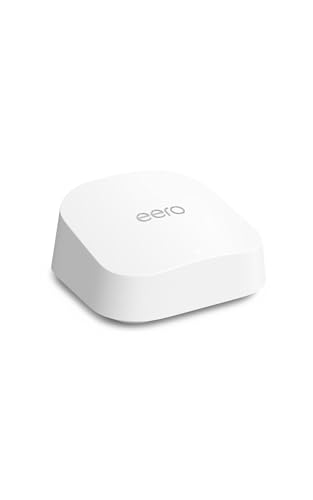
Amazon eero 7 Dual-Band Wi-Fi 7 Router
Best for: multi-gigabit dual-band mesh expansion
- Wi-Fi Standard
- Wi-Fi 7 (what this guide is about)
- Frequency Bands
- Dual-Band
- Coverage Area
- up to 2,000 sq. ft.
- Device Capacity
- 120+ devices
- Max Port Speed
- 2.5 Gbps
- Ethernet Ports
- 2
The Amazon eero 7 is a dual-band Wi-Fi 7 mesh router designed to cover up to 2,000 square feet. It features two auto-sensing 2.5 GbE Ethernet ports to handle wired connections and internet plans up to 2.5 Gbps, with maximum wireless speeds reaching 1.8 Gbps. If you want an expandable mesh setup that supports over 120 connected devices and integrates with older eero units, this standalone node fits your home network.
Pros
- Two auto-sensing 2.5 GbE Ethernet ports
- Supports internet plans up to 2.5 Gbps and wireless speeds up to 1.8 Gbps
- Covers up to 2,000 square feet and connects 120+ devices
- Supports Multi-Link Operation (MLO) and backwards compatibility with earlier eero models
Cons
- Dual-band design lacks a 6 GHz frequency band
- Limited to two physical Ethernet ports
- Single-pack unit requires separate add-ons to expand mesh coverage
Good fit if
- You need a compact Wi-Fi 7 router covering up to 2,000 square feet.
- You subscribe to an internet service tier up to 2.5 Gbps.
- You want to expand an existing network of older eero or compatible Echo devices.
Skip if
- You require tri-band connectivity with access to 6 GHz channels.
- You need more than two wired Ethernet connections on the unit.
Verdict: Amazon eero 7 Dual-Band Mesh Router delivers multi-gigabit wired throughput and Wi-Fi 7 features for spaces up to 2,000 square feet. It serves as an effective entry point for dual-band mesh setups connecting up to 120 devices.

TP-Link Quad-Band WiFi 7 Router with Dual 10G
Best for: ultra-high-speed wired and wireless home networks
- Wi-Fi Standard
- Wi-Fi 7 (what this guide is about)
- Speed Rating
- BE24000
- Frequency Bands
- Quad-Band
- Max Port Speed
- 10 Gbps
- Dimensions
- 11.9 × 10.3 × 3.8 inches
View on Amazon: TP-Link Quad-Band WiFi 7 Router with Dual 10G
This Wi-Fi 7 router delivers quad-band connectivity and dual 10 Gbps ports alongside four 2.5 Gbps Ethernet jacks. You get twelve internal antennas with beamforming, an onboard touchscreen, and an LED screen for device status. Built-in EasyMesh lets you expand coverage with compatible extenders. It suits you if you need multi-gigabit wired backhaul, fast local network throughput, and multiple frequency bands for heavy device traffic.
Pros
- Dual 10 Gbps ports including an Ethernet/Fiber combo option
- Quad-band Wi-Fi 7 design with 12 antennas and beamforming
- Four 2.5 Gbps ports plus one 1 Gbps port and two USB ports
- Integrated touchscreen and LED display
- EasyMesh support for network expansion
Cons
- Incompatible with TP-Link Deco mesh systems
- Requires a separate broadband modem
- Large chassis measuring 11.9 by 10.3 by 3.8 inches
Good fit if
- You require dual 10 Gbps ports and four 2.5 Gbps ports for wired devices.
- You want quad-band Wi-Fi 7 transmission across 12 antennas.
- You plan to expand coverage using EasyMesh hardware.
Skip if
- You already use a TP-Link Deco mesh system.
- You need a compact router for a tight shelf or enclosure.
- You want an all-in-one unit with a built-in modem.
Verdict: TP-Link Quad-Band Wi-Fi 7 Router with Dual 10G Ports offers rare dual 10 Gbps interfaces and quad-band Wi-Fi 7 speeds for high-bandwidth setups. Its expansive wired layout and EasyMesh support make it a powerful centerpiece if you have space for its large footprint.

TP-Link Archer Tri-Band Wi-Fi 7 Router
Best for: multi-gigabit home networks needing 10G wired connectivity
- Wi-Fi Standard
- Wi-Fi 7 (what this guide is about)
- Speed Rating
- BE12000
- Frequency Bands
- Tri-Band
- Coverage Area
- Up to 3,000 sq ft
- Device Capacity
- Up to 128
- Max Port Speed
- 10 Gbps
The TP-Link Archer Tri-Band WiFi 7 Router delivers tri-band BE12000 wireless speeds across 6 GHz, 5 GHz, and 2.4 GHz bands. It features a 10 Gbps WAN/LAN port alongside a 2.5 Gbps port, three Gigabit Ethernet ports, and one USB 3.0 port. With coverage up to 3,000 square feet for 128 devices, it suits you if you need multi-gigabit wired throughput and dedicated high-bandwidth wireless connections for your home network.
Pros
- Dedicated 10 Gbps and 2.5 Gbps WAN/LAN ports
- Tri-band speeds reaching up to 5,765 Mbps on 6 GHz and 5 GHz bands
- Coverage up to 3,000 square feet for up to 128 devices
- Includes a USB 3.0 port and three Gigabit LAN ports
Cons
- Not compatible with TP-Link Deco mesh systems
- Three local LAN ports are limited to 1 Gbps
- Requires a separate modem
Good fit if
- You have multi-gigabit internet requiring a 10 Gbps or 2.5 Gbps connection.
- You want tri-band Wi-Fi 7 coverage for up to 3,000 square feet and 128 devices.
- You plan to expand coverage using EasyMesh-compatible extenders.
Skip if
- You use or plan to expand an existing TP-Link Deco mesh system.
- You require more than two LAN ports faster than 1 Gbps.
Verdict: TP-Link Archer Tri-Band WiFi 7 Router provides multi-gigabit wired flexibility through its 10 Gbps port and delivers tri-band wireless coverage across up to 3,000 square feet. It is a solid standalone option if you do not rely on a Deco mesh system.

ASUS Dual-Band WiFi 7 Dual-WAN Router
Best for: dual-WAN setups requiring mobile tethering failover
- Wi-Fi Standard
- Wi-Fi 7 (what this guide is about)
- Frequency Bands
- Dual-Band
- Features
- VPN, Dual WAN
- Port Speed
- 2.5G
- Dimensions
- 7.6 × 2.3 × 9.37 inches
- Weight
- 1.01 pounds
The ASUS Dual-Band Wi-Fi 7 Dual-WAN Router delivers speeds up to 3600 Mbps across two wireless bands using 4096-QAM and Multi-Link Operation. You get a 2.5G port alongside Dual-WAN capabilities with AI WAN detection and USB mobile tethering for backup internet. Built-in AiProtection Pro provides commercial-grade security, while Smart Home Master lets you manage three dedicated SSIDs and VPNs. It suits you if you need reliable backup connectivity.
Pros
- Dual-WAN setup with AI WAN detection and USB mobile tethering
- Wi-Fi 7 dual-band bandwidth reaching up to 3600 Mbps
- Equipped with a 2.5G port
- Smart Home Master isolates network traffic across up to three SSIDs
Cons
- Dual-band configuration lacks a third 6 GHz wireless band
- Maximum throughput is limited to 3600 Mbps
Good fit if
- You need redundant internet connectivity via Dual-WAN or cellular tethering.
- You want a 2.5G wired connection alongside Wi-Fi 7 Multi-Link Operation.
- You require built-in VPN support and isolated SSIDs for IoT devices.
Skip if
- You need a tri-band router for dedicated high-frequency wireless backhaul.
- You require wireless speeds exceeding 3600 Mbps.
Verdict: ASUS Dual-Band Wi-Fi 7 Dual-WAN Router provides multi-link Wi-Fi 7 connectivity, a 2.5G port, and versatile Dual-WAN failover options. It is a practical pick if maintaining an uninterrupted connection is your main priority.

GL.iNet Slate 7 Wi-Fi 7 Travel Router
Best for: secure travel networking and portable VPN encryption
- Wi-Fi Standard
- Wi-Fi 7 (what this guide is about)
- Speed Rating
- BE3600
- Frequency Bands
- Dual Band
- Max Port Speed
- 2.5 Gbps
- Ethernet Ports
- 2
- Use Case
- Travel
The GL.iNet Slate 7 is a compact dual-band Wi-Fi 7 travel router built for secure networking on the road. You get theoretical throughput up to 2882 Mbps on 5 GHz and 688 Mbps on 2.4 GHz, paired with dual 2.5G Ethernet ports and an integrated touchscreen for status checks. Powered by OpenWrt with built-in WireGuard and OpenVPN client and server support, it suits frequent travelers needing encrypted public connections.
Pros
- Dual 2.5G Ethernet ports for multi-gigabit WAN and LAN
- Built-in touchscreen for real-time speed monitoring and VPN toggling
- Pre-installed WireGuard up to 540 Mbps and OpenVPN up to 100 Mbps
- OpenWrt 23.05 firmware with 512MB storage for custom plugins
- Includes interchangeable US, UK, EU, and AU power plugs
Cons
- Dual-band design lacks access to the 6 GHz Wi-Fi 7 band
- Limited to one wired LAN port for local client devices
Good fit if
- You need a portable Wi-Fi 7 router with integrated VPN server and client capability.
- You want 2.5G wired connectivity and tethering options in a pocket-sized form factor.
- You prefer toggling network profiles and monitoring speeds directly on a device touchscreen.
Skip if
- You require the 6 GHz frequency band available on tri-band Wi-Fi 7 hardware.
- You need multiple local Ethernet ports for wired client setups.
Verdict: GL.iNet Slate 7 Touchscreen Travel Router delivers modern Wi-Fi 7 speeds, dual 2.5G ports, and onboard VPN tools in a pocket-friendly enclosure. It provides advanced OpenWrt functionality and travel-ready adapters for securing connections away from home.

NETGEAR Nighthawk Tri-Band WiFi 7 Router
Best for: multi-gigabit internet plans and high-bandwidth households
- Wi-Fi Standard
- Wi-Fi 7 (what this guide is about)
- Frequency Bands
- Tri-Band
- Coverage Area
- Up to 3,500 sq ft
- Device Capacity
- 200 devices
- Max Port Speed
- 10 Gbps
The NETGEAR Nighthawk Tri-Band Wi-Fi 7 Router delivers wireless throughput up to 19 Gbps across three bands: 2.4 GHz, 5 GHz, and 6 GHz. It provides coverage up to 3,500 square feet for 200 devices via a 12-stream architecture. For wired gear, you get one 10 Gbps WAN port, one 10 Gbps LAN port, and four 1 Gbps LAN ports. This setup suits you if you need multi-gigabit fiber support and ultra-high-bandwidth local networking.
Pros
- Up to 19 Gbps total bandwidth across three wireless bands
- Dedicated 10 Gbps WAN port and one 10 Gbps LAN port
- Coverage rated up to 3,500 sq ft for 200 devices
- 12-stream design with MU-MIMO and OFDMA
Cons
- Four secondary LAN ports limited to 1 Gbps speeds
- NETGEAR Armor requires paid subscription after 30-day trial
- Single-unit coverage may require separate mesh hardware for larger homes
Good fit if
- You subscribe to multi-gigabit internet requiring a 10 Gbps WAN interface.
- You need 10 Gbps wired throughput for a NAS or gaming rig.
- You want tri-band Wi-Fi 7 handling up to 200 simultaneous devices.
Skip if
- You need multiple multi-gigabit LAN ports for wired clients.
- You require whole-home mesh satellites included in the box.
- You want complete network security tools without subscription trials.
Verdict: NETGEAR Nighthawk Tri-Band Wi-Fi 7 Router provides 19 Gbps wireless capacity alongside dual 10 Gbps ports. It delivers top-tier throughput for single-router setups covering up to 3,500 square feet.

NETGEAR Nighthawk Tri-Band WiFi 7 Router
Best for: medium homes needing multi-gigabit wired performance
- Wi-Fi Standard
- Wi-Fi 7 (what this guide is about)
- Frequency Bands
- Tri-Band
- Coverage Area
- 2,500 sq ft
- Device Capacity
- 100 devices
- Max Port Speed
- 2.5 Gbps
- Dimensions
- 10.8 × 7.17 × 7.13 inches
This NETGEAR Nighthawk is a standalone tri-band Wi-Fi 7 router built for medium-sized homes. It delivers combined speeds up to 9.3 Gbps across 2.4 GHz, 5 GHz, and 6 GHz bands, offering coverage for up to 2,500 square feet and 100 devices. You get a dedicated 2.5 Gbps WAN port, two 2.5 Gbps LAN ports, and two 1 Gbps LAN ports for multi-gigabit wired setups.
Pros
- Tri-band Wi-Fi 7 with dedicated 6 GHz band and up to 9.3 Gbps total speed
- One 2.5 Gbps WAN port and two 2.5 Gbps LAN ports for multi-gigabit networking
- Covers up to 2,500 square feet and connects up to 100 devices
- Includes two additional 1 Gbps Ethernet LAN ports
Cons
- NETGEAR Armor security requires a paid subscription after a 30-day trial
- Single-unit coverage reaches a maximum of 2,500 square feet
Good fit if
- You have a multi-gigabit internet plan that uses a 2.5 Gbps WAN connection.
- You need 6 GHz wireless bandwidth across a layout up to 2,500 square feet.
- You want multiple 2.5 Gbps and 1 Gbps wired LAN connections for local hardware.
Skip if
- You live in a multi-story or larger home needing more than 2,500 square feet of range.
- You want full long-term security features without ongoing subscription fees.
Verdict: NETGEAR Nighthawk Tri-Band Wi-Fi 7 Router provides fast tri-band performance and multi-gigabit ports for spaces up to 2,500 square feet. It delivers modern 6 GHz connectivity without the complexity of a multi-node mesh system.
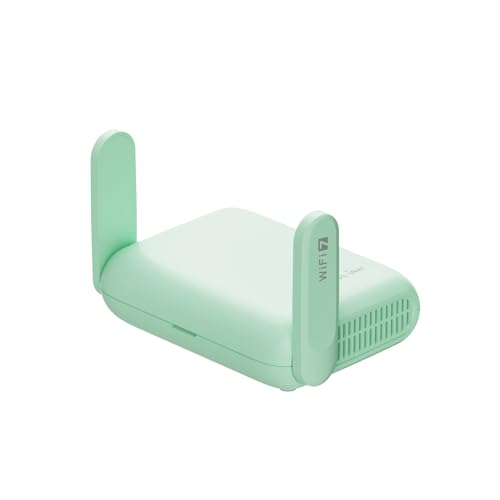
GL.iNet Beryl 7 Wi-Fi 7 Travel Router
Best for: secure Wi-Fi 7 travel and remote networking
- Wi-Fi Standard
- Wi-Fi 7 (what this guide is about)
- Frequency Bands
- Dual-Band
- Device Capacity
- Up to 120
- Max Port Speed
- 2.5 Gbps
- Ethernet Ports
- 2
- Use Case
- Travel
The GL.iNet Beryl 7 is a compact dual-band Wi-Fi 7 travel router built for secure networking away from home. You get wireless speeds reaching 2882 Mbps on the 5 GHz band and 688 Mbps on 2.4 GHz, paired with dual 2.5G Ethernet ports and a USB 3.0 port. Powered by OpenWrt firmware with native WireGuard and OpenVPN client-server capabilities, it suits you if you need encrypted, portable connectivity for hotels, cruises, or remote workspaces.
Pros
- Dual 2.5G Ethernet ports (one WAN and one LAN)
- Built-in OpenWrt 21.02 with WireGuard and OpenVPN support
- Hardware toggle switch for VPN or AdGuard Home control
- Compact pocket size weighing under 0.46 pounds
Cons
- Dual-band design lacks the 6 GHz Wi-Fi 7 band
- Limited to one local LAN Ethernet port
Good fit if
- You need a portable Wi-Fi 7 router for travel, hotels, or mobile work.
- You want built-in WireGuard or OpenVPN encryption on your network.
- You require 2.5 Gbps wired throughput on WAN and LAN.
Skip if
- You require tri-band coverage with dedicated 6 GHz channel access.
- You need multiple wired LAN connections for desktop equipment.
Verdict: GL.iNet Beryl 7 Dual-Band Travel Router delivers fast dual-band Wi-Fi 7 and dual 2.5G ports in a pocket-sized package. It is an exceptional pick when you need advanced OpenWrt VPN management on the go.

ASUS Tri-Band WiFi 7 Router with Dual 10G
Best for: multi-gigabit wired networks and 6 GHz wireless
- Wi-Fi Standard
- Wi-Fi 7 (what this guide is about)
- Speed Rating
- BE19000
- Frequency Bands
- Tri-Band
- Max Port Speed
- 10 Gbps
- Dimensions
- 13.8 × 13.8 × 8 inches
- Weight
- 4.12 pounds
This tri-band Wi-Fi 7 router delivers up to 19 Gbps aggregate throughput, 320 MHz channels on the 6 GHz band, and dual 10 Gbps WAN/LAN ports. It features Multi-Link Operation for concurrent band aggregation, subscription-free Trend Micro network security, and AiMesh compatibility. You get high-capacity wired and wireless throughput designed for multi-gigabit internet plans, high-bandwidth local transfers, and setups requiring dedicated 6 GHz connectivity without recurring software subscriptions.
Pros
- Two 10 Gbps WAN/LAN Ethernet ports
- Tri-band Wi-Fi 7 throughput up to 19 Gbps
- 6 GHz band with 320 MHz channel width and 4096-QAM
- AiMesh extendable router support and Multi-Link Operation
- Subscription-free AiProtection Pro commercial-grade security
Cons
- Substantial footprint measuring 13.8 by 13.8 inches
- Heavy physical build at 4.12 pounds
Good fit if
- You need dual 10 Gbps wired connections for fast LAN storage and multi-gigabit WAN.
- You intend to use 320 MHz channels across the 6 GHz Wi-Fi 7 spectrum.
- You want network security and mesh expansion features without paying recurring fees.
Skip if
- You lack adequate shelf or desk space for a 13.8-inch square router chassis.
- You require a quad-band configuration with multiple separate 5 GHz bands.
Verdict: ASUS Tri-Band Wi-Fi 7 Router with Dual 10G Ports pairs 19 Gbps tri-band wireless capacity with twin 10 Gbps interfaces for extreme data transfer speeds. It provides high-grade Wi-Fi 7 functionality and AiMesh integration for demanding multi-gigabit environments.

GL.iNet Flint 3 Tri-Band Wi-Fi 7 Router
Best for: users needing fast VPN and 2.5G networking
- Wi-Fi Standard
- Wi-Fi 7 (what this guide is about)
- Speed Rating
- BE9300
- Frequency Bands
- Tri-Band
- Coverage Area
- up to 2,000 square feet
- Device Capacity
- over a hundred devices
- Max Port Speed
- 2.5G
The GL.iNet Flint 3 is a tri-band Wi-Fi 7 router delivering speeds up to 9 Gbps across up to 2,000 square feet. It features five 2.5G Ethernet ports, 1GB of DDR4 memory, and 8GB of eMMC storage. Built-in support handles WireGuard and OpenVPN at up to 680 Mbps, alongside AdGuard Home filtering. This router fits you if you need multi-gigabit wired networking combined with dedicated hardware for VPN encryption and network-level ad blocking.
Pros
- Five 2.5G Ethernet ports for multi-gigabit wired connections
- WireGuard and OpenVPN speeds up to 680 Mbps
- Built-in AdGuard Home DNS ad and tracker filtering
- 1GB DDR4 RAM and 8GB eMMC flash for add-on plugins
Cons
- Coverage limited to 2,000 square feet for a single unit
- Requires manual firmware update during initial setup for proper performance
Good fit if
- You need multiple 2.5G ports for high-speed wired devices.
- You run WireGuard or OpenVPN directly on your home gateway.
- You want built-in network-wide DNS filtering via AdGuard Home.
Skip if
- You need coverage exceeding 2,000 square feet without adding extra hardware.
- You require 10G Ethernet ports for faster local transfers.
Verdict: GL.iNet Flint 3 Tri-Band Wi-Fi 7 Router provides fast tri-band Wi-Fi 7 performance and five 2.5G ports backed by dedicated processing for VPN encryption. It gives you deep local network control without sacrificing wired multi-gigabit connectivity.
Specifications side by side
| Spec | TP-Link Deco Tri-Band WiFi 7 Mesh Router | Amazon eero Pro 7 Tri-Band Wi-Fi 7 Router | TP-Link Archer Dual-Band Wi-Fi 7 Router | TP-Link Archer Dual-Band WiFi 7 Router | TP-Link Deco Dual-Band Wi-Fi 7 Mesh Router | Amazon eero 7 Dual-Band Wi-Fi 7 Router | TP-Link Quad-Band WiFi 7 Router with Dual 10G | TP-Link Archer Tri-Band Wi-Fi 7 Router | ASUS Dual-Band WiFi 7 Dual-WAN Router | GL.iNet Slate 7 Wi-Fi 7 Travel Router | NETGEAR Nighthawk Tri-Band WiFi 7 Router | NETGEAR Nighthawk Tri-Band WiFi 7 Router | GL.iNet Beryl 7 Wi-Fi 7 Travel Router | ASUS Tri-Band WiFi 7 Router with Dual 10G | GL.iNet Flint 3 Tri-Band Wi-Fi 7 Router |
|---|---|---|---|---|---|---|---|---|---|---|---|---|---|---|---|
| Wi-Fi Standard | Wi-Fi 7 | Wi-Fi 7 | Wi-Fi 7 | Wi-Fi 7 | WiFi 7 | Wi-Fi 7 | Wi-Fi 7 | Wi-Fi 7 | Wi-Fi 7 | Wi-Fi 7 | WiFi 7 | Wi-Fi 7 | Wi-Fi 7 | WiFi 7 | Wi-Fi 7 |
| Speed Rating | BE10000 | not specified | BE3600 | BE6500 | BE3600 | not specified | BE24000 | BE12000 | not specified | BE3600 | not specified | not specified | not specified | BE19000 | BE9300 |
| Frequency Bands | Tri-Band | Tri-Band | Dual-Band | Dual-Band | Dual-Band | Dual-Band | Quad-Band | Tri-Band | Dual-Band | Dual Band | Tri-Band | Tri-Band | Dual-Band | Tri-Band | Tri-Band |
| Coverage Area | up to 3,000 sq.ft. | 2,000 sq. ft. | Up to 2,000 sq. ft. | Up to 2,400 sq. ft. | 2,500 sq. ft | up to 2,000 sq. ft. | not specified | Up to 3,000 sq ft | not specified | not specified | Up to 3,500 sq ft | 2,500 sq ft | not specified | not specified | up to 2,000 square feet |
| Device Capacity | over 200 devices | 200+ devices | Up to 60 devices | Up to 90 devices | 150 devices | 120+ devices | not specified | Up to 128 | not specified | not specified | 200 devices | 100 devices | Up to 120 | not specified | over a hundred devices |
| Max Port Speed | 10 Gbps | 5 Gbps | 2.5 Gbps | 2.5 Gbps | 2.5 Gbps | 2.5 Gbps | 10 Gbps | 10 Gbps | not specified | 2.5 Gbps | 10 Gbps | 2.5 Gbps | 2.5 Gbps | 10 Gbps | 2.5G |
| Ethernet Ports | not specified | not specified | 5 | 5 | 2 | 2 | not specified | 5 | not specified | 2 | not specified | not specified | 2 | not specified | 5 |
| Frequency Band | Tri-Band | Tri-Band | Dual-Band | Dual-Band | Dual-Band | Dual-Band | Quad-Band | Tri-Band | not specified | not specified | not specified | not specified | Dual-Band | Tri-Band | Tri-Band |
| Pack Size | 1-Pack | 1-Pack | not specified | not specified | not specified | 1-Pack | not specified | not specified | not specified | not specified | not specified | not specified | not specified | not specified | not specified |
| Use Case | not specified | not specified | not specified | not specified | not specified | not specified | not specified | not specified | not specified | Travel | not specified | not specified | Travel | not specified | not specified |
| Features | not specified | not specified | not specified | not specified | not specified | not specified | not specified | not specified | VPN, Dual WAN | not specified | not specified | not specified | not specified | not specified | VPN |
| Port Speed | not specified | not specified | not specified | not specified | not specified | 2.5G | 10G | not specified | 2.5G | 2.5G | not specified | not specified | not specified | 10G | 2.5G |
| Intended Use | Home | not specified | not specified | not specified | not specified | not specified | not specified | not specified | not specified | not specified | not specified | not specified | not specified | not specified | not specified |
| Dimensions | 4.23 × 4.23 × 6.93 inches | 5.79 × 3.11 × 7.09 inches | 13.5 × 10.7 × 1.6 inches | 4.72 × 1.57 × 7.09 inches | not specified | 5.12 × 2.52 × 5.12 inches | 11.9 × 10.3 × 3.8 inches | 10.6 × 1.87 × 6.02 inches | 7.6 × 2.3 × 9.37 inches | 3.5 × 1.3 × 5.1 inches | not specified | 10.8 × 7.17 × 7.13 inches | 3.31 × 1.3 × 4.69 inches | 13.8 × 13.8 × 8 inches | 6.18 × 2.91 × 9.45 inches |
| Weight | 1.66 pounds | 1.68 pounds | 1.21 pounds | 1.37 pounds | not specified | 1.34 pounds | not specified | 1.76 pounds | 1.01 pounds | 10.6 ounces | not specified | 3.95 pounds | 7.23 ounces | 4.12 pounds | 1.87 pounds |
| Size | 1 Pack | not specified | Compact | 10.6 x 6 x 1.9 inches | 1 - Pack | not specified | 11.9 x 10.3 x 3.8 inches | WiFi 7, Tri-Band BE12000 | Dual-Band | 3.5 x 1.3 x 5.1 inches (Mini) | 19.0 Gbps | 9.3 Gbps | not specified | Tri-Band | Compact |
| Color | White | WHITE | Black | Black | White | WHITE | Red | Black | BLACK | Dark Gray | Black | black | Mint Green | BLACK | Black |
| Model | Deco BE63(1-Pack) | ME10001 | Archer BE230 | Archer BE400 | Deco BE23(1-Pack) | PA10001 | Archer BE900 | Archer BE670 | RT-BE58U | GL-BE3600 | RS700S-100NAS | BE9300-1AZPAS | GL-MT3600BE | RT-BE96U | GL-BE9300 |
How to Choose a Wi-Fi 7 Router
-
Check Wired Port Speeds
Inspect the Ethernet port ratings on the router specifications. Wi-Fi 7 routers offer wired interfaces ranging from 2.5 Gbps up to 10 Gbps. If your internet service plan exceeds 1 Gbps, standard gigabit ports will bottleneck your incoming bandwidth. You also need multi-gigabit ports if you transfer large files across local network storage. For example, the Amazon eero Pro 7 Tri-Band Wi-Fi 7 Router includes dual 5 GbE ports to handle internet plans up to 5 Gbps. Match port speeds directly to your modem and switches.
-
Match Rated Coverage Area
Examine the square footage rating listed in the router hardware specifications. Standalone units cover spaces from 2,000 square feet up to 3,500 square feet. Choosing a coverage rating that aligns with your property size prevents dead zones in outer rooms. Compact homes require less broadcast range, while expansive multi-level layouts demand higher coverage numbers. The NETGEAR Nighthawk Tri-Band WiFi 7 Router covers up to 3,500 square feet from a single unit. Compare your floor plan against the router rating before deciding whether you need supplementary nodes.
-
Review Maximum Device Limits
Check the stated device capacity to ensure the hardware can support all active endpoints on your network. Smart bulbs, security cameras, laptops, and streaming boxes all reserve connection slots. Smaller households with basic smart-home gear can operate comfortably on lower limits. Heavy smart-home environments require routers engineered to handle elevated concurrent traffic. For instance, the Amazon eero 7 Dual-Band Wi-Fi 7 Router officially connects up to 120 devices across its network. Count your household devices and pick a model with sufficient capacity headroom to prevent connection drops.
-
Evaluate Router Size Weight
Examine physical dimensions and weight if your deployment requires travel mobility or shelf placement. Full-sized home routers often weigh three to four pounds and require substantial desk clearance. In contrast, dedicated portable routers feature miniature enclosures designed for travel bags and mobile setups. For example, the GL.iNet Slate 7 Wi-Fi 7 Travel Router measures 3.5 by 1.3 by 5.1 inches and weighs under 0.7 pounds. If you intend to take your router on trips, verify compact dimensions and light weight before selecting standard stationary equipment.
-
Assess Dual-WAN Failover Needs
Look for Dual-WAN specifications if your household or home office cannot tolerate internet downtime. Dual-WAN capabilities allow you to configure a secondary broadband connection or mobile tethering line that takes over when the main internet feed drops. Standard routers omit this feature, relying solely on a single incoming internet port. The ASUS Dual-Band WiFi 7 Dual-WAN Router provides integrated Dual-WAN failover alongside VPN features. If you work remotely or manage critical network tasks, verify dual-WAN support on the spec sheet to maintain continuous connectivity during provider outages.
-
Plan for Mesh Expansion
Check whether the router uses an expandable mesh architecture or operates exclusively as a standalone unit. Mesh-compatible routers allow you to link additional satellite nodes under a single network name as your space expands. Traditional standalone routers provide centralized coverage but lack seamless node pairing. The TP-Link Deco Dual-Band Wi-Fi 7 Mesh Router comes as a 1-pack unit that integrates into a larger Deco network if needed later. If your home has complex layouts or thick walls, selecting a mesh-ready platform ensures simple future expansion.
Frequently asked questions
How many devices can a Wi-Fi 7 router handle at once?
Device capacity varies by model and internal hardware. On our list of 15 routers, the Amazon eero 7 connects up to 120 devices, while the Amazon eero Pro 7 handles more than 200 connected devices. These ratings give you enough wireless capacity for smart home sensors, streaming hardware, and high-demand household devices running simultaneously.
What coverage area can you expect from a standalone Wi-Fi 7 router?
A single Wi-Fi 7 router typically covers between 2,000 and 3,500 square feet. For example, the Amazon eero Pro 7 covers up to 2,000 square feet, the TP-Link Deco BE23 covers 2,500 square feet, and the TP-Link Archer BE670 reaches up to 3,000 square feet. The NETGEAR RS700S provides the largest single-unit reach at 3,500 square feet.
Are portable Wi-Fi 7 routers available for travel?
Yes, compact Wi-Fi 7 routers exist specifically for travel and remote use. The GL.iNet Beryl 7 weighs just 0.45 pounds, while the GL.iNet Slate 7 measures 3.5 by 1.3 by 5.1 inches. Both models include dual 2.5G ports and integrated OpenWrt VPN encryption tools so you can maintain fast, secure networking outside your home.
How does a Dual-WAN Wi-Fi 7 router prevent internet outages?
A Dual-WAN router prevents outages by routing traffic to a backup connection if your primary line drops. The ASUS RT-BE58U includes Dual-WAN failover options alongside mobile tethering failover and a 2.5G port. This setup keeps your devices online during service interruptions by switching automatically to a secondary wired line or mobile data source.
Can a standalone Wi-Fi 7 router connect to a mesh network?
Yes, several standalone Wi-Fi 7 routers support mesh protocols for future expansion. The ASUS RT-BE96U integrates with AiMesh networks, and the TP-Link Archer BE900 supports EasyMesh setups. Additionally, standalone units like the TP-Link Deco BE63 and Deco BE23 can link directly with other Deco units if you decide to expand your network later.
Which Wi-Fi 7 routers provide dedicated hardware for VPN encryption?
Certain models provide dedicated internal processing specifically to maintain throughput while encrypting traffic. The GL.iNet Flint 3 features dedicated VPN processing alongside five 2.5G ports and tri-band Wi-Fi 7 capability. Routers like the ASUS RT-BE58U and GL.iNet Slate 7 also list built-in VPN features to secure your connections without requiring third-party host devices.