11 Best Wifi Routers Under $200, Compared
As an Amazon Associate we earn from qualifying purchases. Links on this page are affiliate links.
Finding the right wifi router under 200 depends on your home layout, connection speed, and hardware requirements. The Amazon eero 6+ 2-Pack Mesh System takes the top spot by providing gigabit coverage across 3,000 square feet for 75+ devices with built-in smart hub integration.
This guide compares 11 models strictly using the specifications published on their listings. It helps you decide whether a multi-node mesh system, a standalone Wi-Fi 7 unit with 2.5G ports, or a compact travel router fits your setup.
Quick picks
The best fit for you
- You need multi-room mesh coverage for smart home devices Amazon eero 6+ 2-Pack Mesh System It covers 3,000 square feet across two units with integrated Zigbee and Thread smart home radios.
- You have a large home needing multi-gig wired backhaul TP-Link Deco AX3000 Mesh System 3-Pack The three-pack covers up to 6,500 square feet and provides dual 2.5 Gbps ports per node.
- You travel frequently and require portable OpenWrt VPN encryption GL.iNet Beryl AX Wi-Fi 6 Travel Router 2-Pack It pairs portable Wi-Fi 6 hardware with OpenWrt VPN routing and a 2.5G WAN port.
- You want standalone Wi-Fi 7 with dual multi-gig ports NETGEAR Nighthawk WiFi 7 Router It delivers Wi-Fi 7 connectivity, coverage up to 2,500 square feet, and dual 2.5 Gig ports.
Our 11 picks
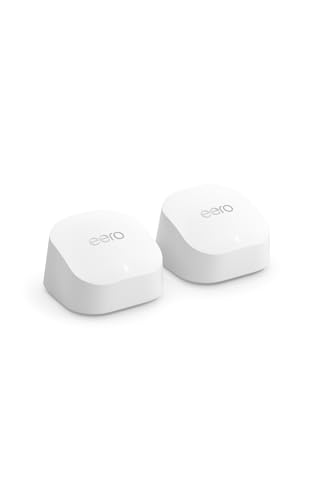
Amazon eero 6+ 2-Pack Mesh System
Best for: gigabit homes needing smart hub integration
- Wi-Fi Standard
- Wi-Fi 6
- Coverage Area
- up to 3,000 sq. ft.
- Device Capacity
- 75+ devices
- Pack Size
- 2-Pack
- Port Speed
- Gigabit
- Dimensions
- 3.94 × 3.82 × 2.6 inches
The Amazon eero 6+ 2-Pack Mesh System provides dual-band Wi-Fi 6 coverage for homes up to 3,000 square feet. It supports network throughput up to gigabit speeds, includes 160 MHz channel bandwidth, and connects more than 75 devices simultaneously. The built-in Zigbee and Thread smart home hub connects directly to compatible Alexa gear. It fits your home if you need reliable whole-home coverage and built-in smart device control across two compact nodes.
Pros
- Covers up to 3,000 square feet across two units
- Supports 160 MHz channels for gigabit Wi-Fi 6 speeds
- Built-in smart home hub supporting Thread and Zigbee
- Handles 75+ connected devices simultaneously
Cons
- Advanced security features require a separate paid subscription
- Ethernet ports top out at gigabit speed with no multi-gigabit support
Good fit if
- You need whole-home mesh coverage for spaces up to 3,000 square feet.
- You manage compatible Thread or Zigbee smart home devices through Alexa.
- You have an internet plan up to gigabit speed and connect up to 75 devices.
Skip if
- You require multi-gigabit wired Ethernet ports for faster local transfers.
- You want advanced network security controls without paying for a separate subscription.
Verdict: Amazon eero 6+ 2-Pack Mesh System delivers gigabit-ready Wi-Fi 6 coverage across 3,000 square feet with integrated Zigbee and Thread smart home control. It serves as a dependable multi-room solution for households with dozens of connected devices.

GL.iNet Beryl AX Wi-Fi 6 Travel Router 2-Pack
Best for: secure travel networking and portable VPN routing
- Wi-Fi Standard
- Wi-Fi 6
- Frequency Bands
- Dual-Band
- Max Port Speed
- 2.5 Gbps
- Ethernet Ports
- 2
- Use Case
- Travel
- Features
- VPN, OpenWrt
View on Amazon: GL.iNet Beryl AX Wi-Fi 6 Travel Router 2-Pack
This two-pack of portable Wi-Fi 6 travel routers gives you dual-band wireless speeds reaching 2402 Mbps on 5 GHz and 574 Mbps on 2.4 GHz. Each unit includes a 2.5G WAN port, a 1G LAN port, and a USB 3.0 port. Powered by OpenWrt firmware with native WireGuard and OpenVPN client and server capabilities, this setup suits users needing portable, encrypted networking with fast wired throughput on the go.
Pros
- 2.5G multi-gigabit WAN port alongside a 1G LAN port
- Hardware VPN client and server support for WireGuard and OpenVPN
- Dual-band Wi-Fi 6 speeds up to 2402 Mbps on 5 GHz
- OpenWrt 21.02 firmware supporting modular package installs
- Includes USB 3.0 port and configurable physical toggle switch
Cons
- Only one wired 1G LAN port per router
- VPN throughput caps at 300 Mbps for WireGuard and 150 Mbps for OpenVPN
- Physical toggle button requires configuration in the admin panel before functioning
Good fit if
- You want portable Wi-Fi 6 hardware with built-in VPN client and server functions.
- You need a 2.5G WAN port to connect to multi-gigabit modems or hotel connections.
- You use OpenWrt packages to customize your network security and settings.
Skip if
- You need multiple wired LAN ports for connecting local Ethernet devices.
- You need encrypted VPN transfer rates exceeding 300 Mbps.
Verdict: GL.iNet Beryl AX Wi-Fi 6 Travel Router 2-Pack pairs portable dual-band Wi-Fi 6 and 2.5G WAN ports with versatile OpenWrt VPN routing. It provides extensive encryption features and flexible configuration options in a compact dual-unit bundle.

GL.iNet Flint 2 Dual 2.5G Wi-Fi 6 Router
Best for: network privacy and high-speed VPN connections
- Wi-Fi Standard
- Wi-Fi 6
- Device Capacity
- over a hundred devices
- Max Port Speed
- 2.5G
- Use Case
- Gaming
- Dimensions
- 5.39 × 2.09 × 9.17 inches
- Weight
- 1.68 pounds
The GL.iNet Flint 2 Dual 2.5G Wi-Fi 6 Router is a home router built for high-throughput connections and advanced network management. It provides Wi-Fi 6 speeds up to 6 Gbps across eight streams, dual 2.5G Ethernet ports, and built-in WireGuard and OpenVPN support. This unit suits you if you run network-wide VPN services, configure AdGuard Home, or manage over a hundred connected devices.
Pros
- Dual 2.5G Ethernet ports for multi-gigabit wired networking
- Wi-Fi 6 speeds up to 6 Gbps across 8 data streams
- Hardware VPN speeds up to 900 Mbps on WireGuard and 880 Mbps on OpenVPN
- 1 GB DDR4 RAM and 8 GB eMMC storage supporting over 100 devices and DIY plugins
- Built-in AdGuard Home support for network-level ad and tracker filtering
Cons
- Uses Wi-Fi 6 rather than the newer Wi-Fi 7 wireless standard
- Requires an immediate firmware update during initial setup for optimal performance
- Web admin setup requires connecting to a computer via Ethernet cable
Good fit if
- You need fast hardware-accelerated WireGuard or OpenVPN performance.
- You want dual 2.5G ports for multi-gigabit WAN or LAN routing.
- You plan to block network-level tracking and ads using AdGuard Home.
Skip if
- You want the newer Wi-Fi 7 standard for your wireless devices.
- You prefer an automatic app-based setup without manual web admin configuration.
Verdict: GL.iNet Flint 2 Dual 2.5G Wi-Fi 6 Router delivers high-speed VPN throughput, dual 2.5G wired connectivity, and extensive software customizability. It gives you capable eight-stream Wi-Fi 6 performance designed to manage heavy device loads and local network services.

NETGEAR Nighthawk Dual-Band WiFi 7 Router
Best for: medium homes needing multi-gigabit internet input
- Wi-Fi Standard
- WiFi 7
- Frequency Bands
- Dual-Band
- Coverage Area
- Up to 2,250 sq ft
- Device Capacity
- Up to 80 devices
- Max Port Speed
- 2.5 Gbps
- Dimensions
- 10.9 × 8.27 × 7.05 inches
The NETGEAR Nighthawk dual-band router brings Wi-Fi 7 connectivity to your home network with speeds up to 5 Gbps. It covers areas up to 2,250 square feet and handles up to 80 connected devices using OFDMA and MU-MIMO. Wired connections include a 2.5 Gbps WAN port and three 1 Gbps LAN ports. This setup fits you if you want multi-gigabit internet input with standard gigabit wired outputs for everyday home devices.
Pros
- Wi-Fi 7 speeds up to 5 Gbps across 2.4 GHz and 5 GHz bands
- One 2.5 Gbps WAN port for multi-gigabit internet connections
- Coverage reaches up to 2,250 square feet for up to 80 devices
- Three 1 Gbps Ethernet LAN ports for wired hardware
Cons
- Dual-band design lacks a dedicated 6 GHz frequency band
- Ethernet LAN ports are limited to 1 Gbps
- NETGEAR Armor protection requires a paid subscription after 30 days
Good fit if
- You subscribe to an internet service plan faster than 1 Gbps.
- You need coverage for up to 80 devices across 2,250 square feet.
- You prefer configuring and managing network settings through an app.
Skip if
- You require multi-gigabit wired transfer speeds across your LAN ports.
- You want a tri-band Wi-Fi 7 router with 6 GHz spectrum access.
- You live in a large multi-story home better served by a mesh system.
Verdict: NETGEAR Nighthawk Dual-Band WiFi 7 Router delivers solid Wi-Fi 7 throughput and a 2.5 Gbps WAN port for medium-sized homes. It balances multi-gigabit incoming service with standard gigabit wired outputs.

NETGEAR Nighthawk WiFi 7 Router
Best for: standalone 2,500 sq. ft. multi-gig setups
- Wi-Fi Standard
- WiFi 7
- Frequency Bands
- Dual-Band
- Coverage Area
- Up to 2,500 sq ft
- Device Capacity
- Up to 80 devices
- Max Port Speed
- 2.5 Gbps
- Dimensions
- 10.9 × 7.13 × 7.05 inches
This standalone dual-band Wi-Fi 7 router delivers aggregate throughput up to 5.5 Gbps across 2.4 GHz and 5 GHz frequencies. It provides coverage for up to 2,500 square feet and supports up to 80 connected devices. For wired networking, you get a 2.5 Gig WAN port, a 2.5 Gig LAN port, and three 1 Gig LAN ports. It suits you if you need multi-gig wired ports and Wi-Fi 7 speeds in a mid-sized home.
Pros
- Wi-Fi 7 speeds reaching up to 5.5 Gbps
- Dual 2.5 Gig Ethernet ports for WAN and LAN
- Coverage spans up to 2,500 square feet for 80 devices
- Three additional 1 Gig LAN ports for wired devices
Cons
- Dual-band operation without a 6 GHz frequency band
- NETGEAR Armor security features require a paid subscription after 30 days
Good fit if
- You need multi-gigabit wired connectivity with a 2.5 Gig WAN and a 2.5 Gig LAN port.
- You have a home up to 2,500 square feet with up to 80 connected devices.
- You want Wi-Fi 7 speeds over standard 2.4 GHz and 5 GHz wireless bands.
Skip if
- You require the 6 GHz spectrum band for your Wi-Fi 7 client devices.
- You need whole-home mesh coverage for a multi-story or larger space.
Verdict: NETGEAR Nighthawk WiFi 7 Router provides fast dual-band connectivity and dual 2.5 Gig ports for spaces up to 2,500 square feet. It handles up to 80 devices easily, though it lacks 6 GHz band support.
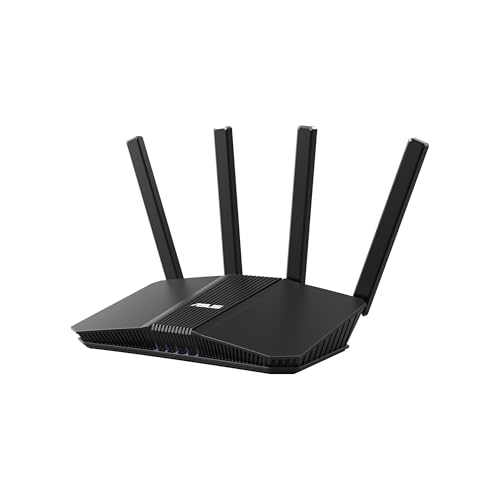
ASUS Dual-Band WiFi 7 Router
Best for: homes needing 2.5G ports and mesh expandability
- Wi-Fi Standard
- WiFi 7
- Frequency Bands
- Dual-Band
- Coverage Area
- up to 2300 ft2
- Max Port Speed
- 2.5G
- Features
- VPN
- Dimensions
- 7.6 × 2.32 × 9.37 inches
This ASUS dual-band WiFi 7 router provides wireless speeds up to 5000 Mbps alongside a 2.5G port for high-speed wired connections. Equipped with four external antennas and one internal antenna, it covers spaces up to 2300 square feet. It includes built-in VPN features and AiMesh capability for network expansion. You can set up three dedicated SSIDs for smart home gear. It suits you if you want modern WiFi 7 networking in a standalone router.
Pros
- WiFi 7 speeds up to 5000 Mbps with MLO and 4K-QAM
- Equipped with a 2.5G port for multi-gigabit wired connections
- AiMesh support covering up to 2300 sq ft with extendable nodes
- Smart Home Master Network supports up to three separate SSIDs
Cons
- Dual-band design lacks a dedicated 6 GHz frequency band
- Single-unit coverage is limited to 2300 sq ft without extra nodes
Good fit if
- You need a 2.5G wired connection for fast local data or internet feeds.
- You plan to expand coverage across a home up to 2300 sq ft using compatible AiMesh hardware.
- You want up to three dedicated SSIDs for IoT devices and parental controls.
Skip if
- You require tri-band operation with dedicated 6 GHz network access.
- You have a home larger than 2300 sq ft and do not want to add secondary mesh nodes.
Verdict: ASUS Dual-Band WiFi 7 Router delivers 2.5G connectivity and speeds up to 5000 Mbps for homes under 2300 square feet. It provides AiMesh expansion and multi-SSID management for structured home networking.

TP-Link Deco AX3000 Mesh System 3-Pack
Best for: large homes needing multi-gig wired backhaul
- Wi-Fi Standard
- Wi-Fi 6
- Speed Rating
- AX3000
- Coverage Area
- 6,500 square feet
- Device Capacity
- more than 150 devices
- Max Port Speed
- 2.5 Gbps
- Pack Size
- 3-Pack
This three-pack mesh system provides Wi-Fi 6 coverage across spaces up to 6,500 square feet. Each unit includes two 2.5 Gbps Ethernet ports to handle multi-gigabit internet plans or high-speed wired backhaul. The dual-band setup delivers physical data rates up to 2,402 Mbps on 5 GHz and 574 Mbps on 2.4 GHz, supporting networks with over 150 connected devices.
Pros
- Two 2.5 Gbps Ethernet ports on every unit
- Covers spaces up to 6,500 square feet
- Connects more than 150 devices
- Speeds up to 2,402 Mbps on 5 GHz and 574 Mbps on 2.4 GHz
Cons
- Dual-band design lacks a dedicated third wireless backhaul band
- Only two Ethernet ports per node
- Uses Wi-Fi 6 rather than the newer Wi-Fi 7 standard
Good fit if
- You want multi-gigabit 2.5 Gbps wired connections on every mesh node.
- You need to distribute wireless coverage across spaces up to 6,500 square feet.
- You connect dozens of smart devices across a dual-band network.
Skip if
- You require tri-band operation with access to the 6 GHz band.
- You need more than two wired LAN ports at each node location.
- You want Wi-Fi 7 speeds and capabilities.
Verdict: TP-Link Deco AX3000 Mesh System 3-Pack delivers wide-area Wi-Fi 6 coverage paired with dual 2.5 Gbps ports on every station. It gives you capable multi-gigabit wired backhaul options across layouts up to 6,500 square feet.

Amazon eero 6+ 2-Pack Mesh System
Best for: gigabit homes needing smart home integration
- Wi-Fi Standard
- Wi-Fi 6
- Coverage Area
- 3,000 sq. ft.
- Device Capacity
- 75+ devices
- Pack Size
- 2-Pack
- Port Speed
- Gigabit
This certified refurbished two-pack mesh system extends Wi-Fi 6 coverage across homes up to 3,000 square feet. It supports internet connections up to one gigabit and uses 160 MHz radio channels for higher local bandwidth. With capacity for more than 75 devices and integrated Zigbee and Thread smart home hubs, it suits you if you want reliable whole-home coverage and streamlined smart device management from a single dual-node network.
Pros
- Covers up to 3,000 square feet across two units
- Supports 160 MHz radio channels for gigabit Wi-Fi 6 connections
- Built-in Zigbee and Thread smart home hub
- Handles network traffic for 75+ connected devices
Cons
- Units are certified refurbished rather than brand-new
- Advanced security tools require a separate paid subscription
- Wired ports max out at standard gigabit speeds
Good fit if
- You need up to 3,000 square feet of mesh Wi-Fi 6 coverage for 75+ devices.
- You have a gigabit internet plan and client devices supporting 160 MHz channels.
- You manage Zigbee or Thread smart home gear alongside Alexa.
Skip if
- You want multi-gigabit wired Ethernet ports faster than 1 Gbps.
- You prefer factory-new equipment over certified refurbished hardware.
- You need advanced network security features without an additional subscription.
Verdict: Amazon eero 6+ 2-Pack Mesh System provides dependable gigabit Wi-Fi 6 coverage across 3,000 square feet with built-in smart home controls. It delivers steady dual-node performance for households wanting straightforward app management and integrated IoT hardware.

GL.iNet Flint 3e Wi-Fi 7 Router
Best for: high-speed VPN networking and home ad blocking
- Wi-Fi Standard
- Wi-Fi 7
- Speed Rating
- BE6500
- Coverage Area
- Up to 2,500 sq ft
- Use Case
- Gaming
- Features
- VPN
- Intended Use
- Home
The GL.iNet Flint 3e Wi-Fi 7 Router is a standalone home router designed for high throughput and integrated network services. It delivers Wi-Fi 7 speeds up to 6.5 Gbps, covers spaces up to 2,500 square feet, and packs 1GB of DDR4 memory. Built-in OpenVPN and WireGuard support reaches up to 1,100 Mbps. If you need local ad blocking through AdGuard Home and advanced VPN controls without running third-party servers, this router matches your setup.
Pros
- WireGuard and OpenVPN speeds reach up to 1,100 Mbps
- Wi-Fi 7 data rates up to 6.5 Gbps with MLO and 4K-QAM
- Built-in AdGuard Home ad blocking and Bark parental control support
- 1GB DDR4 memory supporting over 100 connected devices
Cons
- Vertical chassis measures over 11 inches tall
- Initial setup requires an Ethernet connection to the web admin panel
Good fit if
- You want fast hardware-level VPN handling up to 1,100 Mbps for OpenVPN or WireGuard.
- You plan to run network-level ad filtering directly on your router using AdGuard Home.
- You need Wi-Fi 7 coverage for up to 2,500 square feet with support for over 100 devices.
Skip if
- You want a compact, low-profile router that tucks into shallow shelving.
- You prefer an app-only setup without using an Ethernet connection to access an admin panel.
Verdict: GL.iNet Flint 3e Wi-Fi 7 Router delivers fast Wi-Fi 7 speeds and robust 1,100 Mbps VPN processing in a standalone unit. It is a capable choice if you manage heavy traffic, want built-in AdGuard filtering, and need coverage for up to 2,500 square feet.

TP-Link Omada Multi-WAN Wired Router
Best for: wired multi-WAN setups needing 2.5G ports
- Max Port Speed
- 2.5 Gbps
- Features
- VPN
- Weight
- 1.23 pounds
The TP-Link Omada Multi-WAN Wired Router gives you a wired networking base built for fast throughput. It provides five 2.5G ports with multi-WAN load balancing and auto-failover across up to four connections. A quad-core processor handles routing and VPN tasks, while the integrated 2.51-inch touchscreen monitors traffic and system health directly. This unit suits you if you run a multi-gigabit wired setup and manage standalone access points.
Pros
- Five 2.5G ports supporting up to four WAN connections
- Built-in 2.51-inch touchscreen for real-time traffic and alerts
- Quad-core processor with hardware VPN support
- License-free cloud management with integrated controller
Cons
- No integrated Wi-Fi radios
- Requires separate access points for wireless devices
Good fit if
- You need multi-WAN failover or load balancing across multiple 2.5G lines.
- You want on-device troubleshooting via an integrated touchscreen.
- You deploy dedicated access points managed through the Omada ecosystem.
Skip if
- You need an all-in-one wireless unit with built-in Wi-Fi broadcasting.
- You do not require multi-WAN balancing or 2.5G Ethernet ports.
Verdict: TP-Link Omada Multi-WAN Wired Router delivers high-speed 2.5G multi-WAN throughput and rapid touchscreen diagnostics for dedicated wired setups. It serves as a specialized network controller when paired with standalone wireless access points.

GL.iNet Mudi 4G LTE Travel Router
Best for: secure mobile travel and cellular hotspot connectivity
- Use Case
- Travel
- Features
- SIM Card Slot
- Dimensions
- 5.7 × 3.1 × 0.9 inches
- Weight
- 10.1 ounces
The GL.iNet Mudi 4G LTE Travel Router gives you portable connectivity using a built-in SIM card slot and a 7000mAh rechargeable battery that lasts up to 8 hours. It delivers dual-band Wi-Fi speeds reaching 300 Mbps on 2.4 GHz and 433 Mbps on 5 GHz. With native WireGuard and OpenVPN protocols plus MicroSD storage expansion up to 1 TB, it suits you if you need secure mobile internet on trips.
Pros
- Built-in SIM card slot with Cat6 4G LTE support
- Internal 7000mAh battery offering up to 8 hours of runtime
- Hardware support for WireGuard up to 50 Mbps and OpenVPN up to 10 Mbps
- MicroSD card expansion slot supporting up to 1 TB
Cons
- Wi-Fi speeds cap at 433 Mbps on 5 GHz and 300 Mbps on 2.4 GHz
- WireGuard throughput tops out at 50 Mbps
- Cellular connectivity restricted in select countries due to modem limits
Good fit if
- You need a battery-powered hotspot with a dedicated SIM card slot.
- You want built-in WireGuard or OpenVPN client support for secure remote connections.
- You need local file sharing via a MicroSD card slot up to 1 TB.
Skip if
- You need high-bandwidth Wi-Fi 6 or Wi-Fi 7 home networking speeds.
- You require VPN throughput exceeding 50 Mbps.
Verdict: GL.iNet Mudi 4G LTE Travel Router delivers dedicated cellular connectivity, integrated VPN encryption, and portable battery operation in a pocket-sized package. It offers reliable, on-the-go routing when you travel outside the reach of fixed broadband.
Specifications side by side
| Spec | Amazon eero 6+ 2-Pack Mesh System | GL.iNet Beryl AX Wi-Fi 6 Travel Router 2-Pack | GL.iNet Flint 2 Dual 2.5G Wi-Fi 6 Router | NETGEAR Nighthawk Dual-Band WiFi 7 Router | NETGEAR Nighthawk WiFi 7 Router | ASUS Dual-Band WiFi 7 Router | TP-Link Deco AX3000 Mesh System 3-Pack | Amazon eero 6+ 2-Pack Mesh System | GL.iNet Flint 3e Wi-Fi 7 Router | TP-Link Omada Multi-WAN Wired Router | GL.iNet Mudi 4G LTE Travel Router |
|---|---|---|---|---|---|---|---|---|---|---|---|
| Wi-Fi Standard | Wi-Fi 6 | Wi-Fi 6 | Wi-Fi 6 | WiFi 7 | WiFi 7 | WiFi 7 | Wi-Fi 6 | Wi-Fi 6 | Wi-Fi 7 | not specified | not specified |
| Speed Rating | not specified | not specified | not specified | not specified | not specified | not specified | AX3000 | not specified | BE6500 | not specified | not specified |
| Frequency Bands | not specified | Dual-Band | not specified | Dual-Band | Dual-Band | Dual-Band | not specified | not specified | not specified | not specified | not specified |
| Coverage Area | up to 3,000 sq. ft. | not specified | not specified | Up to 2,250 sq ft | Up to 2,500 sq ft | up to 2300 ft2 | 6,500 square feet | 3,000 sq. ft. | Up to 2,500 sq ft | not specified | not specified |
| Device Capacity | 75+ devices | not specified | over a hundred devices | Up to 80 devices | Up to 80 devices | not specified | more than 150 devices | 75+ devices | not specified | not specified | not specified |
| Max Port Speed | not specified | 2.5 Gbps | 2.5G | 2.5 Gbps | 2.5 Gbps | 2.5G | 2.5 Gbps | not specified | not specified | 2.5 Gbps | not specified |
| Ethernet Ports | not specified | 2 | not specified | not specified | not specified | not specified | not specified | not specified | not specified | not specified | not specified |
| Frequency Band | not specified | not specified | not specified | not specified | not specified | Dual-Band | not specified | not specified | not specified | not specified | not specified |
| Pack Size | 2-Pack | not specified | not specified | not specified | not specified | not specified | 3-Pack | 2-Pack | not specified | not specified | not specified |
| Use Case | not specified | Travel | Gaming | not specified | not specified | not specified | not specified | not specified | Gaming | not specified | Travel |
| Features | not specified | VPN, OpenWrt | not specified | not specified | not specified | VPN | not specified | not specified | VPN | VPN | SIM Card Slot |
| Port Speed | Gigabit | 2.5G | 2.5G | not specified | not specified | 2.5G | 2.5G | Gigabit | not specified | 2.5G | not specified |
| Intended Use | not specified | not specified | not specified | not specified | not specified | not specified | Home | not specified | Home | not specified | not specified |
| Dimensions | 3.94 × 3.82 × 2.6 inches | 4.53 × 3.15 × 1.18 inches | 5.39 × 2.09 × 9.17 inches | 10.9 × 8.27 × 7.05 inches | 10.9 × 7.13 × 7.05 inches | 7.6 × 2.32 × 9.37 inches | 4.33 × 4.33 × 4.48 inches | not specified | 9.84 × 3.07 × 11 inches | not specified | 5.7 × 3.1 × 0.9 inches |
| Weight | 11 ounces | 13.8 ounces | 1.68 pounds | not specified | 3.33 pounds | 1.12 pounds | 2.91 pounds | not specified | 1.87 pounds | 1.23 pounds | 10.1 ounces |
| Size | 2 routers | 4.7 x 3.2 x 1.3 Inch (Pack of 2) | not specified | 5.0 Gbps | 5.5 Gbps | Dual-Band | 3 Pack | not specified | not specified | not specified | 5.7 in * 3.1 in * 0.9 in |
| Color | WHITE | Blue | Black | Blue | Black | BLACK | White/Black | not specified | black | silver | Black |
| Model | R010001 | GL-MT3000 | GL-MT6000 | RS150-100NAS | RS180-100NAS | RT-BE59 | Deco X55 Pro(3-Pack) | not specified | GL-BE6500 | Fusion 2.5G | GL-E750V2-EM060K |
If you need airflow to cool equipment, the guide to each fan under 200 lists noise ratings, blade dimensions, and cubic feet per minute.
How to Choose the Right Wifi Router
-
Assess Wi-Fi Standard Generations
Look closely at the wireless standard before you purchase hardware. Wi-Fi 6 handles standard gigabit connections across typical household devices. Wi-Fi 7 introduces broader channel widths and reduced latency for compatible phones and laptops. If you own or plan to add modern Wi-Fi 7 clients, choosing a platform like the NETGEAR Nighthawk Dual-Band WiFi 7 Router ensures your network protocol matches client capabilities. Sticking to Wi-Fi 6 remains practical if your connected inventory consists primarily of standard smart home accessories and older laptops.
-
Check Ethernet Port Speeds
Check the physical Ethernet port specifications on the back of the chassis. Standard gigabit ports cap wired throughput at 1,000 Mbps. If your internet service exceeds 1 Gbps or you transfer large files to network storage, look for 2.5G ports instead. A model like the GL.iNet Flint 2 provides dual 2.5G interfaces to prevent bottlenecks between incoming broadband lines and high-priority wired equipment. Confirm whether multi-gigabit speeds apply to both WAN and LAN ports or WAN alone.
-
Verify VPN and Software Features
Review the operating system and security software specs if you require network-wide encryption. Standard consumer software usually limits client configurations or restricts encryption protocols. If you intend to run OpenWrt, custom firewall rules, or WireGuard servers, verify processing capacity directly. The GL.iNet Flint 3e offers dedicated 1,100 Mbps VPN processing alongside built-in AdGuard tools. Choosing a router with dedicated cryptographic throughput ensures encrypted traffic does not degrade local household connection speeds during heavy concurrent usage.
-
Account for Travel Connectivity
Consider your power and connectivity requirements if you travel frequently. Traditional home routers require continuous alternating current wall power and broadband cables. Portable units feature compact dimensions, lightweight enclosures, and alternative power inputs. The GL.iNet Mudi 4G LTE Travel Router includes a built-in SIM card slot and battery operation for mobile deployments away from home wiring. If your networking needs remain stationary within a single building, standard desktop routers provide superior antenna spacing and wider overall coverage.
-
Choose Standalone Wired Versus Wireless
Decide whether you require integrated wireless radios or a dedicated routing brain. Dedicated wired routers omit internal antennas and focus solely on traffic management, gateway tasks, and multi-WAN balancing. A device like the TP-Link Omada Multi-WAN Wired Router provides high-speed 2.5G wired routing and diagnostic displays, but requires external wireless access points to connect phones and laptops. Choose an integrated wireless router if you want single-box simplicity, or choose a dedicated wired router for modular component networks.
-
Match Specified Device Capacity
Evaluate the number of active clients your household runs simultaneously. Smart bulbs, security cameras, streaming sticks, and phones all draw network resources. Check the manufacturer capacity rating to avoid dropped connections and packet delay. For example, the standalone NETGEAR Nighthawk WiFi 7 Router specifies capacity for up to 80 devices across 2,500 square feet. If your network hosts dozens of smart home peripherals, verify that the router hardware architecture and processor can sustain your total device count reliably.
Frequently asked questions
Can you get a router with multi-gigabit Ethernet ports in this category?
Yes, several models include 2.5G ports for high-speed connections. The GL.iNet Flint 2 features dual 2.5G wired connectivity, while the TP-Link Deco AX3000 mesh nodes supply dual 2.5 Gbps ports on every station. You also find multi-gig inputs on standalone units like the NETGEAR RS150-100NAS and ASUS RT-BE59, which provide 2.5G WAN or LAN networking for compatible modems and switches.
Do budget-friendly Wi-Fi 7 routers support the 6 GHz band?
Not all of them do. For instance, the NETGEAR Nighthawk RS180-100NAS delivers Wi-Fi 7 connectivity up to 5.5 Gbps across spaces up to 2,500 square feet, but its published specifications confirm it lacks 6 GHz band support. Similarly, models like the ASUS RT-BE59 operate strictly as dual-band Wi-Fi 7 devices. You should check frequency specs if your client hardware specifically requires 6 GHz access.
Which routers include built-in hardware VPN support?
Dedicated VPN capabilities appear across multiple standalone and portable units. The GL.iNet Flint 2 and GL.iNet Flint 3e support OpenWrt-based VPN routing, with the Flint 3e achieving up to 1,100 Mbps VPN processing. If you travel, the GL.iNet Beryl AX and GL.iNet Mudi provide integrated VPN encryption in compact designs. The ASUS RT-BE59 and TP-Link Omada wired router also list dedicated VPN support.
What is the difference between a dedicated wired router and a wireless router?
A wired router routes data strictly over Ethernet cables without transmitting wireless signals. The TP-Link Omada Fusion 2.5G operates entirely as a wired multi-WAN controller with built-in touchscreen diagnostics, requiring separate wireless access points to broadcast Wi-Fi. In contrast, standard wireless routers like the GL.iNet Flint 3e or mesh kits combine internal routing hardware and wireless radios inside a single physical chassis.
Can you use a compact travel router as a primary home unit?
You can use travel models at home, but their hardware focuses on portability and remote connectivity. The GL.iNet Beryl AX provides dual-band Wi-Fi 6 with a 2.5G port in a small form factor, while the GL.iNet Mudi relies on battery power and an integrated SIM card slot for cellular data. They work well for small spaces, but standalone units offer broader local coverage.
How many connected devices can these routers handle simultaneously?
Device capacity varies depending on the hardware architecture. The Amazon eero 6+ two-pack supports 75+ active devices while managing smart home traffic across its mesh network. Standalone hardware like the NETGEAR Nighthawk RS180-100NAS is rated to manage up to 80 connected devices across 2,500 square feet. Checking the manufacturer device rating ensures your network handles phones, computers, and smart appliances without drops.
What router options work without a fixed broadband connection?
Dedicated cellular routers feature integrated mobile hardware for broadband-free connectivity. The GL.iNet Mudi GL-E750V2-EM060K includes a built-in SIM card slot alongside battery operation and OpenWrt VPN encryption. This design allows you to access 4G LTE cellular data directly, making it suitable for locations lacking fixed broadband or as an emergency mobile hotspot when standard fixed-line internet service goes offline.