Best Wifi Routers Under $150: 10 Spec-Based Picks
As an Amazon Associate we earn from qualifying purchases. Links on this page are affiliate links.
Finding the right wifi router under 150 requires balancing wireless standards, wired port speeds, and coverage. We compared 10 models using the specifications published on the listings to evaluate hardware performance. The TP-Link AX5400 Wi-Fi 6 Router leads the list because its AX5400 speed rating and 160 MHz channels deliver strong throughput.
This guide helps you decide whether you need a standalone Wi-Fi 7 model, multi-gigabit wired ports, or expandable mesh coverage for your space.
Quick picks
The best fit for you
- You need balanced Wi-Fi 6 speed and local storage TP-Link AX5400 Wi-Fi 6 Router The Archer AX73 provides an AX5400 speed rating, 160 MHz channel support, and local USB sharing.
- You want a portable router for frequent travel GL.iNet Beryl 7 Wi-Fi 7 Travel Router It weighs 7.23 ounces and delivers dual-band Wi-Fi 7 with dual 2.5G ports.
- You need wide multi-room coverage for large spaces Google Nest Wifi 3-Pack with Smart Speaker Points This three-pack system covers up to 5,400 square feet using integrated smart speaker points.
- You want tri-band Wi-Fi 7 with multi-gigabit ports NETGEAR Nighthawk Tri-Band WiFi 7 Router It features tri-band Wi-Fi 7, dedicated 2.5 Gbps Ethernet ports, and 2,500 square feet of coverage.
Our 10 picks

TP-Link AX5400 Wi-Fi 6 Router
Best for: balanced Wi-Fi 6 performance and local storage
- Wi-Fi Standard
- WiFi 6
- Speed Rating
- AX5400
- Coverage Area
- 2,000 sq. ft.
- Dimensions
- 10.7 × 5.8 × 1.94 inches
The TP-Link AX5400 Wi-Fi 6 Router delivers aggregate speeds up to 5,400 Mbps, featuring 4.8 Gbps on the 5 GHz band via 160 MHz channels and 4T4R architecture. Equipped with six external antennas, beamforming, and a USB 3.0 port for network storage, it covers up to 2,000 square feet. This standalone unit suits you if you need reliable high-bandwidth streaming and file sharing across multiple devices without moving to tri-band hardware.
Pros
- Up to 5,400 Mbps total bandwidth with 4.8 Gbps on the 5 GHz band
- Six external antennas with beamforming cover up to 2,000 square feet
- One USB 3.0 port enables media sharing and local cloud storage
- Supports HE160 wide channels and 4T4R for high-throughput connections
Cons
- Lacks 6 GHz band support found on Wi-Fi 6E or Wi-Fi 7 models
- Coverage limited to 2,000 square feet without additional network hardware
- Advanced HomeShield features require a separate subscription beyond the free tier
Good fit if
- You want up to 4.8 Gbps transfers on the 5 GHz band using 160 MHz channels.
- You need a USB 3.0 port to attach storage for network file sharing.
- You live in a home up to 2,000 square feet requiring directional beamforming.
Skip if
- You need tri-band operation or the 6 GHz spectrum for newer devices.
- You require multi-node coverage out of the box for homes larger than 2,000 square feet.
Verdict: TP-Link AX5400 Wi-Fi 6 Router combines high-speed 160 MHz channels, six antennas, and local USB sharing into a dependable standalone unit. It delivers balanced coverage and throughput for medium-sized households.
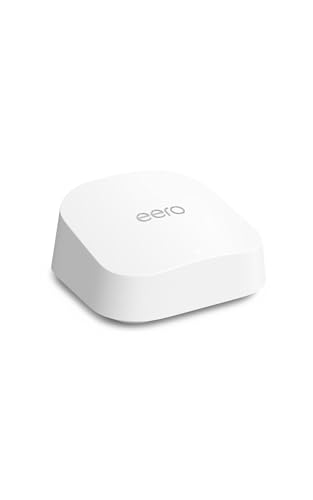
Amazon eero 7 Dual-Band Wi-Fi 7 Router
Best for: Multi-gigabit internet users wanting Wi-Fi 7 mesh
- Wi-Fi Standard
- Wi-Fi 7
- Frequency Bands
- Dual-Band
- Coverage Area
- up to 2,000 sq. ft.
- Device Capacity
- 120+ devices
- Max Port Speed
- 2.5 Gbps
- Ethernet Ports
- 2
The Amazon eero 7 is a dual-band Wi-Fi 7 standalone mesh router. It provides wireless coverage up to 2,000 square feet, supports over 120 devices, and delivers wireless speeds up to 1.8 Gbps. Two auto-sensing 2.5 GbE ports accommodate wired internet plans up to 2.5 Gbps. This router suits you if you want modern Wi-Fi 7 standards and multi-gigabit wired connectivity in a compact, expandable single-unit setup for your home network.
Pros
- Two auto-sensing 2.5 GbE Ethernet ports
- Wi-Fi 7 support including Multi-Link Operation (MLO)
- Supports over 120 connected devices
- Backward compatible with previous-generation eero hardware
Cons
- Dual-band design lacks a dedicated 6 GHz frequency band
- Limited to two total wired Ethernet ports
Good fit if
- You have an internet plan up to 2.5 Gbps and need matching wired ports.
- You want a single Wi-Fi 7 unit covering up to 2,000 square feet.
- You already own compatible eero hardware and want to expand your mesh network.
Skip if
- You require a tri-band router with 6 GHz band access.
- You need more than two wired Ethernet connections without adding a separate switch.
Verdict: Amazon eero 7 Dual-Band Wi-Fi 7 Router brings Wi-Fi 7 features and dual 2.5 GbE ports to spaces needing up to 2,000 square feet of coverage. It delivers multi-gigabit wired throughput and mesh expandability in an efficient footprint.

Amazon eero Pro 6E Mesh Router
Best for: Gigabit-plus internet tiers and Wi-Fi 6E hardware
- Wi-Fi Standard
- Wi-Fi 6E
- Coverage Area
- up to 2,000 sq. ft.
- Device Capacity
- 100+ devices
- Max Port Speed
- 2.5 Gbps
- Pack Size
- 1-Pack
- Dimensions
- 5.47 × 5.47 × 2.21 inches
The Amazon eero Pro 6E Mesh Router is a standalone tri-band mesh unit built for multi-gigabit connections. You get access to the 6 GHz Wi-Fi 6E band, a 2.5 Gbps Ethernet port, and coverage reaching up to 2,000 square feet for over 100 connected devices. It suits you if you want lower network latency on compatible hardware and plan to build or expand an existing mesh network.
Pros
- Dedicated access to the 6 GHz Wi-Fi 6E frequency band
- Single 2.5 Gbps Ethernet port enables gigabit-plus internet plans
- Supports up to 2,000 square feet and 100+ connected devices
- Backward-compatible with previous-generation eero mesh units
Cons
- Single-unit pack does not include satellite mesh extenders
- Wireless transfer rates max out at 1.6 Gbps
- Setup and ongoing network management require the eero mobile app
Good fit if
- You own Wi-Fi 6E devices that can utilize the 6 GHz band.
- You have an internet plan up to 2.5 Gbps requiring a multi-gigabit port.
- You plan to expand coverage alongside existing eero hardware.
Skip if
- You need immediate multi-point coverage for spaces larger than 2,000 square feet.
- You prefer configuring your router without relying on a smartphone app.
Verdict: Amazon eero Pro 6E Mesh Router delivers compact 6 GHz performance and a 2.5 Gbps port for fast wired inputs. It is an effective entry point if you want a expandable mesh foundation with low-latency support.

ASUS Dual-Band WiFi 7 Dual-WAN Router
Best for: uninterrupted internet with dual-WAN mobile backup
- Wi-Fi Standard
- Wi-Fi 7
- Frequency Bands
- Dual-Band
- Features
- VPN, Dual WAN
- Port Speed
- 2.5G
- Dimensions
- 7.6 × 2.3 × 9.37 inches
- Weight
- 1.01 pounds
This ASUS dual-band Wi-Fi 7 router delivers aggregate speeds up to 3600 Mbps and features a 2.5G port for multi-gigabit wired connections. It includes versatile Dual-WAN capabilities with automatic detection and USB 4G or 5G mobile tethering backup. You also get Multi-Link Operation and VPN support. It suits you if you need reliable backup internet and fast wireless throughput for smart home devices.
Pros
- Dual-WAN support with USB 4G and 5G mobile tethering
- 2.5G wired port speed
- Wi-Fi 7 with Multi-Link Operation up to 3600 Mbps
- Smart Home Master supporting up to three separate SSIDs
Cons
- Dual-band design without a 6 GHz wireless band
- Maximum wireless speed capped at 3.6 Gbps
Good fit if
- You need backup internet connectivity through mobile tethering
- You want Wi-Fi 7 performance paired with a 2.5G wired port
- You manage separate networks for smart home and IoT gear
Skip if
- You need a tri-band router with 6 GHz frequency access
- You require wireless speeds exceeding 3.6 Gbps
Verdict: ASUS Dual-Band WiFi 7 Dual-WAN Router provides multi-gigabit wired performance and dependable uptime via mobile tethering. It is a practical fit if you need reliable dual-WAN failover alongside modern Wi-Fi 7 features.

NETGEAR Nighthawk WiFi 7 Router
Best for: multi-gigabit internet in medium-sized homes
- Wi-Fi Standard
- WiFi 7
- Frequency Bands
- Dual-Band
- Coverage Area
- Up to 2,000 sq ft
- Device Capacity
- Up to 50 devices
- Max Port Speed
- 2.5 Gbps
- Ethernet Ports
- 5
This NETGEAR Nighthawk router brings Wi-Fi 7 networking to your home with speeds reaching 3.6 Gbps across its dual-band setup. It features a dedicated 2.5 Gig WAN port for multi-gigabit internet connections, along with four 1 Gig LAN ports for wired gear. It suits you if you need reliable coverage for up to 2,000 square feet and up to 50 connected devices without moving to a full mesh system.
Pros
- Wi-Fi 7 speeds up to 3.6 Gbps across 2.4 GHz and 5 GHz bands
- 2.5 Gig WAN port supports multi-gigabit internet connections
- Four 1 Gig Ethernet LAN ports for wired devices
- Covers up to 2,000 square feet and connects up to 50 devices
Cons
- Dual-band design lacks a dedicated 6 GHz frequency band
- NETGEAR Armor security features require a paid subscription after 30 days
Good fit if
- You have an internet plan over 1 Gbps that can use the 2.5 Gig WAN port.
- You need to connect up to 50 devices across a space up to 2,000 square feet.
- You want four dedicated 1 Gig LAN ports for wired hardware.
Skip if
- You live in a multi-story home exceeding 2,000 square feet that needs mesh coverage.
- You want network security software without an ongoing paid subscription after 30 days.
Verdict: NETGEAR Nighthawk WiFi 7 Router provides modern Wi-Fi 7 performance and a 2.5 Gig WAN port for fast standalone home setups. It is an effective single-unit router if you do not need 6 GHz tri-band capability or mesh expansion.
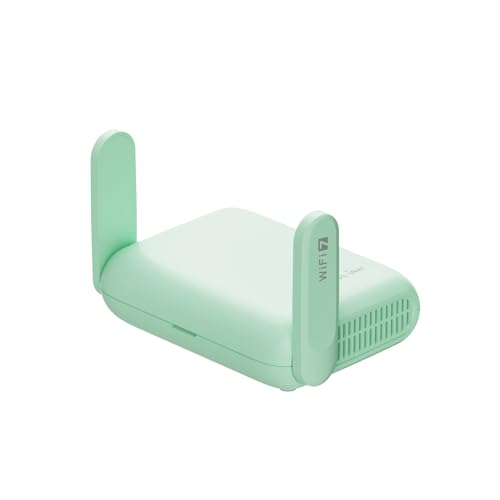
GL.iNet Beryl 7 Wi-Fi 7 Travel Router
Best for: travelers wanting high-speed VPN and 2.5G ports
- Wi-Fi Standard
- Wi-Fi 7
- Frequency Bands
- Dual-Band
- Device Capacity
- Up to 120
- Max Port Speed
- 2.5 Gbps
- Ethernet Ports
- 2
- Use Case
- Travel
The GL.iNet Beryl 7 Wi-Fi 7 Travel Router is a compact dual-band router designed for portable setups. It delivers up to 2882 Mbps on the 5 GHz band and 688 Mbps on 2.4 GHz, backed by two 2.5G Ethernet ports and a USB 3.0 port. With pre-installed OpenWrt firmware and built-in WireGuard speeds reaching 1100 Mbps, it suits you if you need hardware VPN encryption, open-source customization, and multi-gigabit wired connectivity on the go.
Pros
- Dual 2.5G Ethernet ports for WAN and LAN
- WireGuard VPN speeds up to 1100 Mbps and OpenVPN up to 1000 Mbps
- Pre-installed OpenWrt 21.02 firmware with 512MB storage
- Includes US, UK, EU, and AU plug adapters
Cons
- Offers only two total Ethernet ports
- Operates as dual-band without the 6 GHz Wi-Fi band
- Physical toggle switch requires manual setup in admin panel before functioning
Good fit if
- You need a travel router with dual 2.5G Ethernet ports.
- You want built-in WireGuard or OpenVPN client and server capabilities.
- You require OpenWrt firmware for custom package installations.
Skip if
- You need more than two wired Ethernet ports for home devices.
- You want tri-band Wi-Fi 7 with dedicated 6 GHz connectivity.
Verdict: GL.iNet Beryl 7 Wi-Fi 7 Travel Router packs dual 2.5G ports and fast VPN hardware into a pocket-sized form factor. It gives you advanced OpenWrt networking without the bulk of a standard desktop router.

Google Nest Wifi 3-Pack with Smart Speaker Points
Best for: whole-home coverage with built-in voice assistance
- Coverage Area
- Up to 5400 sq ft
- Device Capacity
- Up to 100 connected devices
- Ethernet Ports
- 2 per router
- Pack Size
- 3-Pack
- Dimensions
- 4.33 × 4.33 × 3.56 inches
- Weight
- 2.38 pounds
View on Amazon: Google Nest Wifi 3-Pack with Smart Speaker Points
This Google Nest Wifi package includes one base router and two satellite points designed to blanket spaces up to 5,400 square feet. Each unit supports up to 100 connected devices and handles multiple 4K video streams. The satellite points double as voice-controlled smart speakers with Google Assistant built in. You get two Ethernet ports on the router for wired connections, making it a fit if you want broad coverage and voice control.
Pros
- Up to 5,400 square feet of coverage across three units
- Supports up to 100 connected devices per unit
- Satellite points double as Google Assistant smart speakers
- Compatible with existing Google Wifi hardware
Cons
- Only two Ethernet ports total, located on the router
- Satellite points include no wired Ethernet ports
Good fit if
- You need wireless coverage across a layout up to 5,400 square feet.
- You want built-in Google Assistant smart speakers in secondary rooms.
- You want to integrate with an existing Google Wifi network setup.
Skip if
- You need wired Ethernet jacks on satellite points for client devices.
- You need more than two Ethernet ports on the base router.
Verdict: Google Nest Wifi 3-Pack with Smart Speaker Points delivers wide 5,400-square-foot coverage and voice assistant integration across three rooms. It works best for large homes that rely primarily on wireless connections rather than multi-port Ethernet setups.

TP-Link Multi-WAN Wired Gigabit VPN Router
Best for: multi-WAN wired routing with VPN tunnels
- Device Capacity
- Up to 700
- Max Port Speed
- 1 Gigabit
- Features
- VPN
- Dimensions
- 8.9 × 5.17 × 1.38 inches
- Weight
- 2.01 pounds
This is a dedicated wired router designed for high-capacity routing and multi-provider load balancing. You get one Gigabit SFP WAN port, one dedicated Gigabit WAN port, and two flexible WAN/LAN ports, supporting up to four WAN connections. It handles up to 700 concurrent clients and provides extensive VPN tunnels via IPsec, OpenVPN, L2TP, and PPTP. It suits you if you deploy standalone access points for wireless coverage.
Pros
- Up to four Gigabit WAN ports, including one dedicated SFP slot
- High capacity handling up to 700 concurrent clients
- Hardware VPN support for IPsec, OpenVPN, L2TP, and PPTP
- Centralized management via Omada SDN controller or standalone mode
Cons
- No integrated Wi-Fi radios
- Requires separate access points for wireless device connectivity
Good fit if
- You need multi-WAN load balancing across multiple internet connections.
- You run secure site-to-site or client VPN tunnels.
- You use separate wireless access points to cover your space.
Skip if
- You want an all-in-one router with integrated Wi-Fi antennas.
- You need local wired port speeds exceeding 1 Gbps.
Verdict: TP-Link Multi-WAN Wired Gigabit VPN Router provides reliable multi-WAN failover and robust site-to-site VPN performance. It serves as a pure wired gateway and requires external access points for wireless connections.
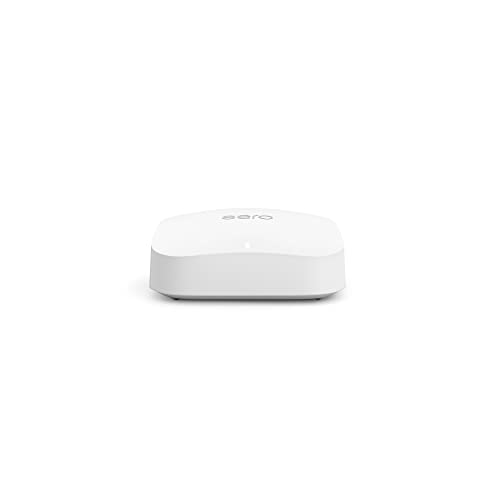
Amazon eero Pro 6E Mesh Router
Best for: gigabit-plus internet plans with Wi-Fi 6E devices
- Wi-Fi Standard
- Wi-Fi 6E
- Coverage Area
- 2,000 sq ft
- Device Capacity
- 100+ devices
- Max Port Speed
- 2.5 Gbps
- Pack Size
- 1-Pack
- Dimensions
- 5.47 × 5.47 × 2.21 inches
This certified refurbished mesh router brings Wi-Fi 6E connectivity to your home network. It features a 2.5 Gbps Ethernet port, access to the 6 GHz band, and covers up to 2,000 square feet for more than 100 connected devices. With supported network speeds up to 2.3 Gbps, it suits you if you need low-latency wireless performance and multi-gigabit wired speeds without buying a multi-node pack upfront.
Pros
- Wi-Fi 6E support with access to the 6 GHz band
- One 2.5 Gbps Ethernet port for internet plans over 1 Gbps
- Coverage up to 2,000 square feet for 100+ devices
- Backward-compatible with earlier eero mesh hardware
Cons
- Unit is certified refurbished rather than brand new
- Advanced security and network features require a separate subscription
- Network setup and management require the eero mobile app
Good fit if
- You have an internet plan exceeding 1 Gbps that uses a 2.5 Gbps port.
- You own Wi-Fi 6E client devices capable of using the 6 GHz band.
- You want to expand an existing eero network with faster backhaul.
Skip if
- You prefer a factory-new device in standard retail packaging.
- You require advanced network security features without an ongoing subscription.
- You need more than one multi-gigabit Ethernet port for wired gear.
Verdict: Amazon eero Pro 6E Mesh Router delivers tri-band Wi-Fi 6E coverage and 2.5 Gbps wired throughput in a compact refurbished unit. It provides a direct path to 6 GHz networking for homes with compatible hardware.

NETGEAR Nighthawk Tri-Band WiFi 7 Router
Best for: Multi-gigabit internet and high-speed wired devices
- Wi-Fi Standard
- WiFi 7
- Frequency Bands
- Tri-Band
- Coverage Area
- 2,500 sq. ft.
- Max Port Speed
- 2.5 Gbps
- Ethernet Ports
- 5
- Dimensions
- 10.8 × 7.2 × 7 inches
This is a standalone tri-band Wi-Fi 7 router designed to cover up to 2,500 square feet. It delivers total wireless speeds up to 9.3 Gbps across its bands. For wired devices, you get one 2.5 Gbps internet port, two 2.5 Gbps LAN ports, and two 1 Gbps LAN ports. This setup fits your home if you want multi-gigabit wired connectivity and high-throughput Wi-Fi 7 wireless performance for dense device environments.
Pros
- Tri-band Wi-Fi 7 with combined speeds up to 9.3 Gbps
- Three 2.5 Gbps Ethernet ports across WAN and LAN
- Up to 2,500 square feet of wireless coverage
- Automatic firmware updates and built-in security features
Cons
- Requires a separate modem for internet access
- Two of the four local LAN ports are limited to 1 Gbps
Good fit if
- You have an internet plan above 1 Gbps that uses a 2.5 Gbps port.
- You need coverage for spaces up to 2,500 square feet.
- You want multiple 2.5 Gbps LAN ports for high-speed wired connections.
Skip if
- You need an all-in-one cable modem and router combination device.
- You require more than two 2.5 Gbps local LAN connections.
Verdict: NETGEAR Nighthawk Tri-Band WiFi 7 Router provides modern tri-band Wi-Fi 7 throughput and dedicated 2.5 Gbps Ethernet ports for fast home networks. It covers up to 2,500 square feet without needing additional extenders.
Specifications side by side
| Spec | TP-Link AX5400 Wi-Fi 6 Router | Amazon eero 7 Dual-Band Wi-Fi 7 Router | Amazon eero Pro 6E Mesh Router | ASUS Dual-Band WiFi 7 Dual-WAN Router | NETGEAR Nighthawk WiFi 7 Router | GL.iNet Beryl 7 Wi-Fi 7 Travel Router | Google Nest Wifi 3-Pack with Smart Speaker Points | TP-Link Multi-WAN Wired Gigabit VPN Router | Amazon eero Pro 6E Mesh Router | NETGEAR Nighthawk Tri-Band WiFi 7 Router |
|---|---|---|---|---|---|---|---|---|---|---|
| Wi-Fi Standard | WiFi 6 | Wi-Fi 7 | Wi-Fi 6E | Wi-Fi 7 | WiFi 7 | Wi-Fi 7 | not specified | not specified | Wi-Fi 6E | WiFi 7 |
| Speed Rating | AX5400 | not specified | not specified | not specified | not specified | not specified | not specified | not specified | not specified | not specified |
| Frequency Bands | not specified | Dual-Band | not specified | Dual-Band | Dual-Band | Dual-Band | not specified | not specified | not specified | Tri-Band |
| Coverage Area | 2,000 sq. ft. | up to 2,000 sq. ft. | up to 2,000 sq. ft. | not specified | Up to 2,000 sq ft | not specified | Up to 5400 sq ft | not specified | 2,000 sq ft | 2,500 sq. ft. |
| Device Capacity | not specified | 120+ devices | 100+ devices | not specified | Up to 50 devices | Up to 120 | Up to 100 connected devices | Up to 700 | 100+ devices | not specified |
| Max Port Speed | not specified | 2.5 Gbps | 2.5 Gbps | not specified | 2.5 Gbps | 2.5 Gbps | not specified | 1 Gigabit | 2.5 Gbps | 2.5 Gbps |
| Ethernet Ports | not specified | 2 | not specified | not specified | 5 | 2 | 2 per router | not specified | not specified | 5 |
| Frequency Band | not specified | Dual-Band | not specified | not specified | not specified | Dual-Band | not specified | not specified | not specified | Tri-Band |
| Pack Size | not specified | 1-Pack | 1-Pack | not specified | not specified | not specified | 3-Pack | not specified | 1-Pack | not specified |
| Use Case | not specified | not specified | not specified | not specified | not specified | Travel | not specified | not specified | not specified | not specified |
| Features | not specified | not specified | not specified | VPN, Dual WAN | not specified | not specified | not specified | VPN | not specified | not specified |
| Port Speed | not specified | 2.5G | 2.5G | 2.5G | not specified | not specified | not specified | Gigabit | 2.5G | not specified |
| Dimensions | 10.7 × 5.8 × 1.94 inches | 5.12 × 2.52 × 5.12 inches | 5.47 × 5.47 × 2.21 inches | 7.6 × 2.3 × 9.37 inches | 10.7 × 7 × 5.1 inches | 3.31 × 1.3 × 4.69 inches | 4.33 × 4.33 × 3.56 inches | 8.9 × 5.17 × 1.38 inches | 5.47 × 5.47 × 2.21 inches | 10.8 × 7.2 × 7 inches |
| Weight | not specified | 1.34 pounds | 1.41 pounds | 1.01 pounds | 1.83 pounds | 7.23 ounces | 2.38 pounds | 2.01 pounds | 1.41 pounds | not specified |
| Size | AX5400 | not specified | not specified | Dual-Band | 3.6 Gbps | not specified | Three Pack | 1 Gigabit | not specified | 9.8 x 5.9 x 4 in. |
| Color | Black | WHITE | WHITE | BLACK | Black | Mint Green | Snow | Black | WHITE | black or white |
| Model | Archer AX73 | PA10001 | B091G65HH6 | RT-BE58U | RS100-100APS | GL-MT3600BE | H2E, H2E, and H2D | ER7206 | S010001 | RS300 |
If you keep networking gear in an enclosed closet, specs for a fan under 150 detail airflow ratings suitable for cooling hardware.
How to Choose the Right Wifi Router
-
Assess Pack Size and Coverage
Check your home footprint against the stated coverage area before choosing a system. Standalone units generally cover between 2,000 and 2,500 square feet. If you have a larger property or multiple floors, a multi-unit bundle provides wider physical reach. For example, the Google Nest Wifi 3-Pack covers up to 5,400 square feet by distributing points across several rooms. Selecting a multi-pack eliminates dead zones in distant rooms, while a single router works well for smaller, open layouts.
-
Evaluate 6 GHz Band Availability
Look at the supported wireless standard to determine available spectrum. Standard Wi-Fi 6 models broadcast across 2.4 GHz and 5 GHz bands, while Wi-Fi 6E models add dedicated access to the 6 GHz band. The Amazon eero Pro 6E delivers this 6 GHz capability to reduce congestion from legacy devices. If your client devices, such as newer laptops or smartphones, lack 6 GHz support, you will not use this frequency. Verify your client hardware specifications before choosing a 6 GHz model.
-
Check Dual WAN for Redundancy
Consider your uptime requirements if you work from home or manage vital network traffic. Certain routers include dual-WAN capabilities, allowing you to connect two separate internet service inputs simultaneously. The ASUS Dual-Band WiFi 7 Dual-WAN Router features mobile backup support alongside its primary connection to maintain network access during service drops. If your household relies on a single cable or fiber line without a secondary connection, a standard single-WAN unit will meet your needs without extra configuration.
-
Verify Wireless Broadcasting Hardware
Review the physical architecture to confirm whether the device includes wireless broadcasting hardware. Standalone wireless routers include integrated antennas to transmit Wi-Fi directly to client hardware. In contrast, pure wired units serve strictly as network gateways. The TP-Link Multi-WAN Wired Gigabit VPN Router provides wired routing and VPN tunnels, but contains no wireless radios. If you select a pure wired gateway, you must attach separate wireless access points to connect phones, tablets, and smart home equipment wirelessly.
-
Select Tri-Band for Dense Traffic
Compare the number of frequency bands if you run many active devices at the same time. Dual-band routers provide two bands to distribute wireless connections, which serves standard home tasks. Tri-band models add a third operational frequency band to reduce contention during heavy data transfer. The NETGEAR Nighthawk Tri-Band WiFi 7 Router uses three operational bands to deliver bandwidth across 2,500 square feet. Homes with multiple streaming devices, consoles, and smart appliances benefit from tri-band distribution to prevent traffic slowdowns.
Frequently asked questions
Can you get Wi-Fi 7 capabilities on a standalone router?
Yes, standalone routers offer Wi-Fi 7 connectivity along with high-speed ports. The NETGEAR Nighthawk RS100-100APS provides Wi-Fi 7 speeds up to 3.6 Gbps and a 2.5 Gig WAN port for standalone setups covering 2,000 square feet. Similarly, the NETGEAR Nighthawk RS300 delivers tri-band Wi-Fi 7 performance across 2,500 square feet without requiring extra mesh nodes or range extenders.
What is the advantage of choosing a dual-WAN router?
A dual-WAN router protects you against internet service drops by supporting two separate inbound connections. The ASUS RT-BE58U features dual-WAN failover alongside mobile tethering backup and 2.5G ports, keeping your network connected if your primary provider fails. If you manage dedicated hardware, the TP-Link ER7206 provides multi-WAN gateway routing and site-to-site VPN tunnels across gigabit wired connections.
How much coverage does a multi-pack mesh system provide?
Multi-pack mesh bundles provide significantly broader physical coverage than single router nodes. For example, a single Amazon eero 7 unit covers up to 2,000 square feet. By comparison, the Google Nest Wifi three-pack covers up to 5,400 square feet across three distinct rooms using smart speaker points, making multi-pack hardware suitable when you need whole-home signal distribution over larger interior spaces.
Do all gigabit VPN routers transmit wireless signals?
No, some specialized VPN routers operate strictly as wired gateways without integrated antennas. The TP-Link ER7206 is a pure wired gigabit router engineered for VPN tunnels and multi-WAN balancing. Because it lacks native wireless radios, you must connect external wireless access points or switches to distribute Wi-Fi connectivity to your laptops, smartphones, and smart home peripherals.
Can a compact travel router support modern high-speed home connections?
Yes, compact travel hardware can handle fast networking using modern specifications. The GL.iNet Beryl 7 GL-MT3600BE weighs 7.23 ounces and measures 4.69 inches tall, yet includes Wi-Fi 7 dual-band support and dual 2.5G ports. It runs OpenWrt firmware with VPN capabilities, allowing you to use it for high-throughput wired routing or portable wireless deployment on your travels.
How many devices can a standalone Wi-Fi 6E mesh node handle?
A standalone Wi-Fi 6E mesh node can support dense network environments with heavy traffic demands. The Amazon eero Pro 6E router provides connectivity for more than 100 devices simultaneously while covering spaces up to 2,000 square feet. It includes a 2.5G Ethernet port and 6 GHz spectrum access to maintain low-latency wireless performance across active client hardware.