15 Best Wifi Routers for Gaming, Compared
As an Amazon Associate we earn from qualifying purchases. Links on this page are affiliate links.
Finding the best wifi routers for gaming requires matching your network setup to specific wireless standards and port speeds. We compared 15 models based strictly on the specifications published on their product listings.
The Smart Air Minions Tri-Band Wi-Fi 6E Router leads the list because it combines dedicated 6 GHz wireless bandwidth with an AXE5400 speed rating and a 2.5 GbE WAN port. This guide helps you decide whether dual-band Wi-Fi 6, tri-band Wi-Fi 6E, or multi-gigabit Wi-Fi 7 best matches your household gaming demands.
Quick picks
The best fit for you
- You want dedicated 6 GHz bandwidth for wireless PCVR Smart Air Minions Tri-Band Wi-Fi 6E Router It features tri-band Wi-Fi 6E connectivity with AXE5400 speeds and a 2.5 GbE port.
- You need quad-band Wi-Fi 7 and multi-gigabit connections ASUS ROG Quad-Band WiFi 7 Gaming Router It delivers quad-band Wi-Fi 7 wireless throughput paired with dual 10 Gbps ports.
- You need entry-level Wi-Fi 6 for Gigabit gaming setups ASUS Dual-Band WiFi 6 Router It includes dual-band Wi-Fi 6 connectivity and four dedicated Gigabit LAN ports.
- You want dual 2.5G wired ports and VPN encryption GL.iNet Flint 2 Dual 2.5G Wi-Fi 6 Router It features dual 2.5G ports along with fast VPN processing and 8-stream Wi-Fi 6.
Our 15 picks

Smart Air Minions Tri-Band Wi-Fi 6E Router
Best for: wireless PCVR and tri-band Wi-Fi 6E gaming
- Use Case
- Gaming (what this guide is about)
- Wi-Fi Standard
- Wi-Fi 6E
- Speed Rating
- AXE5400
- Frequency Bands
- Tri-Band
- Device Capacity
- 128 devices
- Max Port Speed
- 2.5 Gbps
This tri-band Wi-Fi 6E router provides combined theoretical speeds up to 5.4 Gbps across 2.4 GHz, 5 GHz, and 6 GHz bands. You get a dedicated 6 GHz frequency for wireless PCVR and gaming alongside a 2.5 GbE WAN port for multi-gig internet connections. It suits you if you want lower wireless congestion for gaming hardware and need support for up to 128 connected devices across your home network.
Pros
- Tri-band Wi-Fi 6E with access to the 6 GHz band
- One 2.5 GbE WAN port for multi-gig broadband uplinks
- Supports up to 128 connected devices using OFDMA and 160MHz channels
- Operates as a primary router, access point, repeater, or mesh node
Cons
- Only two total Ethernet ports provided on the device
- Single Gigabit LAN port limits direct wired hardware connections
Good fit if
- You use Wi-Fi 6E hardware for wireless PCVR or gaming on the clear 6 GHz band.
- You have multi-gigabit internet requiring a 2.5 GbE WAN connection.
- You want expandable coverage using compatible Davolink mesh hardware.
Skip if
- You require multiple wired Ethernet connections for game consoles and PCs.
- You prefer standard hardware styling over a novelty character design.
Verdict: Smart Air Minions Tri-Band Wi-Fi 6E Gaming Router delivers dedicated 6 GHz wireless bandwidth and a 2.5 GbE WAN port in a compact upright enclosure. It provides solid tri-band capacity for wireless gaming setups that rely on minimal wired connections.

ASUS TUF Gaming Dual-Band WiFi 7 Router
Best for: multi-gigabit wired and Wi-Fi 7 gaming
- Use Case
- Gaming (what this guide is about)
- Wi-Fi Standard
- Wi-Fi 7
- Speed Rating
- BE6500
- Frequency Bands
- Dual-Band
- Max Port Speed
- 2.5 Gbps
- Ethernet Ports
- 4
The ASUS TUF Gaming Dual-Band WiFi 7 Router delivers wireless throughput up to 6.5 Gbps alongside four 2.5 Gbps Ethernet ports for fast wired connections. You get Wi-Fi 7 features like Multi-Link Operation and 4096-QAM, plus a dedicated hardware Gaming Port and Open NAT setup. It suits you if you need multi-gigabit wired connections for your gaming setup and want the latest wireless protocol on a dual-band network.
Pros
- Four 2.5 Gbps Ethernet ports with one WAN and three LAN configurations
- Wi-Fi 7 speeds reaching up to 6500 Mbps with 4096-QAM
- Multi-Link Operation support for simultaneous band linking
- Dedicated Gaming Port with automated traffic prioritization
Cons
- Dual-band design rather than tri-band or quad-band
- Total wired connectivity limited to four Ethernet ports
Good fit if
- You want multiple 2.5 Gbps Ethernet ports for wired gaming hardware.
- You plan to use Wi-Fi 7 features like Multi-Link Operation.
- You want simplified three-step port forwarding via Open NAT.
Skip if
- You need a tri-band or quad-band setup with a dedicated 6 GHz band.
- You require more than four wired network ports out of the box.
Verdict: ASUS TUF Gaming Dual-Band WiFi 7 Router combines 6.5 Gbps wireless speeds with four 2.5 Gbps ports for multi-gigabit setups. It offers practical traffic prioritization and modern Wi-Fi 7 connectivity in a dual-band format.

GL.iNet Flint 2 Dual 2.5G Wi-Fi 6 Router
Best for: high-speed VPN gaming and custom DNS filtering
- Use Case
- Gaming (what this guide is about)
- Wi-Fi Standard
- Wi-Fi 6
- Device Capacity
- over a hundred devices
- Max Port Speed
- 2.5G
- Dimensions
- 5.39 × 2.09 × 9.17 inches
- Weight
- 1.68 pounds
The GL.iNet Flint 2 Dual 2.5G Router is an 8-stream Wi-Fi 6 router designed for home networking and gaming. It provides speeds up to 6 Gbps, dual 2.5G Ethernet ports, 1 GB DDR4 RAM, and 8 GB eMMC storage. Built-in network services support WireGuard speeds up to 900 Mbps and AdGuard Home ad blocking. This suits you if you manage high-bandwidth connections, prioritize network-level VPNs, and need wired connectivity exceeding gigabit thresholds.
Pros
- Dual 2.5G Ethernet ports for multi-gigabit connectivity
- WireGuard speeds up to 900 Mbps and OpenVPN up to 880 Mbps
- Native AdGuard Home DNS tracking and ad filtering
- 1 GB DDR4 RAM and 8 GB eMMC storage for custom plugins
Cons
- Limited to Wi-Fi 6 without access to 6 GHz wireless bands
- Requires a manual firmware update upon initial setup for optimal performance
- Initial configuration relies on an Ethernet connection to a web admin panel
Good fit if
- You need high-throughput WireGuard or OpenVPN client connections on your router.
- You want dual 2.5G wired interfaces for high-speed WAN and LAN networking.
- You plan to run AdGuard Home or local plugins directly on the hardware.
Skip if
- You want 6 GHz spectrum access found on Wi-Fi 6E or Wi-Fi 7 hardware.
- You prefer an entirely app-managed setup without accessing a web admin panel.
Verdict: GL.iNet Flint 2 Dual 2.5G Router provides robust 8-stream Wi-Fi 6 throughput, dual 2.5G ports, and fast VPN processing for demanding networks. It delivers powerful local DNS filtering and storage headroom if you do not require 6 GHz wireless frequencies.

ASUS Dual-Band WiFi 6 Router
Best for: entry-level Gigabit gaming and home networks
- Use Case
- Gaming, Streaming (what this guide is about)
- Wi-Fi Standard
- Wi-Fi 6
- Speed Rating
- AX1800
- Frequency Bands
- Dual-Band
- Max Port Speed
- 1 Gbps
- Ethernet Ports
- 5
This dual-band Wi-Fi 6 router provides AX1800 throughput and five Gigabit Ethernet ports for wired gaming setups. You get OFDMA and MU-MIMO support to manage simultaneous traffic across active household devices, along with four external antennas and 1024-QAM. It suits you if you play on standard Gigabit internet connections, need built-in VPN and network security features, and prefer a compact dual-band unit over higher-bandwidth alternatives.
Pros
- Four dedicated Gigabit LAN ports and one Gigabit WAN port
- Wi-Fi 6 standard with OFDMA, MU-MIMO, and 1024-QAM support
- AiProtection Classic security and Instant Guard VPN built in
- Four external antennas
Cons
- Dual-band operation without 6 GHz frequency band access
- Ethernet connections cap at 1 Gbps with no multi-gigabit ports
- AX1800 bandwidth ceiling offers lower wireless headroom than tri-band alternatives
Good fit if
- You connect gaming devices through standard 1 Gbps wired Ethernet ports.
- You want built-in network security and VPN features without extra subscriptions.
- You operate a home network on a standard dual-band Wi-Fi 6 connection.
Skip if
- You have an internet plan above 1 Gbps requiring multi-gigabit Ethernet.
- You need tri-band connectivity or the 6 GHz band for low-interference wireless gaming.
Verdict: ASUS Dual-Band WiFi 6 Router provides standard Gigabit connectivity and Wi-Fi 6 efficiency for basic gaming setups. It handles everyday console and PC traffic with four dedicated LAN ports and integrated network security.

ASUS ROG Quad-Band WiFi 7 Gaming Router
Best for: Multi-gigabit quad-band WiFi 7 gaming setups
- Use Case
- Gaming (what this guide is about)
- Wi-Fi Standard
- WiFi 7
- Frequency Bands
- Quad-Band
- Max Port Speed
- 10G
- Dimensions
- 13.7 × 8.6 × 13.7 inches
- Weight
- 4.4 pounds
This quad-band Wi-Fi 7 gaming router provides wireless bandwidth up to 30 Gbps across four frequency bands. You get dual 10G ports alongside four 2.5G ports for wired networking, plus 320MHz channel support. It suits you if you need Multi-link Operation to combine bands, high-throughput 10G LAN connectivity, and triple-level traffic prioritization for your gaming rigs.
Pros
- Dual 10G Ethernet ports and quad 2.5G Ethernet ports
- Quad-band Wi-Fi 7 with combined speeds up to 30 Gbps
- 320MHz channel support and 4096-QAM in the 6 GHz band
- Multi-link Operation links to multiple bands simultaneously
Cons
- Large physical footprint measuring 13.7 by 13.7 inches
- Heavier chassis at 4.4 pounds
Good fit if
- You require dual 10G and quad 2.5G wired connections for local gaming hardware.
- You want quad-band Wi-Fi 7 access with wide 320MHz channels and Multi-link Operation.
Skip if
- You have limited desk or shelf clearance for a 13.7-inch tall and wide unit.
- You only require basic dual-band or tri-band Wi-Fi without 10G wired capabilities.
Verdict: ASUS ROG Rapture Quad-Band WiFi 7 Gaming Router delivers unmatched wired and wireless specs with dual 10G ports and 30 Gbps quad-band capacity. It stands out as an elite network foundation for multi-gigabit gaming environments.

NETGEAR Nighthawk Dual-Band AX3000 WiFi 6 Router
Best for: 2,000 sq ft homes with gigabit connections
- Use Case
- Gaming (what this guide is about)
- Wi-Fi Standard
- WiFi 6
- Speed Rating
- AX3000
- Frequency Bands
- Dual-Band
- Coverage Area
- 2,000 sq. ft.
- Device Capacity
- 25 devices
View on Amazon: NETGEAR Nighthawk Dual-Band AX3000 WiFi 6 Router
The NETGEAR Nighthawk AX3000 is a dual-band WiFi 6 standalone router designed for moderate spaces. It provides up to 3 Gbps wireless throughput and covers up to 2,000 square feet for up to 25 devices. You get four 1 Gbps Ethernet ports for hardwiring consoles or gaming PCs directly. This unit suits you if you need gigabit-tier home networking without extra hardware.
Pros
- Coverage area reaches up to 2,000 sq ft
- AX3000 WiFi 6 speeds up to 3 Gbps
- Four 1 Gbps Ethernet ports for wired gaming gear
- Built-in VPN capability
Cons
- Device capacity capped at 25 devices
- No multi-gigabit Ethernet ports
- Dual-band design lacks a third band or 6 GHz support
Good fit if
- You need up to 2,000 sq ft of wireless coverage.
- You want four 1 Gbps ports to hardwire your gaming equipment.
- You operate 25 or fewer connected devices on your network.
Skip if
- You subscribe to an internet service plan exceeding 1 Gbps.
- You need a router with an integrated cable modem.
- You require tri-band connectivity for heavier device congestion.
Verdict: NETGEAR Nighthawk AX3000 Dual-Band WiFi 6 Router provides solid dual-band WiFi 6 throughput and four gigabit LAN ports for homes up to 2,000 square feet. It gives you dependable local connectivity for up to 25 devices without multi-gig complexity.

GL.iNet Flint 3e Wi-Fi 7 Router
Best for: high-speed VPN gaming on Wi-Fi 7 networks
- Use Case
- Gaming (what this guide is about)
- Wi-Fi Standard
- Wi-Fi 7
- Speed Rating
- BE6500
- Coverage Area
- Up to 2,500 sq ft
- Features
- VPN
- Intended Use
- Home
The GL.iNet Flint 3e is a Wi-Fi 7 gaming router engineered for low-latency networking across spaces up to 2,500 square feet. It delivers wireless speeds up to 6.5 Gbps using Multi-Link Operation and 4K-QAM. You also get built-in WireGuard and OpenVPN client support capable of 1,100 Mbps, backed by 1 GB of DDR4 memory. It suits you if you want modern Wi-Fi 7 speeds alongside dedicated hardware VPN handling.
Pros
- Wi-Fi 7 speeds reaching up to 6.5 Gbps with Multi-Link Operation
- Hardware WireGuard and OpenVPN speeds rated up to 1,100 Mbps
- Integrated AdGuard Home DNS blocking and Bark parental controls
- 1 GB DDR4 RAM handles high-density traffic and custom plugins
Cons
- Large vertical footprint measuring 11 inches tall
- Requires wired Ethernet connection to a computer for web admin setup
Good fit if
- You want Wi-Fi 7 throughput and latency features like MLO for gaming.
- You run WireGuard or OpenVPN protocols directly on your router.
- You want local ad filtering via AdGuard Home without extra hardware.
Skip if
- You need coverage beyond 2,500 square feet from a single router.
- You lack desk clearance for an 11-inch tall upright chassis.
Verdict: GL.iNet Flint 3e Wi-Fi 7 Gaming Router pairs 6.5 Gbps Wi-Fi 7 capabilities with robust 1,100 Mbps VPN encryption for low-latency play. It gives you deep networking control and strong coverage across 2,500 square feet.

ASUS Dual-Band WiFi 6 Gaming Router
Best for: dual-band WiFi 6 gaming with mesh expansion
- Use Case
- Gaming (what this guide is about)
- Wi-Fi Standard
- WiFi 6
- Speed Rating
- AX5400
- Frequency Bands
- Dual-Band
- Features
- MU-MIMO
- Dimensions
- 11 × 7.26 × 6.5 inches
The ASUS Dual-Band WiFi 6 Gaming Router delivers speeds up to 5400 Mbps across dual-band channels, utilizing 160MHz bandwidth and MU-MIMO technology. You get dedicated mobile gaming optimization through the companion app, AiMesh compatibility for whole-home coverage, and integrated Aura RGB lighting. Built-in network protection includes WPA3 security and parental controls. It suits you if you need reliable WiFi 6 throughput for gaming and want extendable mesh options.
Pros
- AX5400 speed rating with support for 160MHz channels
- AiMesh compatibility for whole-home mesh expansion
- Mobile Game Mode via the companion app to reduce latency
- Built-in AiProtection Pro with WPA3 and parental controls
Cons
- Dual-band configuration lacks a dedicated 6GHz band
- Limited to Wi-Fi 6 rather than newer Wi-Fi 6E or Wi-Fi 7
Good fit if
- You want an AX5400 Wi-Fi 6 router with 160MHz channel support.
- You plan to build an extendable mesh setup using AiMesh hardware.
- You prioritize mobile gaming optimization alongside customizable RGB lighting.
Skip if
- You need a tri-band or quad-band router with a 6GHz frequency band.
- You want the newer Wi-Fi 6E or Wi-Fi 7 standards.
Verdict: ASUS Dual-Band WiFi 6 Gaming Router provides AX5400 speeds, 160MHz channel width, and AiMesh support for gamers seeking solid dual-band Wi-Fi 6 connectivity. Built-in mobile optimization and commercial-grade security make it a dependable hub for your network.

TP-Link Archer Tri-Band Wi-Fi 7 Gaming Router
Best for: multi-gigabit wired and Wi-Fi 7 gaming
- Use Case
- Gaming (what this guide is about)
- Wi-Fi Standard
- Wi-Fi 7
- Speed Rating
- BE19000
- Frequency Bands
- Tri-Band
- Max Port Speed
- 10 Gbps
- Weight
- 4.87 pounds
View on Amazon: TP-Link Archer Tri-Band Wi-Fi 7 Gaming Router
This tri-band Wi-Fi 7 gaming router delivers wireless bandwidth up to 11,528 Mbps on its 6 GHz band, paired with a quad-core processor and 2GB of RAM. For wired gaming setups, you get two 10 Gbps ports and four 2.5 Gbps Ethernet ports. It suits you if you need multi-gigabit wired backhaul, dedicated high-speed wireless spectrum, and built-in Quality of Service for heavy online multiplayer gaming.
Pros
- Two 10 Gbps ports and four 2.5 Gbps ports
- Tri-band Wi-Fi 7 with up to 11,528 Mbps on 6 GHz
- Quad-core processor with 2GB RAM
- EasyMesh support for whole-home network expansion
Cons
- Not compatible with TP-Link Deco mesh systems
- Large footprint weighing 4.87 pounds
Good fit if
- You run high-speed multi-gigabit wired connections using 10 Gbps or 2.5 Gbps hardware.
- You want dedicated 6 GHz Wi-Fi 7 wireless bandwidth for gaming devices.
- You plan to expand your coverage using EasyMesh-compatible hardware.
Skip if
- You already use or plan to expand with TP-Link Deco mesh units.
- You have limited shelf space for an 11.9-inch wide, nearly five-pound unit.
Verdict: TP-Link Tri-Band Wi-Fi 7 Gaming Router provides exceptional wired and wireless throughput via dual 10 Gbps ports and BE19000 tri-band connectivity. It is a capable choice for LAN-heavy gaming stations and fast local networks.

MSI Radix Tri-Band Wi-Fi 6E Gaming Router
Best for: Tri-band WiFi 6E gaming with automated QoS
- Use Case
- Gaming (what this guide is about)
- Wi-Fi Standard
- WiFi 6E
- Speed Rating
- AXE6600
- Frequency Bands
- Tri-Band
- Features
- MU-MIMO
- Port Speed
- Gigabit
The MSI Radix Tri-Band WiFi 6E Router is a gaming router built around tri-band connectivity across 2.4GHz, 5GHz, and 6GHz bands. It delivers eight simultaneous data streams with throughput up to 6.6Gbps, backed by a 1.8GHz quad-core processor and AI QoS packet prioritization. This setup suits you if you want dedicated 6GHz bandwidth to minimize network interference during online play while managing multiple connected home devices over standard Gigabit ports.
Pros
- Tri-band WiFi 6E support across 2.4GHz, 5GHz, and 6GHz bands
- Total throughput up to 6.6Gbps across 8 concurrent streams
- 1.8GHz quad-core processor
- AI QoS automatic packet prioritization
Cons
- Wired networking is limited to Gigabit port speeds
- Large physical footprint measuring 13.3 by 8.8 inches
Good fit if
- You have devices compatible with the 6GHz WiFi 6E frequency band.
- You want automated AI QoS to prioritize your gaming traffic.
- You want to synchronize router RGB lighting with MSI Mystic Light hardware.
Skip if
- You need multi-gigabit wired Ethernet ports for high-speed local transfers or multi-gig internet.
- You have limited desk or shelf space for a 13.3-inch router chassis.
Verdict: MSI Radix Tri-Band WiFi 6E Router offers solid tri-band wireless capacity and quad-core processing power for dedicated 6GHz gaming. It balances high wireless throughput with AI packet management, though wired connections remain capped at Gigabit speeds.

ASUS ROG Rapture Tri-Band WiFi 6 Router
Best for: tri-band Wi-Fi 6 gaming setups
- Use Case
- Gaming (what this guide is about)
- Wi-Fi Standard
- WiFi 6
- Frequency Bands
- Tri-Band
- Max Port Speed
- 2.5G
- Dimensions
- 11.3 × 4.74 × 14.9 inches
- Weight
- 4.1 pounds
The ASUS ROG Rapture Tri-Band WiFi 6 Router provides tri-band Wi-Fi 6 connectivity designed for dedicated network traffic management. You get a dedicated 2.5G gaming port, an eight-antenna layout, and a 1.8GHz quad-core processor to handle high-demand local devices. It supports ASUS AiMesh to connect additional nodes across your home. This unit suits you if you need hardware-level traffic prioritization, multi-gigabit wired capability, and expanded wireless bands for heavy gaming setups.
Pros
- Dedicated 2.5G gaming port for multi-gigabit wired speed
- Tri-band Wi-Fi 6 connectivity with eight external antennas
- 1.8GHz quad-core processor handles network traffic and Asuswrt monitoring
- AiMesh compatibility supports whole-home coverage using additional ASUS nodes
Cons
- Uses Wi-Fi 6 rather than newer Wi-Fi 6E or Wi-Fi 7 standards
- Large physical footprint measuring 14.9 inches high and weighing 4.1 pounds
- Maximum wired interface tops out at 2.5G
Good fit if
- You want a dedicated 2.5G Ethernet connection for a gaming PC or console.
- You need tri-band Wi-Fi 6 to isolate gaming devices onto separate frequency bands.
- You plan to expand coverage across multiple rooms using an ASUS AiMesh setup.
Skip if
- You want support for 6GHz channels found on Wi-Fi 6E or Wi-Fi 7 hardware.
- You have limited desk or shelf space for a 4.1-pound, 14.9-inch router.
- You require Ethernet speeds faster than 2.5G.
Verdict: ASUS ROG Rapture Tri-Band WiFi 6 Router delivers tri-band Wi-Fi 6 capability, an onboard 2.5G gaming port, and mesh expansion options for multi-device homes. It offers solid hardware-level prioritization without stepping up to newer wireless standards.

TP-Link Quad-Band Wi-Fi 6E Router
Best for: multi-gigabit wired setups and 6 GHz gaming
- Use Case
- Gaming (what this guide is about)
- Wi-Fi Standard
- Wi-Fi 6E
- Speed Rating
- AXE16000
- Frequency Bands
- Quad-Band
- Max Port Speed
- 10 Gbps
- Dimensions
- 9.13 × 9.13 × 2.68 inches
This Wi-Fi 6E unit gives you quad-band connectivity and an AXE16000 speed rating across four dedicated bands, including 6 GHz. It includes dual 10 Gbps ports alongside a 2.5 Gbps port, eight antennas, and a quad-core processor. You get built-in VPN client support and basic Quality of Service controls. It fits your setup if you run multi-gigabit wired hardware and need dedicated wireless spectrum for low-latency gaming.
Pros
- Dual 10 Gbps WAN/LAN ports including one SFP+/RJ45 combo port
- Quad-band layout with 6 GHz, two 5 GHz, and 2.4 GHz bands
- Combined wireless speeds reaching up to 15.6 Gbps
- Built-in VPN client and server supporting OpenVPN, PPTP, and L2TP
- Eight antennas paired with a quad-core processor
Cons
- Dual 10 Gbps and 2.5 Gbps ports cannot be configured as concurrent WAN ports
- Uses Wi-Fi 6E rather than the Wi-Fi 7 standard
- Large physical footprint measuring 9.13 by 9.13 inches and weighing 3.37 pounds
Good fit if
- You need 10 Gbps wired connections for local NAS transfers or high-speed gaming rigs.
- You want four separate frequency bands to isolate 6 GHz gaming devices.
- You require router-level VPN client functionality via OpenVPN, PPTP, or L2TP.
Skip if
- You want the newer Wi-Fi 7 wireless standard.
- You need concurrent multi-WAN routing across the 10 Gbps and 2.5 Gbps ports.
- You have limited physical space for a 9.13-inch square device.
Verdict: TP-Link Quad-Band WiFi 6E Gaming Router delivers ultra-fast 10 Gbps networking and dedicated quad-band wireless capacity for demanding multi-device households. It offers substantial wired speed and 6 GHz spectrum, though it remains on Wi-Fi 6E rather than Wi-Fi 7.

HYPEREV AX3000 Dual-Band Gaming Router
Best for: console and PC game acceleration add-ons
- Use Case
- Gaming (what this guide is about)
- Wi-Fi Standard
- WiFi 6
- Speed Rating
- AX3000
- Frequency Bands
- Dual Band
- Dimensions
- 7.05 × 2.52 × 7.05 inches
The HYPEREV AX3000 is a dual-band Wi-Fi 6 gaming booster designed to work alongside your existing home network. It delivers speeds up to 2402 Mbps on the 5 GHz band and manages network routing via the GearUP Router app. This device suits you if you want targeted latency reduction for consoles like the PS5, Nintendo Switch, or Steam Deck without replacing your primary router setup.
Pros
- Dual-band Wi-Fi 6 speeds up to 2402 Mbps on 5 GHz
- Works alongside existing routers without network replacement
- Dedicated GearUP app controls game acceleration settings
- Includes 90-day GearUP VIP Core plan and 1 month Discord Nitro
Cons
- Not compatible with Starlink internet services
- Dual-band design lacks a dedicated 6 GHz frequency band
- Long-term route optimization requires continuing the GearUP subscription
Good fit if
- You want gaming route acceleration without replacing your main router.
- You play on consoles or handhelds like PS5, Switch, and Steam Deck.
Skip if
- You use Starlink for your home internet connection.
- You need tri-band Wi-Fi 6E or Wi-Fi 7 capabilities.
Verdict: HYPEREV AX3000 Dual-Band WiFi 6 Router provides plug-and-play game acceleration for consoles and PC without swapping your main network equipment. It is a practical add-on if you want lower latency routes, provided you do not use Starlink.
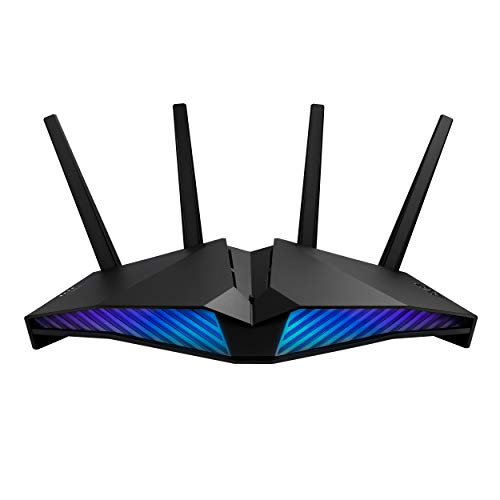
ASUS Dual-Band WiFi 6 Gaming Router
Best for: dual-band WiFi 6 gaming setups
- Use Case
- Gaming (what this guide is about)
- Wi-Fi Standard
- WiFi 6
- Speed Rating
- AX5400
- Frequency Bands
- Dual Band
- Features
- VPN
- Dimensions
- 11 × 7.26 × 6.5 inches
This ASUS dual-band WiFi 6 router delivers up to 5400 Mbps total throughput across 160MHz channels. Powered by a 1.5 GHz tri-core processor, it features a dedicated gaming port and a mobile game mode accessible via the companion app to prioritize traffic. It suits you if you need reliable low-latency wireless connections for gaming and want mesh expansion options via AiMesh compatibility without jumping to a tri-band setup.
Pros
- WiFi 6 throughput up to 5400 Mbps with 160MHz channel support
- 1.5 GHz tri-core processor for handling network demands
- Dedicated gaming port and one-tap Mobile Game Mode
- AiMesh support for modular whole-home mesh expansion
- Built-in AiProtection Pro security and Instant Guard VPN
Cons
- Dual-band design lacks access to the 6 GHz frequency band
- No multi-gigabit Ethernet ports listed in specifications
Good fit if
- You want dual-band WiFi 6 speeds up to 5400 Mbps with 160MHz channel support.
- You play mobile or console games and want dedicated traffic prioritization.
- You plan to build an extendable mesh network using AiMesh hardware.
Skip if
- You need tri-band capability or access to the 6 GHz wireless spectrum.
- You require multi-gigabit wired Ethernet ports for high-bandwidth local transfers.
Verdict: ASUS AX5400 Dual-Band WiFi 6 Gaming Router delivers reliable throughput and dedicated traffic prioritization for everyday gaming. It offers practical mesh expandability for homes that do not require tri-band or 6 GHz access.

ASUS ROG Rapture Tri-Band WiFi 6 Router
Best for: 10 Gbps wired and tri-band gaming setups
- Use Case
- Gaming (what this guide is about)
- Wi-Fi Standard
- WiFi 6
- Speed Rating
- AX11000
- Frequency Bands
- Tri-Band
- Max Port Speed
- 10 Gbps
- Dimensions
- 13.9 × 13.9 × 7.6 inches
The ASUS ROG Rapture Tri-Band 10G Gaming Router is a Wi-Fi 6 router designed for high-bandwidth home gaming setups. It delivers tri-band speeds up to 11,000 Mbps with 160 MHz channel support, driven by a 2.0 GHz quad-core processor. For wired devices, you get one 10 Gbps port and one 2.5 Gbps port, both configurable as LAN or WAN. This suits you if you need fast wired multi-gigabit connectivity.
Pros
- Configurable 10 Gbps and 2.5 Gbps networking ports for WAN or LAN
- Tri-band Wi-Fi 6 wireless throughput up to 11,000 Mbps
- 64-bit 2.0 GHz quad-core processor
- Supports 160 MHz channels
Cons
- Uses Wi-Fi 6 rather than newer Wi-Fi 6E or Wi-Fi 7 standards
- Large footprint measuring 13.9 by 13.9 inches and weighing 4.81 pounds
Good fit if
- You need a 10 Gbps port for ultra-fast local networking or internet.
- You want tri-band Wi-Fi 6 with 160 MHz channel support.
- You run wired gaming rigs that benefit from multi-gigabit connections.
Skip if
- You want the 6 GHz frequency band found on Wi-Fi 6E or Wi-Fi 7 hardware.
- You have limited desk space for a 13.9-inch wide, 4.81-pound chassis.
Verdict: ASUS ROG Rapture Tri-Band 10G Gaming Router delivers top-tier wired throughput and fast tri-band wireless capacity for dedicated gaming environments. Its 10 Gbps and 2.5 Gbps ports provide extensive network bandwidth if you do not require Wi-Fi 6E or Wi-Fi 7.
Specifications side by side
| Spec | Smart Air Minions Tri-Band Wi-Fi 6E Router | ASUS TUF Gaming Dual-Band WiFi 7 Router | GL.iNet Flint 2 Dual 2.5G Wi-Fi 6 Router | ASUS Dual-Band WiFi 6 Router | ASUS ROG Quad-Band WiFi 7 Gaming Router | NETGEAR Nighthawk Dual-Band AX3000 WiFi 6 Router | GL.iNet Flint 3e Wi-Fi 7 Router | ASUS Dual-Band WiFi 6 Gaming Router | TP-Link Archer Tri-Band Wi-Fi 7 Gaming Router | MSI Radix Tri-Band Wi-Fi 6E Gaming Router | ASUS ROG Rapture Tri-Band WiFi 6 Router | TP-Link Quad-Band Wi-Fi 6E Router | HYPEREV AX3000 Dual-Band Gaming Router | ASUS Dual-Band WiFi 6 Gaming Router | ASUS ROG Rapture Tri-Band WiFi 6 Router |
|---|---|---|---|---|---|---|---|---|---|---|---|---|---|---|---|
| Wi-Fi Standard | Wi-Fi 6E | Wi-Fi 7 | Wi-Fi 6 | Wi-Fi 6 | WiFi 7 | WiFi 6 | Wi-Fi 7 | WiFi 6 | Wi-Fi 7 | WiFi 6E | WiFi 6 | Wi-Fi 6E | WiFi 6 | WiFi 6 | WiFi 6 |
| Speed Rating | AXE5400 | BE6500 | not specified | AX1800 | not specified | AX3000 | BE6500 | AX5400 | BE19000 | AXE6600 | not specified | AXE16000 | AX3000 | AX5400 | AX11000 |
| Frequency Bands | Tri-Band | Dual-Band | not specified | Dual-Band | Quad-Band | Dual-Band | not specified | Dual-Band | Tri-Band | Tri-Band | Tri-Band | Quad-Band | Dual Band | Dual Band | Tri-Band |
| Coverage Area | not specified | not specified | not specified | not specified | not specified | 2,000 sq. ft. | Up to 2,500 sq ft | not specified | not specified | not specified | not specified | not specified | not specified | not specified | not specified |
| Device Capacity | 128 devices | not specified | over a hundred devices | not specified | not specified | 25 devices | not specified | not specified | not specified | not specified | not specified | not specified | not specified | not specified | not specified |
| Max Port Speed | 2.5 Gbps | 2.5 Gbps | 2.5G | 1 Gbps | 10G | 1 Gbps | not specified | not specified | 10 Gbps | not specified | 2.5G | 10 Gbps | not specified | not specified | 10 Gbps |
| Ethernet Ports | 2 | 4 | not specified | 5 | not specified | 4 | not specified | not specified | not specified | not specified | not specified | not specified | not specified | not specified | not specified |
| Frequency Band | Tri-Band | Dual-Band | not specified | Dual-Band | Quad-Band | Dual-Band | not specified | Dual-Band | Tri-Band | Tri-Band | Tri-Band | Quad-Band | Dual-Band | Dual-Band | Tri-Band |
| Use Case | Gaming | Gaming | Gaming | Gaming, Streaming | Gaming | Gaming | Gaming | Gaming | Gaming | Gaming | Gaming | Gaming | Gaming | Gaming | Gaming |
| Features | not specified | VPN | not specified | VPN, Parental Controls | not specified | VPN | VPN | MU-MIMO | not specified | MU-MIMO | not specified | not specified | not specified | VPN | not specified |
| Port Speed | Gigabit, 2.5G | 2.5G | 2.5G | not specified | not specified | Gigabit | not specified | not specified | not specified | Gigabit | Gigabit, 2.5G | not specified | not specified | not specified | 2.5G, 10G |
| Intended Use | not specified | not specified | not specified | Home | not specified | not specified | Home | not specified | not specified | not specified | not specified | not specified | not specified | not specified | not specified |
| Dimensions | 4.2 × 4.8 × 9.6 inches | 6.9 × 8.4 × 11.9 inches | 5.39 × 2.09 × 9.17 inches | 9.06 × 5.28 × 2.2 inches | 13.7 × 8.6 × 13.7 inches | 11.3 × 9.33 × 4.72 inches | 9.84 × 3.07 × 11 inches | 11 × 7.26 × 6.5 inches | not specified | 13.3 × 8.8 × 7.8 inches | 11.3 × 4.74 × 14.9 inches | 9.13 × 9.13 × 2.68 inches | 7.05 × 2.52 × 7.05 inches | 11 × 7.26 × 6.5 inches | 13.9 × 13.9 × 7.6 inches |
| Weight | not specified | 1.7 pounds | 1.68 pounds | 13.1 ounces | 4.4 pounds | 2.38 pounds | 1.87 pounds | 1.57 pounds | 4.87 pounds | not specified | 4.1 pounds | 3.37 pounds | not specified | 1.57 pounds | 4.81 pounds |
| Color | Yellow, Blue | BLACK | Black | BLACK | BLACK | Black | black | not specified | Black | Multicolor | Black | Black | not specified | BLACK | BLACK |
| Model | AXE-5400 | TUF-BE6500 | GL-MT6000 | RT-AX1800S | GT-BE98 | RAX36-100PAS | GL-BE6500 | AX5400 | Archer GE800 | RADIX AXE6600 | GT-AX11000 | Archer AXE300 | NIT-GU-07-HR | RT-AX82U | GT-AX11000 PRO |
| Size | not specified | Dual-Band | not specified | Router | Quad-Band | 3.0 Gbps | not specified | not specified | 11.9 x 10.3 x 3.8 inches | Pack of 1 | ax | Quad-Band Wi-Fi 6E AXE16000 Gaming | not specified | not specified | Large |
If you are also updating your audio setup, the guide to the best headphones for gaming ranks options strictly by their published hardware specifications.
How to Choose a Gaming Router
-
Match Your Wi-Fi Standard
Check the Wi-Fi generation supported by your gaming clients before picking a router. Wi-Fi 6 routers handle standard consoles and PCs using stable 2.4 GHz and 5 GHz channels. Wi-Fi 6E introduces clean 6 GHz spectrum for lower wireless interference. Wi-Fi 7 units add wider channels and multi-link operation for compatible hardware. If you do not own Wi-Fi 7 devices yet, a Wi-Fi 6 router like the ASUS Dual-Band WiFi 6 Router provides ample speed without paying for unused wireless overhead on your local network.
-
Check Wired Port Speeds
Look closely at the Ethernet port specifications on the router. Basic Gigabit LAN ports max out at roughly 940 Mbps of throughput. If your home internet service exceeds 1 Gbps, or if you transfer large game files between local drives, choose hardware with multi-gigabit connections. Routers with 2.5 Gbps or 10 Gbps ports let you link high-speed modems and gaming PCs directly. The TP-Link Archer Tri-Band Wi-Fi 7 Gaming Router includes dual 10 Gbps ports, which prevents wired bottlenecks when routing multi-gigabit data across your gaming desktop.
-
Evaluate Wireless Speed Ratings
Pay attention to cumulative speed class labels such as AX3000, AX5400, or AXE6600. These numbers represent the combined maximum theoretical throughput across all broadcast bands, not what a single console receives. A higher rating indicates wider channel widths, such as 160 MHz, and more spatial streams to serve concurrent devices. If several household members download games or stream media simultaneously, higher ratings prevent bandwidth starvation. The ASUS Dual-Band WiFi 6 Gaming Router offers an AX5400 speed rating to maintain high wireless throughput across busy shared environments.
-
Verify Home Coverage Area
Compare the manufacturer square footage ratings against your home layout before deciding. Standalone gaming routers typically broadcast reliable wireless signals across small to mid-sized residences. If your setup spans multiple rooms or walls, a model with insufficient range leads to dropped packets and ping spikes. Choosing a router rated for your home size ensures solid signal strength at your desk. For example, the NETGEAR Nighthawk Dual-Band AX3000 WiFi 6 Router lists coverage up to 2,000 square feet, making it suitable for moderate spaces without requiring separate mesh nodes.
-
Review Hardware VPN Performance
Check the router processor and VPN protocol support if you plan to encrypt entire network traffic. Running OpenVPN or WireGuard on a weak CPU creates latency bottlenecks and lowers download speeds. Routers with dedicated VPN acceleration handle client encryption directly at router level, protecting consoles that do not support native VPN apps. The GL.iNet Flint 3e Wi-Fi 7 Router offers 1,100 Mbps VPN speeds, allowing encrypted gaming sessions without sacrificing connection responsiveness or adding software overhead to your individual gaming devices.
-
Assess Physical Dimensions
Measure your desk or shelf space before purchasing high-performance networking gear. Flagship multi-band routers often feature substantial footprints and heavy chassis designed to house complex antenna arrays and internal cooling assemblies. A small upright design fits on crowded desks, whereas large multi-band units need significant clearance and ventilation. For example, the ASUS ROG Quad-Band WiFi 7 Gaming Router measures 13.7 inches wide and deep, weighing 4.4 pounds. Confirm your placement area can accommodate large chassis without obstructing cooling airflow or surrounding equipment.
Frequently asked questions
Do you need a 2.5G or 10G port on a gaming router?
A multi-gigabit port matters if your internet plan exceeds 1 Gbps or if you run a high-speed local network. Routers like the ASUS TUF Gaming router include 2.5 Gbps ports, while the TP-Link Archer GE800 and ASUS ROG GT-BE98 feature dual 10 Gbps ports. These connections prevent physical port bottlenecks between your modem, network-attached storage, and gaming desktop.
What is the benefit of a quad-band gaming router?
Quad-band routers split wireless traffic across four discrete bands to minimize channel competition among household hardware. For example, the ASUS ROG GT-BE98 provides 30 Gbps quad-band capacity, and the TP-Link Archer AXE300 uses quad-band Wi-Fi 6E. This design allows you to isolate high-throughput gaming devices onto clear frequencies while background devices operate on separate channels without slowing down your connection.
Does built-in VPN support affect router gaming performance?
Processing VPN encryption directly on a router requires substantial hardware resources. Routers built with dedicated VPN features handle this workload more efficiently. For instance, the GL.iNet Flint 3e provides up to 1,100 Mbps VPN encryption alongside its 6.5 Gbps Wi-Fi 7 rating, and the GL.iNet Flint 2 features dual 2.5G ports with high-speed VPN handling. This keeps encrypted gaming traffic stable across your network.
Can you use a gaming router as a secondary add-on unit?
Yes, specialized units can work alongside your existing ISP equipment rather than replacing it entirely. The HYPEREV AX3000 Dual-Band Gaming Router functions as a plug-and-play game acceleration add-on for consoles and PCs without changing your primary gateway. However, product specifications note that it is not compatible with Starlink setups, so verify your internet service type before adding one.
How much physical space does a high-performance gaming router require?
Gaming router dimensions vary significantly based on their internal hardware and antenna configurations. Compact options like the Smart Air Minions measure 4.8 by 4.2 by 9.6 inches. In contrast, multi-band powerhouses need more clearance; the ASUS ROG GT-BE98 measures 13.7 by 13.7 by 8.6 inches and weighs 4.4 pounds. Always check shelf clearance and ventilation space before choosing larger chassis models.
How many devices can a standard Wi-Fi 6 gaming router handle?
Most standard Wi-Fi 6 routers comfortably support typical households with dozens of active devices. For example, the NETGEAR Nighthawk AX3000 covers up to 2,000 square feet and supports up to 25 connected devices across its dual-band spectrum. If your home has more endpoints, stepping up to models with MU-MIMO support or additional frequency bands prevents congestion during multiplayer sessions.
What should you look for if you want wired mesh expansion later?
Check whether the router ecosystem supports compatible node linking, such as ASUS models equipped with AiMesh support like the ASUS AX5400. You should also ensure the router provides enough wired LAN ports to support wired backhaul. Models such as the ASUS RT-AX1800S and NETGEAR Nighthawk RAX36 offer four dedicated gigabit LAN ports, letting you connect nodes or hardwire nearby consoles directly.