15 Best Wi-Fi 6 Wifi Repeaters, Compared
As an Amazon Associate we earn from qualifying purchases. Links on this page are affiliate links.
Adding a Wi-Fi 6 wifi repeater expands your network coverage and eliminates dead zones without replacing your existing router. This guide compares 15 models based strictly on the specifications published on their official listings. The NETGEAR AX1800 Dual-Band WiFi 6 Extender earns the top spot because its compact wall-plug design combines AX1800 dual-band throughput with an integrated Ethernet port.
Hardware options vary widely across speed ratings, physical enclosures, and operating modes. This comparison helps you decide which coverage range, wired port configuration, and mesh compatibility match your home.
Quick picks
The best fit for you
- You need compact wall-plug dual-band Wi-Fi 6 coverage NETGEAR AX1800 Dual-Band WiFi 6 Extender This wall-plug extender provides AX1800 dual-band speeds and an integrated Ethernet port for everyday coverage.
- You need directional outdoor Wi-Fi 6 signal coverage WAVLINK AX3000 Outdoor WiFi 6 Extender Its IP67-rated enclosure and directional 12 dBi antenna project dual-band AX3000 Wi-Fi outdoors.
- You want seamless roaming on a TP-Link OneMesh network TP-Link AX1800 Dual-Band WiFi 6 Extender It supports OneMesh integration, AX1800 dual-band throughput, and includes a Gigabit Ethernet port.
- You want to extend an ASUS AiMesh system ASUS Dual-Band WiFi 6 Range Extender This model supports AiMesh network expansion while delivering dual-band AX3000 Wi-Fi 6 speeds.
Our 15 picks

NETGEAR AX1800 Dual-Band WiFi 6 Extender
Best for: compact wall-plug Wi-Fi 6 home coverage
- Wi-Fi Standard
- Wi-Fi 6 (what this guide is about)
- Speed Rating
- AX1800
- Frequency Bands
- Dual-Band
- Ethernet Ports
- 1 x Ethernet
- Operating Modes
- Mesh Extender
- Placement
- Wall plug
This NETGEAR unit is a dual-band Wi-Fi 6 range extender that plugs straight into a wall outlet. It provides an AX1800 speed rating across 2.4GHz and 5GHz frequencies, helping expand your existing wireless network without shelf clutter. A built-in Ethernet port lets you attach a wired device like a gaming console or smart TV. It suits you if you need a straightforward Wi-Fi 6 coverage boost in rooms with weak signal.
Pros
- Wi-Fi 6 dual-band operation on 2.4GHz and 5GHz bands
- Compact wall-plug design requires no desk or shelf space
- Built-in Ethernet port for connecting a wired client
- AX1800 speed rating for everyday streaming and browsing
Cons
- AX1800 bandwidth is lower than AX3000 alternatives
- Only one Ethernet port provided for wired hardware
- Certified refurbished unit rather than brand new
Good fit if
- You need a wall-plug Wi-Fi 6 extender that saves shelf space.
- You want to connect one wired device via an Ethernet port.
- You have an existing mesh-compatible router setup.
Skip if
- You need higher wireless bandwidth than AX1800 specs provide.
- You require multiple wired Ethernet ports for several devices.
Verdict: NETGEAR AX1800 Dual-Band WiFi 6 Wall Plug Extender delivers compact dual-band wireless expansion with an integrated Ethernet port. It offers a tidy wall-mounted option to extend Wi-Fi 6 coverage across everyday home devices.
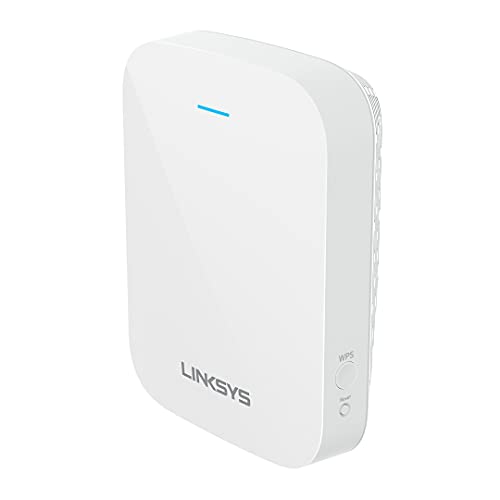
Linksys Dual-Band WiFi 6 Range Extender
Best for: medium-sized homes needing Wi-Fi 6 extension
- Wi-Fi Standard
- Wi-Fi 6 (what this guide is about)
- Speed Rating
- AX1800 (up to 1.8 Gbps)
- Frequency Bands
- Dual-Band
- Coverage Area
- 2,000 sq. ft.
- Operating Modes
- Range Extender, Access Point
- Dimensions
- 5.1 × 3.9 × 2 inches
The Linksys Dual-Band AX1800 WiFi 6 Extender expands your wireless network up to 2,000 square feet. It delivers dual-band Wi-Fi 6 connectivity across simultaneous 2.4 GHz and 5 GHz frequencies. It includes MU-MIMO, beamforming, and an access point mode for wired connections to your router. This unit suits you if you need to eliminate dead zones in medium-sized spaces while keeping push-button setup simple.
Pros
- Covers up to 2,000 square feet
- Simultaneous dual-band AX1800 Wi-Fi 6 speeds
- Includes Access Point mode for direct wired connection
- Beamforming and MU-MIMO support
- Push-Button Connect pairing
Cons
- Limited to AX1800 bandwidth rather than faster AX3000 speeds
- Dual-band design lacks a dedicated third band for backhaul
- Indoor chassis without outdoor weatherproofing
Good fit if
- You need up to 2,000 square feet of additional Wi-Fi 6 coverage.
- You want an access point mode to wire directly into your network.
- You prefer simple push-button pairing without changing router settings.
Skip if
- You require AX3000 throughput for heavy network traffic.
- You need a tri-band extender with a dedicated wireless backhaul.
- You need a weather-resistant enclosure for outdoor placement.
Verdict: Linksys Dual-Band AX1800 WiFi 6 Extender expands your home coverage by 2,000 square feet using simultaneous dual-band Wi-Fi 6. It gives you flexible deployment options via standard range extension or dedicated access point mode.

TP-Link AX1800 Dual-Band WiFi 6 Extender
Best for: seamless roaming on TP-Link OneMesh networks
- Wi-Fi Standard
- Wi-Fi 6 (what this guide is about)
- Speed Rating
- AX1800 (up to 1.8 Gbps)
- Frequency Bands
- Dual Band
- Coverage Area
- Up to 1,500 sq. ft.
- Ethernet Ports
- 1 Gigabit
- Operating Modes
- Repeater, Access Point (AP)
The TP-Link AX1800 Dual-Band Wi-Fi 6 Extender expands your wireless network up to 1,500 square feet and handles up to 30 devices. It delivers dual-band AX1800 speeds, reaching up to 1,201 Mbps on 5 GHz and 574 Mbps on 2.4 GHz. Two external antennas direct the signal, while a single Gigabit Ethernet port provides a wired connection or supports Access Point mode. This unit suits you if you need reliable coverage in dead zones.
Pros
- Dual-band Wi-Fi 6 speeds up to 1,201 Mbps on 5 GHz and 574 Mbps on 2.4 GHz
- Built-in Gigabit Ethernet port for wired devices or Access Point mode
- OneMesh support for seamless roaming with compatible TP-Link routers
- Two external high-gain antennas and intelligent signal indicator
Cons
- Only one Gigabit Ethernet port
- Rated for up to 30 devices, which may limit dense smart homes
- Mesh roaming features require a compatible TP-Link OneMesh router
Good fit if
- You have a TP-Link OneMesh router and want single-network roaming.
- You need to cover up to 1,500 square feet or connect up to 30 devices.
- You want a dedicated Gigabit Ethernet port to connect a wired client or run Access Point mode.
Skip if
- You need multiple wired Ethernet ports for several stationary devices.
- You have more than 30 devices requiring simultaneous wireless connections.
- You require tri-band support or speeds beyond the AX1800 rating.
Verdict: TP-Link AX1800 Dual-Band Wi-Fi 6 Extender provides a solid balance of AX1800 throughput, Gigabit wired connectivity, and OneMesh compatibility. It effectively expands coverage across up to 1,500 square feet without unnecessary complexity.

TP-Link AX1500 Dual-Band WiFi 6 Extender
Best for: OneMesh routers needing entry-level Wi-Fi 6
- Wi-Fi Standard
- Wi-Fi 6 (what this guide is about)
- Speed Rating
- AX1500 (1.5 Gbps)
- Frequency Bands
- Dual-Band
- Ethernet Ports
- 1 Gigabit
- Operating Modes
- Range Extender
- Dimensions
- 5.87 × 3.07 × 1.42 inches
This TP-Link dual-band Wi-Fi 6 range extender provides up to 1.5 Gbps total bandwidth to expand your wireless coverage. It delivers up to 1201 Mbps on the 5 GHz band and up to 300 Mbps on the 2.4 GHz band. A built-in Gigabit Ethernet port lets you connect a wired client directly. It suits you if you own a TP-Link OneMesh router and need entry-level Wi-Fi 6 speeds without upgrading your entire network setup.
Pros
- Up to 1201 Mbps on 5 GHz and 300 Mbps on 2.4 GHz
- One built-in Gigabit Ethernet port for wired devices
- Compatible with TP-Link OneMesh for a single network name
- Compact footprint measuring 5.87 by 3.07 by 1.42 inches
Cons
- Does not support the 6 GHz frequency band
- Not compatible with TP-Link Deco mesh systems
- 2.4 GHz band speed is capped at 300 Mbps
Good fit if
- You have a OneMesh-compatible router and want seamless roaming.
- You need a Gigabit Ethernet port to link a wired device.
- You want basic dual-band Wi-Fi 6 coverage on 2.4 GHz and 5 GHz.
Skip if
- You use a TP-Link Deco mesh system.
- You require access to the 6 GHz Wi-Fi band.
- You need higher 2.4 GHz throughput than 300 Mbps.
Verdict: TP-Link AX1500 Dual-Band Wi-Fi 6 Range Extender gives you an entry-level Wi-Fi 6 boost and a Gigabit port for OneMesh setups. It reliably expands dual-band coverage if you do not need 6 GHz support or Deco compatibility.

TP-Link AX1800 Dual Band Wi-Fi 6 Extender
Best for: OneMesh router owners needing dual-band coverage
- Wi-Fi Standard
- Wi-Fi 6 (what this guide is about)
- Speed Rating
- AX1800
- Frequency Bands
- Dual-Band
- Ethernet Ports
- 1x Gigabit
- Operating Modes
- Range Extender, Repeater
- Antenna Count
- 2 internal
This TP-Link dual-band Wi-Fi 6 range extender expands your wireless coverage across two internal antennas. It delivers speeds up to 1201 Mbps on the 5 GHz band and 574 Mbps on 2.4 GHz, giving you an AX1800 total rating. You also get a single gigabit Ethernet port for wired hardware and TP-Link OneMesh support to build a single-name network with compatible routers. It suits you if you need compact plug-in Wi-Fi 6 coverage.
Pros
- Dual-band Wi-Fi 6 speeds up to 1201 Mbps on 5 GHz and 574 Mbps on 2.4 GHz
- One gigabit Ethernet port for connecting wired devices
- Supports TP-Link OneMesh for single-network roaming with compatible routers
- Tether app management with an intelligent signal indicator for placement
Cons
- Only one Ethernet port provided
- Internal antennas cannot be repositioned or adjusted
- OneMesh roaming requires a compatible TP-Link router
Good fit if
- You have an existing TP-Link OneMesh router and want unified roaming.
- You need a gigabit Ethernet connection for a stationary wired device.
- You want dual-band Wi-Fi 6 coverage without external antennas sticking out.
Skip if
- You need multiple wired Ethernet ports for several devices.
- You want faster AX3000 speeds or higher Wi-Fi throughput.
- You need adjustable external antennas to aim signals manually.
Verdict: TP-Link AX1800 Dual-Band WiFi 6 Extender delivers reliable dual-band expansion and seamless OneMesh integration in a compact wall-plug format. Its single gigabit Ethernet port and app-based signal finder make it a straightforward choice for eliminating dead zones.

TP-Link AX3000 Dual-Band WiFi 6 Extender
Best for: EasyMesh networks needing high-speed dual-band coverage
- Wi-Fi Standard
- Wi-Fi 6 (what this guide is about)
- Speed Rating
- AX3000
- Frequency Bands
- Dual-Band
- Ethernet Ports
- 1x Gigabit
- Operating Modes
- Range Extender, Access Point
- Antenna Count
- 2
This dual-band Wi-Fi 6 range extender delivers combined speeds up to AX3000, broken down into 2404 Mbps on the 5 GHz band and 574 Mbps on 2.4 GHz. It covers up to 2,400 square feet and connects up to 64 devices using two directional antennas. You will find it suits your setup if you need high-bandwidth coverage or want a Gigabit Ethernet access point linked to an EasyMesh router.
Pros
- AX3000 speeds up to 2404 Mbps on 5 GHz and 574 Mbps on 2.4 GHz
- Covers up to 2,400 square feet for up to 64 devices
- Gigabit Ethernet port with Access Point mode
- EasyMesh compatibility for whole-home roaming
Cons
- Incompatible with TP-Link Deco mesh systems
- Wireless extending cuts throughput by 50 percent or more
Good fit if
- You have an EasyMesh router and need coverage up to 2,400 square feet.
- You need a Gigabit Ethernet port for a wired client or AP mode.
- You connect up to 64 devices across dual-band Wi-Fi 6.
Skip if
- You use a TP-Link Deco mesh network.
- You require a tri-band extender with a dedicated wireless backhaul.
Verdict: TP-Link AX3000 Dual-Band WiFi 6 Range Extender expands coverage across 2,400 square feet with EasyMesh support. It offers reliable dual-band speeds and a Gigabit Ethernet port for access point flexibility.

Linksys AX1800 Dual-Band Wi-Fi 6 Extender
Best for: budget-focused coverage up to 2,000 square feet
- Wi-Fi Standard
- Wi-Fi 6 (what this guide is about)
- Speed Rating
- AX1800
- Frequency Bands
- Dual-Band
- Coverage Area
- Up to 2,000 sq. ft.
- Ethernet Ports
- 1x Gigabit
- Operating Modes
- Range Extender
This renewed Linksys range extender expands your local Wi-Fi 6 network across up to 2,000 square feet of space. It delivers total speeds up to 1.8 Gbps using simultaneous 2.4 GHz and 5 GHz frequency bands. A single gigabit Ethernet port provides a wired connection for a desktop or television. It suits you if you need basic dual-band coverage to eliminate dead spots in your home.
Pros
- Up to 2,000 sq. ft. of Wi-Fi 6 coverage
- Dual-band AX1800 throughput up to 1.8 Gbps
- Simultaneous 2.4 GHz and 5 GHz transmission
- One dedicated gigabit Ethernet port
Cons
- Certified refurbished unit with a 90-day warranty
- Single Ethernet port limits wired connections
Good fit if
- You need to extend Wi-Fi 6 coverage across areas up to 2,000 square feet.
- You want a single gigabit Ethernet port for a wired device.
- You accept certified refurbished hardware backed by a 90-day warranty.
Skip if
- You prefer brand-new hardware with standard manufacturer warranty terms.
- You need more than one wired Ethernet port.
Verdict: Linksys Dual-Band Wi-Fi 6 Extender (Renewed) provides 1.8 Gbps dual-band speeds and up to 2,000 square feet of coverage in a compact design. It is a practical choice if you need basic Wi-Fi 6 expansion and a wired gigabit port.
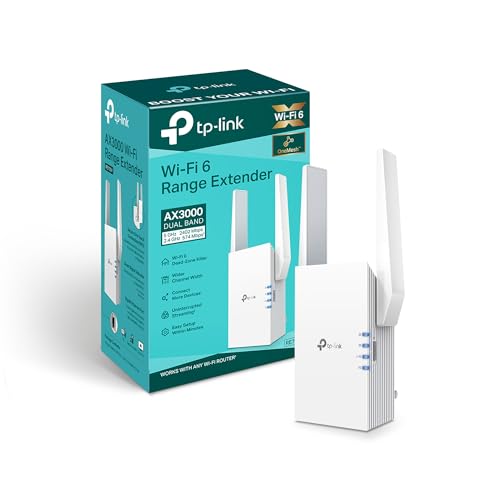
TP-Link AX3000 Wi-Fi 6 Range Extender
Best for: AX3000 dual-band coverage and wired bridging
- Wi-Fi Standard
- Wi-Fi 6 (what this guide is about)
- Speed Rating
- AX3000
- Frequency Bands
- Dual-Band
- Ethernet Ports
- Gigabit Port
- Operating Modes
- Range Extender, AP Mode
- Dimensions
- 8 × 6 × 4 inches
This TP-Link dual-band range extender brings Wi-Fi 6 connectivity to your home network with an AX3000 speed rating. It includes an integrated Gigabit Ethernet port and supports Access Point mode alongside standard range extension. Built with OFDMA and beamforming technologies, the white unit measures 8 by 6 by 4 inches. It suits you if you need faster dual-band throughput and wired bridging for high-bandwidth devices across your current coverage area.
Pros
- AX3000 Wi-Fi 6 dual-band speed rating
- Gigabit Ethernet port for wired connectivity
- Access Point mode support
- Features OFDMA and beamforming technologies
Cons
- Dual-band design lacks a dedicated third backhaul band
- Provides only a single Gigabit Ethernet port
Good fit if
- You need AX3000 Wi-Fi 6 speeds on a dual-band setup.
- You want an Access Point mode option with a Gigabit Ethernet port.
- You use devices that benefit from OFDMA and beamforming support.
Skip if
- You require a tri-band extender with a dedicated wireless backhaul.
- You need multiple Ethernet ports to connect several wired devices.
Verdict: TP-Link AX3000 Dual-Band Wi-Fi 6 Extender delivers AX3000 dual-band throughput and Gigabit wired connectivity with flexible Access Point mode operation. It expands your Wi-Fi 6 network efficiently using beamforming and OFDMA technologies.

ASUS Dual-Band WiFi 6 Range Extender
Best for: AiMesh router owners needing AX3000 Wi-Fi 6
- Wi-Fi Standard
- Wi-Fi 6 (what this guide is about)
- Speed Rating
- AX3000
- Frequency Bands
- Dual-Band
- Operating Modes
- Range Extender
- Dimensions
- 5.91 × 2.83 × 3.43 inches
- Weight
- 6.72 ounces
This ASUS dual-band Wi-Fi 6 range extender provides network speeds up to 3000 Mbps. It features ASUS AiMesh support to integrate with compatible routers for whole-home coverage. Built-in network security includes AiProtection Pro and WPA3 encryption, alongside customizable parental controls and Instant Guard access. If you operate an AiMesh system and need AX3000 throughput, this fits your network.
Pros
- Supports Wi-Fi 6 speeds up to 3000 Mbps (AX3000)
- Integrates with AiMesh-compatible routers for mesh networking
- Includes AiProtection Pro security and WPA3 support
- Features Instant Guard and age-customizable parental controls
Cons
- Dual-band design lacks a third dedicated wireless band
- No Ethernet ports listed in specifications
Good fit if
- You use an AiMesh router and want unified whole-home coverage.
- You need AX3000 dual-band Wi-Fi 6 transmission speeds.
- You require built-in AiProtection Pro network security and parental controls.
Skip if
- You need tri-band wireless frequency support.
- You require an extender with documented physical Ethernet ports.
Verdict: ASUS AX3000 Dual-Band WiFi 6 Range Extender delivers AX3000 dual-band speeds and AiMesh capability. It expands network reach while adding WPA3 security and parental controls.

WAVLINK AX1800 Outdoor WiFi 6 Extender
Best for: long-range outdoor network coverage and yards
- Wi-Fi Standard
- Wi-Fi 6 (what this guide is about)
- Speed Rating
- AX1800
- Frequency Bands
- Dual-Band
- Operating Modes
- Mesh, AP, Router, Repeater
- Antenna Count
- 4
- Placement
- Outdoor, IP67
This is an outdoor Wi-Fi 6 extender designed to bring AX1800 speeds outside your home. It provides dual-band throughput up to 1201 Mbps on 5 GHz and 574 Mbps on 2.4 GHz. Four detachable 8dBi fiberglass antennas deliver coverage across a 200 to 300-meter line-of-sight radius for up to 256 devices. It suits you if you need reliable outdoor network coverage for yards, farms, or detached garages.
Pros
- IP67 weatherproof housing rated for temperatures from -20°C to 50°C
- Four detachable 8dBi omni-directional fiberglass antennas
- Supports active 802.3af/at PoE and passive PoE power
- Handles up to 256 connected client devices
Cons
- Mesh mode works only with WAVLINK series products
- Included PoE power adapter is not waterproof and must stay indoors
Good fit if
- You need long-range Wi-Fi coverage across open outdoor spaces like yards or farms.
- You prefer powering the unit over Ethernet using active or passive PoE.
- You need an exterior unit with an IP67 rating against moisture, dust, and lightning.
Skip if
- You want mesh roaming with non-WAVLINK routers or mesh hardware.
- You need an outdoor installation where the power supply cannot be placed indoors.
Verdict: WAVLINK AX1800 Outdoor WiFi 6 Extender delivers robust weatherproofing and flexible PoE power options to project dual-band signals into wide-open yards. Its versatile operating modes make it a capable exterior access point or repeater.

TP-Link AX1800 Dual-Band WiFi 6 Range Extender
Best for: EasyMesh setups requiring gigabit Ethernet connectivity
- Wi-Fi Standard
- Wi-Fi 6 (what this guide is about)
- Frequency Bands
- Dual-Band
- Ethernet Ports
- 1x Gigabit
- Operating Modes
- Range Extender
- Antenna Count
- 2
- Speed Rating
- AX1800
View on Amazon: TP-Link AX1800 Dual-Band WiFi 6 Range Extender
This dual-band Wi-Fi 6 range extender provides AX1800 throughput, delivering up to 1201 Mbps on the 5 GHz band and 574 Mbps on 2.4 GHz. Two directional antennas with beamforming cover up to 2,100 square feet for up to 64 devices. A built-in gigabit Ethernet port connects wired gear, and EasyMesh support pairs with compatible routers. It suits you if you need steady dual-band extension across medium-sized layouts.
Pros
- Speeds up to 1201 Mbps on 5 GHz and 574 Mbps on 2.4 GHz
- Single gigabit Ethernet port for wired connectivity
- EasyMesh support for integration with compatible routers
- Coverage rated up to 2,100 square feet for up to 64 devices
Cons
- Does not support the 6 GHz frequency band
- Incompatible with TP-Link Deco mesh systems
Good fit if
- You use an EasyMesh-compatible router to expand your coverage.
- You need a gigabit Ethernet port to link a wired device.
- You want dual-band coverage for up to 64 connected devices.
Skip if
- You manage a TP-Link Deco mesh network.
- You need access to the 6 GHz band.
Verdict: TP-Link AX1800 Dual-Band Wi-Fi 6 Extender delivers dependable dual-band speeds and gigabit Ethernet for EasyMesh-compatible networks. It handles up to 64 devices across 2,100 square feet without adding 6 GHz support.
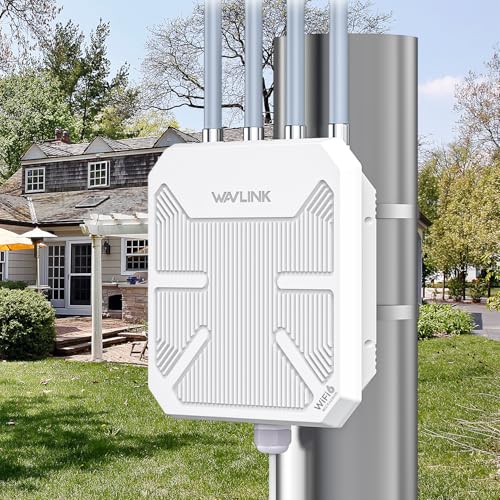
WAVLINK AX3000 Outdoor WiFi 6 Extender
Best for: long-range outdoor Wi-Fi 6 coverage
- Wi-Fi Standard
- Wi-Fi 6 (what this guide is about)
- Speed Rating
- AX3000
- Frequency Bands
- Dual-band
- Operating Modes
- Mesh, AP, Router, Repeater, AP+Repeater
- Antenna Count
- 4
- Placement
- Indoor/Outdoor, IP67
The WAVLINK AX3000 Outdoor WiFi 6 Extender expands your wireless network into outdoor spaces. It delivers dual-band Wi-Fi 6 speeds up to 2,402 Mbps on 5 GHz and 573 Mbps on 2.4 GHz. Four detachable 8dBi fiberglass antennas provide coverage up to a 300-meter radius. This unit suits you if you need weather-resistant yard coverage powered via active or passive PoE.
Pros
- Dual-band Wi-Fi 6 speeds up to 2,402 Mbps on 5 GHz and 573 Mbps on 2.4 GHz
- IP67 weatherproof housing with 6kV lightning and 15kV ESD protection
- Supports both 802.3af/at active PoE and passive PoE power options
- Four detachable 8dBi omni-directional fiberglass antennas
Cons
- Included PoE converter is not waterproof
- Mesh mode operates only with WAVLINK series hardware
Good fit if
- You need an IP67-rated outdoor Wi-Fi 6 access point or repeater.
- You run Ethernet cable up to 100 meters to power the device using PoE.
- You want to connect up to 256 wireless devices outdoors.
Skip if
- You want seamless mesh roaming with a third-party router brand.
- You need a weatherproof PoE injector for fully unsheltered power placement.
Verdict: WAVLINK AX3000 Outdoor WiFi 6 Extender brings high-throughput Wi-Fi 6 coverage to outdoor yards using ruggedized IP67 hardware and flexible PoE connectivity. Its mesh roaming features remain limited strictly to paired WAVLINK hardware.

WAVLINK AX3000 Outdoor WiFi 6 Extender
Best for: long-range outdoor Wi-Fi 6 coverage
- Wi-Fi Standard
- Wi-Fi 6 (what this guide is about)
- Speed Rating
- AX3000
- Frequency Bands
- Dual-band
- Operating Modes
- Mesh, AP, Router, Repeater, AP+Repeater
- Placement
- Outdoor, IP67
- Dimensions
- 9.45 × 9.45 × 2.76 inches
This outdoor Wi-Fi 6 extender provides AX3000 dual-band speeds, reaching up to 2402 Mbps on 5 GHz and 573 Mbps on 2.4 GHz. It features an IP67 weatherproof housing, four 8dBi omnidirectional antennas, and supports up to 256 connected devices. It suits you if you need to broadcast a wireless signal across open outdoor yards, campsites, or work sites using active or passive Power over Ethernet.
Pros
- Dual-band speeds up to 2402 Mbps on 5 GHz and 573 Mbps on 2.4 GHz
- IP67 weatherproofing with 15kV ESD and 6kV lightning protection
- Four 8dBi omnidirectional fiberglass tube antennas
- Compatible with both active 802.3af/at and passive Power over Ethernet
Cons
- Included PoE converter is not waterproof and must stay indoors
- Mesh networking only pairs with specific WAVLINK equipment
Good fit if
- You need an IP67 weatherproof unit powered via standard or passive PoE cabling.
- You manage high client density with up to 256 devices outdoors.
- You want high-gain 8dBi antennas to broad-cast coverage over large open areas.
Skip if
- You plan to integrate it into a mesh network with a non-WAVLINK router.
- You cannot house the non-waterproof PoE power injector inside an enclosure.
Verdict: WAVLINK AX3000 Outdoor WiFi 6 Extender delivers high-speed dual-band coverage and durable IP67 weather resistance for outdoor deployments. It operates as an access point, repeater, or router, provided your PoE injector stays protected indoors.

WAVLINK AX3000 Outdoor WiFi 6 Extender
Best for: directional outdoor Wi-Fi 6 coverage via PoE
- Wi-Fi Standard
- Wi-Fi 6 (what this guide is about)
- Speed Rating
- AX3000
- Frequency Bands
- Dual-Band
- Operating Modes
- Router, AP, Mesh
- Antenna Count
- 4
- Placement
- Outdoor, IP67
This outdoor Wi-Fi 6 extender delivers dual-band AX3000 throughput, reaching up to 2402 Mbps on 5 GHz and 573 Mbps on 2.4 GHz. Four built-in 12 dBi directional antennas provide targeted coverage up to 300 meters, while an IP67 housing protects the unit against outdoor weather. It suits you if you need to project high-speed wireless networking into outdoor areas using Power over Ethernet.
Pros
- Dual-band Wi-Fi 6 throughput reaching 2402 Mbps on 5 GHz and 573 Mbps on 2.4 GHz
- Four built-in 12 dBi directional antennas for coverage up to 300 meters
- IP67 weatherproof housing with 15 kV ESD and 6 kV lightning protection
- Supports active 802.3af/at PoE and passive PoE up to 100 meters
Cons
- Mesh networking is compatible only with other WAVLINK devices
- Included PoE converter is not waterproof and must stay indoors
- Mesh mode disables signal strength readings in the management interface
Good fit if
- You need directional Wi-Fi 6 coverage across an open outdoor range up to 300 meters.
- You want to deliver power and data to an exterior location through a single Ethernet cable.
- You require an outdoor enclosure rated against rain, dust, and lightning surges.
Skip if
- You plan to build a mesh network using routers from other brands.
- You need omnidirectional signal distribution rather than a focused directional beam.
- You lack a dry indoor location to place the non-weatherproof PoE converter.
Verdict: WAVLINK AX3000 Outdoor WiFi 6 Extender provides fast dual-band Wi-Fi 6 connectivity in an IP67-rated exterior shell. Its directional 12 dBi antenna array makes it a practical option for targeting specific outdoor zones over long distances.

Linksys Velop Micro Dual-Band WiFi 6 Add-on Node
Best for: Linksys Cognitive Mesh network expansion
- Wi-Fi Standard
- Wi-Fi 6 (what this guide is about)
- Frequency Bands
- Dual Band
- Coverage Area
- 1500 sq.ft.
- Operating Modes
- Mesh Node, Range Extender
View on Amazon: Linksys Velop Micro Dual-Band WiFi 6 Add-on Node
This Linksys Velop Micro add-on node extends your home network using the Wi-Fi 6 standard. It operates on dual-band frequencies to provide an additional 1,500 square feet of wireless coverage. If you already run a compatible Linksys Cognitive Mesh router and need to push your connection into rooms with weak reception, this unit links directly with your current system to expand your coverage area.
Pros
- Adds up to 1,500 sq. ft. of coverage
- Uses Wi-Fi 6 standard
- Dual-band frequency support
Cons
- Requires an existing Linksys Cognitive Mesh router
- No Ethernet ports listed in specifications
Good fit if
- You already own a Linksys Cognitive Mesh WLAN router.
- You need up to 1,500 square feet of additional Wi-Fi 6 coverage.
Skip if
- You do not have a Linksys Cognitive Mesh setup.
- You need a universal standalone range extender.
Verdict: Linksys Velop Micro Dual-Band Wi-Fi 6 Node provides up to 1,500 square feet of extra coverage for an existing Linksys Cognitive Mesh system. It works as an add-on expansion point to eliminate dead spots on dual-band networks.
Specifications side by side
| Spec | NETGEAR AX1800 Dual-Band WiFi 6 Extender | Linksys Dual-Band WiFi 6 Range Extender | TP-Link AX1800 Dual-Band WiFi 6 Extender | TP-Link AX1500 Dual-Band WiFi 6 Extender | TP-Link AX1800 Dual Band Wi-Fi 6 Extender | TP-Link AX3000 Dual-Band WiFi 6 Extender | Linksys AX1800 Dual-Band Wi-Fi 6 Extender | TP-Link AX3000 Wi-Fi 6 Range Extender | ASUS Dual-Band WiFi 6 Range Extender | WAVLINK AX1800 Outdoor WiFi 6 Extender | TP-Link AX1800 Dual-Band WiFi 6 Range Extender | WAVLINK AX3000 Outdoor WiFi 6 Extender | WAVLINK AX3000 Outdoor WiFi 6 Extender | WAVLINK AX3000 Outdoor WiFi 6 Extender | Linksys Velop Micro Dual-Band WiFi 6 Add-on Node |
|---|---|---|---|---|---|---|---|---|---|---|---|---|---|---|---|
| Wi-Fi Standard | WiFi 6 | WiFi 6 | WiFi 6 | WiFi 6 | WiFi 6 | WiFi 6 | Wi-Fi 6 | Wi-Fi 6 | WiFi 6 (802.11ax) | WiFi 6 | WiFi 6 | WiFi 6 | WiFi 6 | WiFi 6 | WiFi 6 |
| Speed Rating | AX1800 | AX1800 (up to 1.8 Gbps) | AX1800 (up to 1.8 Gbps) | AX1500 (1.5 Gbps) | AX1800 | AX3000 | AX1800 | AX3000 | AX3000 | AX1800 | not specified | AX3000 | AX3000 | AX3000 | not specified |
| Frequency Bands | Dual-Band | Dual-Band | Dual Band | Dual-Band | Dual-Band | Dual-Band | Dual-Band | Dual-Band | Dual-Band | Dual-Band | Dual-Band | Dual-band | Dual-band | Dual-Band | Dual Band |
| Coverage Area | not specified | 2,000 sq. ft. | Up to 1,500 sq. ft. | not specified | not specified | not specified | Up to 2,000 sq. ft. | not specified | not specified | not specified | not specified | not specified | not specified | not specified | 1500 sq.ft. |
| Ethernet Ports | 1 x Ethernet | not specified | 1 Gigabit | 1 Gigabit | 1x Gigabit | 1x Gigabit | 1x Gigabit | Gigabit Port | not specified | not specified | 1x Gigabit | not specified | not specified | not specified | not specified |
| Operating Modes | Mesh Extender | Range Extender, Access Point | Repeater, Access Point (AP) | Range Extender | Range Extender, Repeater | Range Extender, Access Point | Range Extender | Range Extender, AP Mode | Range Extender | Mesh, AP, Router, Repeater | Range Extender | Mesh, AP, Router, Repeater, AP+Repeater | Mesh, AP, Router, Repeater, AP+Repeater | Router, AP, Mesh | Mesh Node, Range Extender |
| Antenna Count | not specified | not specified | 2 | not specified | 2 internal | 2 | not specified | not specified | not specified | 4 | 2 | 4 | not specified | 4 | not specified |
| Placement | Wall plug | not specified | not specified | not specified | not specified | not specified | not specified | not specified | not specified | Outdoor, IP67 | not specified | Indoor/Outdoor, IP67 | Outdoor, IP67 | Outdoor, IP67 | not specified |
| Frequency Band | Dual-Band | Dual-Band | Dual-Band | not specified | not specified | Dual-Band | Dual-Band | Dual-Band | Dual-Band | not specified | not specified | not specified | not specified | Dual-Band | Dual-Band |
| Port Speed | not specified | not specified | Gigabit | not specified | not specified | not specified | not specified | Gigabit | not specified | not specified | not specified | not specified | not specified | not specified | not specified |
| Intended Use | not specified | not specified | not specified | not specified | not specified | not specified | not specified | not specified | not specified | Outdoors | not specified | Outdoors | Outdoors | Outdoors | not specified |
| Operating Mode | not specified | not specified | Access Point Mode | not specified | not specified | not specified | not specified | Access Point Mode | not specified | not specified | not specified | not specified | not specified | not specified | not specified |
| Weight | 1.26 pounds | 10.7 ounces | 9.6 ounces | 7.36 ounces | 8.16 ounces | 13.4 ounces | not specified | 10.9 ounces | 6.72 ounces | 4.97 pounds | 13.4 ounces | 5.36 pounds | 2.43 pounds | 2.31 pounds | not specified |
| Dimensions | not specified | 5.1 × 3.9 × 2 inches | 6.23 × 3.83 × 1.81 inches | 5.87 × 3.07 × 1.42 inches | 1.4 × 3.1 × 5.9 inches | 4.21 × 1.58 × 6.3 inches | 5.1 × 4 × 2 inches | 8 × 6 × 4 inches | 5.91 × 2.83 × 3.43 inches | 3.5 × 13 × 17.6 inches | 4.21 × 1.57 × 6.3 inches | 9.4 × 2.8 × 9.4 inches | 9.45 × 9.45 × 2.76 inches | 9.4 × 9.4 × 2.8 inches | not specified |
| Color | White | White | White | Wi-Fi 6 | White | White | For Canada Only | White | WHITE | White | White | White | not specified | White-AX3000 | not specified |
| Model | EAX15-100NAS | RE7310 | RE605X | RE500X | RE600X | RE715X | RE7350 | not specified | RP-AX58 | WL-WN573HX1 | RE615X | WL-WN573HX3 | WN573HX3 | WN573HP3 | LN1201 |
| Size | not specified | Wifi 6 | not specified | not specified | not specified | not specified | RE7350-RM2 For US Only | not specified | Range Extender | Outdoor WiFi Extender | 4.2 x 1.6 x 6.3 Inch | AX3000 | not specified | not specified | not specified |
If you build a desktop PC instead of using a repeater, evaluate the best motherboards with Wi-Fi 6 for integrated networking specs.
Choosing the Right Wi-Fi 6 Extender
-
Verify Mesh System Compatibility
You should check your current router ecosystem before buying an extender for seamless roaming. Extenders often rely on proprietary mesh standards that only link with compatible equipment from the same brand. For example, the ASUS RP-AX58 requires an AiMesh setup to unify network names and roaming protocols. Other units use TP-Link OneMesh, Linksys Cognitive Mesh, or generic EasyMesh standards. If your router does not support these matching protocols, the device functions only as a standard manual repeater without seamless handoffs.
-
Check Ethernet Port Speeds
You must inspect the physical Ethernet port specifications if you plan to connect stationary wired gear. Many Wi-Fi 6 repeaters include a single wired port to bridge electronics like smart televisions, desktop computers, or gaming consoles directly to the extended network. Look for a Gigabit port rating, as seen on the TP-Link RE605X, to ensure your wired link handles local transfers up to 1,000 Mbps. Extenders lacking Gigabit wired interfaces will bottleneck high-speed equipment down to slower legacy speeds during heavy transfers.
-
Select Supported Operating Modes
You need to confirm whether an extender supports dedicated Access Point mode in addition to standard wireless repeating. Regular repeating receives and retransmits your existing wireless signal through the air, which can reduce throughput over longer distances. In contrast, Access Point mode lets you run an Ethernet cable directly from your main gateway to the repeater, creating a fresh, full-strength wireless transmission zone. Units like the Linksys RE7310 provide this operational flexibility, allowing you to choose between standard wireless extending and wired access point broadcasting.
-
Evaluate Power Over Ethernet
You must consider how the hardware receives electrical power before settling on an installation spot. Indoor units simply insert into ordinary wall outlets, but outdoor deployments often lack nearby AC sockets. Hardware like the WAVLINK WL-WN573HX1 relies on Power over Ethernet (PoE) technology. This design routes power alongside network data over a single network cable, simplifying exterior mounting on masts or walls. Make sure your setup accommodates the required indoor PoE injector connection so power reaches the outdoor repeater safely without requiring an exterior electrical outlet.
-
Consider Antenna Radiation Patterns
You should examine antenna directionality based on the shape of the space you want to cover. Most wall-plug repeaters use omnidirectional internal antennas that cast coverage evenly in circular patterns. However, if you need to project a signal across a long, narrow outdoor property or towards a distant outbuilding, directional antennas work better. The WAVLINK WN573HP3 incorporates a directional 12 dBi antenna array to concentrate signal energy toward one specific heading. Choosing directional antennas prevents wasting transmission strength across areas where you do not need wireless reception.
-
Review Device Capacity Limits
You need to check simultaneous client limits if you connect numerous smart home accessories, tablets, and phones. While Wi-Fi 6 uses OFDMA to handle multi-device traffic efficiently, individual repeater hardware has distinct memory and processing thresholds. A model like the TP-Link RE615X specifically rates its system to manage up to 64 connected devices across its dual-band channels. If your household runs dozens of connected bulbs, sensors, and streaming gadgets, verifying a published device ceiling ensures the repeater does not drop connections or stall under heavy client volume.
Frequently asked questions
What speed differences exist between AX1500, AX1800, and AX3000 repeaters?
These speed ratings define the maximum theoretical dual-band bandwidth provided by the hardware. An entry-level unit like the TP-Link RE500X delivers AX1500 speeds, while AX1800 models such as the NETGEAR EAX15-100NAS offer balanced everyday bandwidth. Faster units like the TP-Link RE715X and ASUS RP-AX58 provide AX3000 throughput, which gives you higher potential capacity when multiple devices transfer data simultaneously across your extended local network.
Can a Wi-Fi 6 repeater function as a wired access point?
Yes, select Wi-Fi 6 repeaters include dedicated access point modes alongside range extension. Models like the Linksys RE7310, TP-Link RE605X, and TP-Link AX3000 allow you to plug an Ethernet cable directly from your gateway into their Gigabit ports. This setup broadcasts a fresh Wi-Fi 6 signal rather than repeating degraded wireless packets over the air, giving you more reliable transmission speeds in distant rooms.
What square footage can you expect a Wi-Fi 6 repeater to cover?
Coverage varies by individual model hardware, typically ranging from 1,500 to 2,400 square feet indoors. The TP-Link RE605X covers up to 1,500 square feet, while the Linksys RE7310 and Linksys RE7350 extend wireless signals across up to 2,000 square feet. For larger single-floor layouts, higher-tier options like the TP-Link RE715X advertise coverage up to 2,400 square feet to clear out broader dead zones.
How do outdoor Wi-Fi 6 repeaters handle weather exposure?
Dedicated outdoor extenders feature sealed, weatherized casings designed specifically for exterior elements. Models such as the WAVLINK AX3000 series (WL-WN573HX3, WN573HX3, and WN573HP3) utilize IP67-rated enclosures that guard against rain, dust, and outdoor conditions. These units rely on Power over Ethernet to supply electricity through an Ethernet cable, keeping sensitive power adapters and main electrical connections safe inside your home.
What does an integrated Gigabit Ethernet port allow you to do?
An integrated Gigabit Ethernet port provides a reliable wired link between your extender and local client devices. On units like the NETGEAR AX1800, TP-Link RE605X, or TP-Link RE615X, you can plug in a smart TV, gaming console, or PC to eliminate wireless latency. Alternatively, on supported hardware, you can connect this port to your main network to operate the repeater as an access point.
How many client devices can a Wi-Fi 6 extender support?
Device handling varies by hardware platform and specifications. For instance, the TP-Link RE615X specifies support for up to 64 devices connected concurrently. Wi-Fi 6 technologies, including OFDMA and beamforming found on models like the TP-Link AX3000, optimize communication efficiency across multiple connections. This ensures stable dual-band performance even when dozens of smart home gadgets, tablets, and computers access the extended network simultaneously.
What is the benefit of a directional antenna on an outdoor extender?
Directional antennas focus wireless energy in a single targeted direction rather than broadcasting evenly in a circular radius. The WAVLINK AX3000 model WN573HP3 incorporates a directional 12 dBi antenna array to achieve this effect. This focused transmission allows you to beam strong dual-band Wi-Fi 6 coverage across longer outdoor distances toward specific zones, such as detached garages, workshops, or distinct yard boundaries.