Wi-Fi 7 vs Wi-Fi 5 Mesh Wifi Systems in 2026: Key Differences
As an Amazon Associate we earn from qualifying purchases. Links on this page are affiliate links.
This Wi-Fi 7 vs Wi-Fi 5 mesh wifi system comparison looks at two distinct generations of networking gear. Both options provide dual-band coverage and seamless roaming for your home network. The primary difference lies in the wireless standard and speed capabilities. One system uses the latest Wi-Fi 7 technology for higher throughput, while the other relies on established Wi-Fi 5 specs. You need to decide which performance level matches your household's device count and internet plan.
Key differences
| Aspect | TP-Link Deco WiFi 7 Dual-Band 2-Pack | Tenda 3-Pack Dual-Band Wi-Fi 5 Mesh System |
|---|---|---|
| Wi-Fi Standard | Wi-Fi 7 | Wi-Fi 5 |
| Speed Rating | 5 Gbps | AC1200 |
| Coverage Area | 4,600 sq. ft. | up to 3,500 sq. ft. |
| Device Capacity | over 150 devices | up to 90 devices |
| Port Speed | 2.5G | Gigabit |
| Pack Size | 2 Pack | 3-Pack |
Which one should you choose?
Choose TP-Link Deco WiFi 7 Dual-Band 2-Pack if
- You have a fast internet plan exceeding 1 Gbps.
- You need to connect more than 100 devices simultaneously.
- You want the latest Wi-Fi 7 technology for future-proofing.
Choose Tenda 3-Pack Dual-Band Wi-Fi 5 Mesh System if
- You prefer having three nodes for broader initial coverage.
- Your internet speed is below 1 Gbps.
- You want a proven Wi-Fi 5 system for basic streaming.
Verdict: The TP-Link Deco 7 is the better choice for users with high-speed internet plans and many connected devices. Its Wi-Fi 7 standard and 2.5G ports handle heavy data loads more effectively. The Tenda Nova is a practical option for smaller homes with moderate device counts and standard internet speeds.
Wi-Fi 7 vs Wi-Fi 5 Mesh Systems
Wi-Fi standard
The TP-Link Deco 7 BE25 uses the Wi-Fi 7 standard, while the Tenda Nova MW6 relies on Wi-Fi 5. Wi-Fi 7 introduces significant improvements in data handling and efficiency. It supports wider channels and more advanced modulation, allowing for faster peak speeds and lower latency. This makes it better suited for future-proofing your network against high-bandwidth demands. Wi-Fi 5 is an older generation that still provides reliable connectivity for basic tasks. However, it lacks the advanced features and raw throughput potential of newer standards. If you want the latest technology and maximum speed headroom, Wi-Fi 7 is the clear choice. It represents a generational leap in wireless performance.
speed rating
Speed ratings show a major gap between these two systems. The TP-Link Deco 7 BE25 is rated at 5 Gbps total. This combines speeds from both its 2.4 GHz and 5 GHz bands. The Tenda Nova MW6 is rated at AC1200, which totals roughly 1.2 Gbps. This lower rating reflects its older Wi-Fi 5 technology and narrower channel widths. For households with multiple 4K streams or large file transfers, the higher rating of the Deco 7 helps prevent bottlenecks. The Tenda system is sufficient for standard browsing and streaming but may struggle under heavy load. The difference in potential throughput is substantial, favoring the newer standard significantly.
coverage area
Coverage specifications differ slightly between the two mesh systems. The TP-Link Deco 7 BE25 covers up to 4,600 square feet. The Tenda Nova MW6 covers up to 3,500 square feet. Both systems use multiple units to blanket your home in signal. The Deco 7 offers a larger total area, which is helpful for bigger homes or layouts with many obstacles. The Tenda system is designed for smaller to medium-sized spaces, covering four to six bedrooms. If your home exceeds 3,500 square feet, you might need more Tenda units or a different setup. For most average homes, both provide ample coverage, but the Deco 7 has a larger stated footprint.
device capacity
Device capacity indicates how many gadgets each system can handle simultaneously. The TP-Link Deco 7 BE25 supports over 150 devices. The Tenda Nova MW6 supports up to 90 devices. Modern homes often have dozens of connected devices, including phones, laptops, smart TVs, and IoT sensors. The higher capacity of the Deco 7 means it can manage a crowded network more efficiently without slowing down. The Tenda system is adequate for smaller households with fewer connected devices. If you have many smart home gadgets or multiple users streaming at once, the Deco 7 offers more headroom. This spec is crucial for maintaining performance in busy networks.
pack size
The number of units included in the box varies. The TP-Link Deco 7 BE25 comes as a 2-pack. The Tenda Nova MW6 comes as a 3-pack. A 3-pack provides more nodes to distribute throughout your home, which can help with coverage in larger or oddly shaped spaces. However, the Deco 7 units are more powerful due to the Wi-Fi 7 standard and higher speed rating. You might need fewer Deco units to cover the same area compared to the Tenda units. The Tenda offers more physical units, which is useful if you need to fill a large space with older technology. The Deco offers higher performance per unit.
Which mesh system fits your needs
Users with 8K streaming and high bandwidth needs
The TP-Link Deco 7 BE25 supports Wi-Fi 7 with a 5 Gbps speed rating. It covers up to 4,600 square feet and handles over 150 devices. The 2.5G Ethernet port offers faster wired backhaul options. This system delivers higher throughput for demanding tasks like 8K video streaming and heavy multi-device usage in large homes.
Small home owners seeking extensive node coverage
The Tenda Nova MW6 comes in a 3-pack configuration. It provides up to 3,500 square feet of coverage with a single network name. This setup is ideal for smaller residences where you want multiple nodes included in the box. It supports up to 90 devices with stable dual-band Wi-Fi 5 performance.
Buyers prioritizing wired connection speed upgrades
Only the TP-Link Deco 7 BE25 features a 2.5G Ethernet port. This allows for faster wired connections between mesh nodes or to high-speed internet plans. The Tenda Nova MW6 is limited to Gigabit ports. If your internet service exceeds 1 Gbps or you need faster local transfers, the 2.5G port is essential.
Quick picks
| # | Product | Best for | Price |
|---|---|---|---|
| 1 | TP-Link Deco WiFi 7 Dual-Band 2-Pack | large homes with many connected devices | Check price of TP-Link Deco WiFi 7 Dual-Band 2-Pack on Amazon |
| 2 | Tenda 3-Pack Dual-Band Wi-Fi 5 Mesh System | medium homes with moderate device counts | Check price of Tenda 3-Pack Dual-Band Wi-Fi 5 Mesh System on Amazon |
The products compared

TP-Link Deco WiFi 7 Dual-Band 2-Pack
Best for: large homes with many connected devices
- Wi-Fi Standard
- Wi-Fi 7 (what this guide is about)
- Speed Rating
- BE5000
- Coverage Area
- 4,600 sq. ft.
- Frequency Bands
- Dual-Band
- Pack Size
- 2-Pack
- Port Speed
- 2.5G
View on Amazon: TP-Link Deco WiFi 7 Dual-Band 2-Pack Affiliate link
The TP-Link Deco 7 BE25 is a dual-band Wi-Fi 7 mesh system rated at BE5000. It covers up to 4,600 square feet and supports over 150 devices. The system uses a 2.5G Ethernet port to enable simultaneous wired and wireless backhaul. This setup helps balance traffic between units for more stable whole-home coverage. It suits users who need high throughput for 4K or 8K streaming and multiple connected devices.
Pros
- Wi-Fi 7 standard with BE5000 speed rating
- Covers up to 4,600 square feet
- Supports over 150 connected devices
- 2.5G Ethernet port for wired backhaul
Cons
- Dual-band configuration limits bandwidth compared to tri-band systems
- No mention of multi-gig WAN port support
- Requires separate modem for operation
Good fit if
- You need coverage for a large home up to 4,600 sq. ft.
- You want to connect more than 150 devices simultaneously
- You require Wi-Fi 7 speeds for high-bandwidth tasks
Skip if
- You need tri-band backhaul for maximum wireless performance
- You want a system that includes a modem
- You only need coverage for small spaces under 1,500 sq. ft.
Verdict: The TP-Link Deco 7 BE25 BE5000 delivers robust Wi-Fi 7 coverage for large homes with many devices. It is a strong choice for users prioritizing wide area coverage and high device capacity over tri-band redundancy.
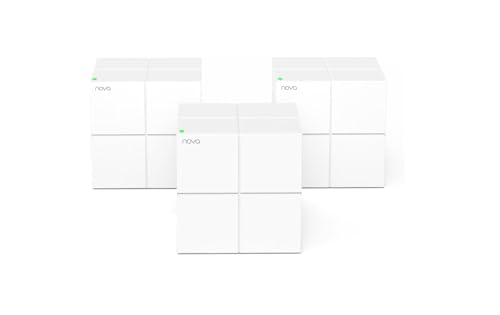
Tenda 3-Pack Dual-Band Wi-Fi 5 Mesh System
Best for: medium homes with moderate device counts
- Wi-Fi Standard
- Wi-Fi 5 (what this guide is about)
- Speed Rating
- AC1200
- Coverage Area
- up to 3500 sq.ft.
- Frequency Bands
- Dual-Band
- Pack Size
- 3-Pack
- Device Capacity
- up to 90 devices
View on Amazon: Tenda 3-Pack Dual-Band Wi-Fi 5 Mesh System Affiliate link
The Tenda Nova MW6 is a Wi-Fi 5 mesh system designed for homes up to 3,500 square feet. It uses dual-band AC1200 speeds and supports up to 90 devices. The three-pack includes gigabit ports for wired connections. You get seamless roaming with a single network name. This setup replaces traditional extenders to eliminate dead zones in larger houses.
Pros
- Wi-Fi 5 AC1200 dual-band standard
- Covers up to 3,500 sq.ft.
- Supports up to 90 connected devices
- Includes gigabit Ethernet ports
- 3-pack configuration for whole-home coverage
Cons
- Wi-Fi 5 is an older standard compared to newer Wi-Fi 7 options
- Dual-band limits bandwidth compared to tri-band systems
- Maximum capacity of 90 devices may be low for very large networks
Good fit if
- You need coverage for a 4-6 bedroom home
- You have up to 90 devices to connect
- You want to replace existing Wi-Fi extenders
Skip if
- You require the latest Wi-Fi 7 speeds
- You have more than 90 devices
- You need tri-band performance for heavy congestion
Verdict: Tenda Nova MW6 AC1200 Mesh System fits homes needing reliable Wi-Fi 5 coverage for up to 90 devices across 3,500 square feet.
Specifications side by side
| Spec | TP-Link Deco WiFi 7 Dual-Band 2-Pack | Tenda 3-Pack Dual-Band Wi-Fi 5 Mesh System |
|---|---|---|
| Wi-Fi Standard | WiFi 7 | not stated |
| Speed Rating | BE5000 | AC1200 |
| Coverage Area | 4,600 sq. ft. | up to 3500 sq.ft. |
| Frequency Bands | Dual-Band | Dual-Band |
| Pack Size | 2-Pack | 3-Pack |
| Port Speed | 2.5G | not stated |
| Device Capacity | over 150 devices | up to 90 devices |
| Frequency Band | Dual-Band | Dual-Band |
| Features | VPN, Mesh, Seamless Roaming | Mesh |
| Intended Use | not stated | Home |
| Placement | Indoor | not stated |
| Dimensions | 5.91 × 5.91 × 2.44 inches | 3.93 × 3.93 × 3.93 inches |
| Weight | 2.23 pounds | 1.83 pounds |
| Size | 2 Pack | 3 Pack |
| Color | White | white |
| Model | Deco BE25(2-Pack) | MW6-3 |
Frequently asked questions
Is Wi-Fi 7 worth the upgrade from Wi-Fi 5 for my home network?
Yes, if you have many connected devices or need high bandwidth. The TP-Link Deco 7 BE25 supports over 150 devices and covers 4,600 square feet. It features a 2.5G Ethernet port for faster wired connections. Wi-Fi 5 systems like the Tenda Nova MW6 handle up to 90 devices across 3,500 square feet. Choose Wi-Fi 7 for future-proofing and heavy usage.
How many devices can a Wi-Fi 7 mesh system handle compared to Wi-Fi 5?
Wi-Fi 7 systems generally support more simultaneous connections. The TP-Link Deco 7 BE25 handles over 150 devices. In contrast, the Tenda Nova MW6 Wi-Fi 5 system supports up to 90 devices. This makes Wi-Fi 7 better for homes with smart home gadgets, multiple screens, and many users. Wi-Fi 5 remains suitable for moderate device counts in smaller spaces.
What is the coverage area difference between these two mesh systems?
Coverage depends on the specific model and home layout. The TP-Link Deco 7 BE25 covers up to 4,600 square feet. The Tenda Nova MW6 covers 3,500 square feet. Larger homes with many walls may benefit from the extended range of Wi-Fi 7. Both systems use dual-band technology for seamless roaming across your property.
Does Wi-Fi 7 offer faster wired connection speeds?
Yes, Wi-Fi 7 systems often include higher-speed ports. The TP-Link Deco 7 BE25 features a 2.5G Ethernet port. This allows for faster data transfer to wired devices like gaming consoles or desktop computers. The Tenda Nova MW6 uses standard Gigabit ports. If you need speeds beyond 1 Gbps, the Wi-Fi 7 option is the practical choice.
Which mesh system is better for large homes with many users?
The TP-Link Deco 7 BE25 is the stronger choice for large homes. It covers 4,600 square feet and supports over 150 devices. Its Wi-Fi 7 standard handles high traffic efficiently. The Tenda Nova MW6 is designed for medium homes with moderate usage. It covers 3,500 square feet and supports 90 devices. Select the Wi-Fi 7 system for maximum capacity and range.
Do I need a tri-band system for Wi-Fi 7 performance?
Not necessarily. The TP-Link Deco 7 BE25 is a dual-band Wi-Fi 7 system. It delivers robust performance without a dedicated tri-band backhaul. This makes it a strong choice for users prioritizing wide coverage and high device capacity. Tri-band is not required for Wi-Fi 7 to function effectively in most home environments.