TP-Link N300 WiFi Extender vs TP-Link Dual-Band WiFi 6 Extender (2026): Key Differences
As an Amazon Associate we earn from qualifying purchases. Links on this page are affiliate links.
This tp link n300 wifi extender vs dual band wifi 6 extender comparison helps you choose the right device for your home network. Both units expand coverage and include an Ethernet port for wired connections. The main difference lies in their performance standards. The RE105 uses older N300 technology, while the RE505X supports modern WiFi 6 speeds. You need to decide if basic coverage or high-speed performance matters more to your specific setup.
Key differences
| Aspect | TP-Link N300 WiFi Extender | TP-Link Dual-Band WiFi 6 Extender |
|---|---|---|
| Wi-Fi Standard | N300 (802.11n) | WiFi 6 (802.11ax) |
| Speed Rating | N300 | Up to 1.5 Gbps |
| Ethernet Port | Fast Ethernet | Gigabit Ethernet |
| Operating Modes | Repeater, Access Point | Extender |
Which one should you choose?
Choose TP-Link N300 WiFi Extender if
- You need a budget-friendly option for basic internet browsing.
- You want to create a separate access point for wired devices.
- You have fewer devices and lower speed requirements.
Choose TP-Link Dual-Band WiFi 6 Extender if
- You stream 4K video or play online games regularly.
- You have multiple connected devices causing network congestion.
- You want future-proof technology with faster data rates.
Verdict: The TP-Link RE105 suits users with simple needs and lower bandwidth demands. The RE505X is better for households with high-speed internet and many connected devices. Choose the model that matches your current router's capabilities and your daily usage patterns.
N300 vs Dual-Band WiFi 6 Specs
Wi-Fi standard
The TP-Link N300 WiFi Extender relies on older N300 technology, which limits its ability to handle modern network demands efficiently. In contrast, the TP-Link Dual-Band WiFi 6 Extender supports the latest WiFi 6 standard. This newer protocol offers improved data handling and reduced latency for connected devices. You will notice better performance when multiple devices stream or download simultaneously. The upgrade to WiFi 6 provides a more robust foundation for today’s high-bandwidth applications. It ensures smoother connectivity in busy households. If you plan to keep your network current for several years, the newer standard is the logical choice for future-proofing your home setup.
Speed rating
Speed ratings differ significantly between these two extenders. The N300 model caps out at N300 speeds, which is sufficient for basic browsing but may struggle with heavy loads. The Dual-Band WiFi 6 Extender offers speeds up to 1.5 Gbps, with 1201 Mbps on the 5 GHz band and 300 Mbps on the 2.4 GHz band. This substantial increase allows for faster file transfers and higher-quality video streaming. You get more bandwidth to distribute among your devices. The higher rating means less congestion during peak usage times. For users who prioritize speed and responsiveness, the higher rating of the second model provides a clear advantage in daily performance.
Frequency band
Both devices offer dual-band capabilities, but the implementation varies. The TP-Link N300 WiFi Extender includes two external antennas to support its coverage needs. The TP-Link Dual-Band WiFi 6 Extender also operates on dual bands, specifically separating traffic between 2.4 GHz and 5 GHz frequencies. This separation helps reduce interference and improves overall network stability. The 5 GHz band on the newer model delivers higher speeds, while the 2.4 GHz band provides better range. You benefit from this separation by having dedicated channels for different types of traffic. This configuration helps maintain consistent performance across various devices in your home network environment.
Ethernet port
Both extenders include an Ethernet port for wired connections, but the port types differ. The TP-Link N300 WiFi Extender features a fast Ethernet port, which is suitable for standard wired connections. The TP-Link Dual-Band WiFi 6 Extender includes a gigabit Ethernet port. This port supports higher data transfer rates for connected devices like gaming consoles or smart TVs. You can achieve faster wired speeds with the gigabit option. This is particularly useful if you connect bandwidth-intensive devices directly to the extender. The difference in port speed ensures that your wired connections do not become a bottleneck in your network setup.
Compatibility
Compatibility features vary between the two models. The TP-Link N300 WiFi Extender is designed to work with any WiFi router, gateway, or access point. It also supports Access Point mode for creating new networks. The TP-Link Dual-Band WiFi 6 Extender supports OneMesh compatibility, allowing it to create a seamless WiFi network with compatible routers like the Archer A7. This feature lets you move between nodes without switching networks manually. You gain convenience with the OneMesh integration if you use a compatible router. The N300 offers broader basic compatibility, while the newer model offers advanced seamless roaming features.
Which extender fits your needs
Budget users with light internet habits
The RE105 offers basic N300 coverage for simple tasks. It includes two external antennas for improved range and a fast Ethernet port for wired connections. You can manage it easily via the Tether app. This model suits homes where high-speed streaming or heavy gaming are not primary concerns. It provides reliable signal extension without the cost of advanced standards.
Users needing high speed and low latency
The RE505X supports WiFi 6 with speeds up to 1.5 Gbps. This dual-band extender handles multiple devices with reduced latency. It features a gigabit Ethernet port for stable wired connections. You get smoother streaming and gaming performance. The OneMesh compatibility creates a seamless network with supported routers. This choice is best for modern networks requiring efficient data handling and higher throughput.
Those wanting seamless whole-home coverage
This extender supports OneMesh technology for unified network management. You avoid switching networks manually as you move through your home. The WiFi 6 standard ensures better connection stability for many devices. The gigabit port maintains high-speed wired links. This setup eliminates dead zones effectively. It is ideal if you want a cohesive network experience with compatible routers for consistent signal strength everywhere.
The products compared
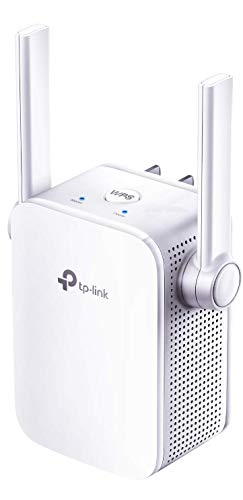
TP-Link N300 WiFi Extender
Best for: small spaces with light internet use
- Speed Rating
- N300
- Frequency Bands
- Single-Band (2.4 GHz)
- Operating Modes
- Range Extender, Access Point
- Antenna Count
- 2 external
- Placement
- Wall Plug Design
- Intended Use
- Home
View on Amazon: TP-Link N300 WiFi Extender Affiliate link
The TP-Link RE105 is a single-band N300 extender designed for basic home coverage. It uses two external antennas and MIMO technology to extend signal range rather than boost speed. The unit includes one fast Ethernet port for wired connections and supports both repeater and access point modes. You can manage it via the Tether app or its signal indicator. This model suits users needing simple, reliable coverage for light tasks.
Pros
- Two external antennas with MIMO for improved range
- Supports Repeater and Access Point operating modes
- Includes a fast Ethernet port for wired devices
- Compact white and grey design fits in corners
Cons
- Single-band N300 speed rating limits performance
- No dual-band or WiFi 6 support for modern devices
- Only one Ethernet port for wired connections
Good fit if
- You need to extend WiFi to a small area
- You only require basic web browsing and email
- You want a simple setup with the Tether app
Skip if
- You stream 4K video or play online games
- You have many high-bandwidth devices
- You need faster dual-band WiFi speeds
Verdict: TP-Link RE105 N300 WiFi Extender is a budget-friendly option for extending signal to a single room or small space. It fits users who only need basic connectivity for light internet use.

TP-Link Dual-Band WiFi 6 Extender
Best for: Streaming and gaming in homes with OneMesh routers
- Wi-Fi Standard
- WiFi 6
- Speed Rating
- Up to 1.5 Gbps
- Frequency Bands
- Dual-Band
- Ethernet Ports
- 1 x Gigabit
- Operating Modes
- Extender
- Dimensions
- 3.83 × 2.48 × 6.23 inches
View on Amazon: TP-Link Dual-Band WiFi 6 Extender Affiliate link
The TP-Link RE505X expands your home network using dual-band WiFi 6 technology. It delivers combined speeds up to 1.5 Gbps, with 1201 Mbps on the 5 GHz band and 300 Mbps on the 2.4 GHz band. A single gigabit ethernet port allows wired connections for devices like smart TVs. It works with OneMesh compatible routers to create a seamless network. This white extender measures 6.23 inches tall and weighs 8 ounces. It suits users needing reliable coverage for streaming and gaming.
Pros
- WiFi 6 standard for improved reliability and speed
- Dual-band operation up to 1.5 Gbps total
- One gigabit ethernet port for wired connections
- OneMesh compatible for seamless network roaming
Cons
- Only one ethernet port limits wired device connections
- No mention of smart app control for management
- Renewed condition may vary in cosmetic appearance
Good fit if
- You need to eliminate dead zones in a medium-sized home
- You want to connect a wired device via ethernet
- You already own a OneMesh compatible router
Skip if
- You require multiple ethernet ports for wired devices
- You need tri-band speeds for heavy congestion
- You prefer a brand new unit with full warranty
Verdict: The TP-Link RE505X Dual-Band WiFi 6 Extender fits homes needing solid coverage for streaming and gaming without complex setup. It is ideal for users with OneMesh routers who want a simple, high-speed booster.
Specifications side by side
| Spec | TP-Link N300 WiFi Extender | TP-Link Dual-Band WiFi 6 Extender |
|---|---|---|
| Wi-Fi Standard | not stated | WiFi 6 |
| Speed Rating | N300 | Up to 1.5 Gbps |
| Frequency Bands | Single-Band (2.4 GHz) | Dual-Band |
| Ethernet Ports | not stated | 1 x Gigabit |
| Operating Modes | Range Extender, Access Point | Extender |
| Antenna Count | 2 external | not stated |
| Placement | Wall Plug Design | not stated |
| Intended Use | Home | not stated |
| Operating Mode | Access Point Mode | not stated |
| Dimensions | 3.15 × 2 × 2.7 inches | 3.83 × 2.48 × 6.23 inches |
| Weight | 4.23 ounces | 8 ounces |
| Size | WiFi Extender- N300(Newer Model) | not stated |
| Color | White,Grey | White |
| Model | ELCM | RE505X |
Frequently asked questions
Which extender is better for gaming?
The TP-Link Dual-Band WiFi 6 Extender is the better choice for gaming. It supports WiFi 6, which offers improved data handling and reduced latency compared to older standards. This results in smoother gameplay and fewer lag spikes. The N300 model lacks these modern features, making it less suitable for interactive online activities.
Do both extenders support dual-band WiFi?
No, they differ in band support. The TP-Link Dual-Band WiFi 6 Extender operates on both 2.4 GHz and 5 GHz frequencies. The TP-Link N300 WiFi Extender is limited to the 2.4 GHz band. Dual-band capability allows the RE505X to reduce congestion by connecting devices to the less crowded 5 GHz channel.
What is the size difference between the two?
The Dual-Band WiFi 6 Extender is larger and heavier. It measures 3.83 inches in length and weighs 8 ounces. The N300 Extender is more compact, measuring 3.15 inches in length and weighing 4.23 ounces. The smaller form factor of the N300 model makes it easier to fit into tight spaces without obstructing outlets.
Can I use these with OneMesh routers?
Yes, the TP-Link Dual-Band WiFi 6 Extender is ideal for homes with OneMesh routers. It integrates seamlessly to create a unified network. The N300 model is a standalone extender. While it expands coverage, it does not offer the same seamless roaming experience provided by the OneMesh-compatible RE505X.
Is the N300 extender suitable for 4K streaming?
It is not recommended for 4K streaming. The N300 WiFi Extender is best for small spaces with light internet use. Its older technology limits throughput. The Dual-Band WiFi 6 Extender provides the necessary speed and stability for high-bandwidth tasks like 4K video streaming, ensuring a buffer-free viewing experience.
Do both devices include Ethernet ports?
Yes, both units include an Ethernet port for wired connections. This feature allows you to connect devices like smart TVs or gaming consoles directly to the extender. Wired connections provide a more stable link than wireless, which is beneficial for devices that require consistent high-speed data transfer.