3,000 Sq ft vs 2,500 Sq. Ft. Wifi Routers in 2026: Key Differences
As an Amazon Associate we earn from qualifying purchases. Links on this page are affiliate links.
Choosing between a 3000 sq ft vs 2500 sq ft wifi router depends on your home size and device load. Both systems support modern Wi-Fi standards and manage multiple connections. The main difference lies in coverage area and technology generation. One offers a mesh system for larger spaces, while the other provides a single high-performance unit. You need to weigh coverage needs against speed capabilities. This comparison highlights how each option serves different household requirements effectively.
Key differences
| Aspect | Amazon eero 6+ 2-Pack Mesh System | NETGEAR Nighthawk Tri-Band WiFi 7 Router |
|---|---|---|
| Coverage Area | up to 3,000 sq. ft. | up to 2,500 sq. ft. |
| Wi-Fi Standard | Wi-Fi 6 | Wi-Fi 7 |
| Device Capacity | 75+ devices | 100 devices |
| Frequency Bands | Dual-band (implied by Wi-Fi 6) | Tri-band |
| Pack Size | 2-Pack | Single router |
| Wired Ports | Gigabit | 2.5 Gbps WAN, 2.5 Gbps LAN ports |
Which one should you choose?
Choose Amazon eero 6+ 2-Pack Mesh System if
- You have a larger home up to 3,000 square feet.
- You prefer a mesh system with two units for better coverage.
- You want built-in smart home hub support for Thread and Zigbee devices.
Choose NETGEAR Nighthawk Tri-Band WiFi 7 Router if
- You need the latest Wi-Fi 7 technology for faster speeds.
- You have up to 100 devices connected simultaneously.
- You require multi-gigabit wired connections for gaming or NAS.
Verdict: Choose the eero 6+ if your priority is maximizing coverage area with a two-unit mesh system for larger homes. Select the NETGEAR Nighthawk RS300 if you prioritize cutting-edge Wi-Fi 7 speed and higher device capacity within a smaller footprint. Your decision should hinge on whether square footage or raw performance matters more to your specific setup.
Coverage and Standard Comparison
Coverage Area
The Amazon eero 6+ 2-Pack Mesh System covers up to 3,000 square feet. This larger footprint makes it suitable for bigger homes or open floor plans where signal strength needs to reach further corners. The NETGEAR Nighthawk Tri-Band WiFi 7 Router covers up to 2,500 square feet. While still robust for average-sized residences, it reaches slightly less distance than the eero system. If your home exceeds 2,500 square feet, the eero mesh nodes may provide more consistent connectivity across the entire space. The eero holds the advantage here for larger square footage requirements.
Wi-Fi Standard
The NETGEAR Nighthawk router uses Wi-Fi 7 technology, the latest generation available. This standard offers improved efficiency, lower latency, and higher throughput compared to older standards. The Amazon eero 6+ system uses Wi-Fi 6, which is a mature and widely supported standard. Wi-Fi 6 provides excellent performance for most households and supports 160 MHz channels for faster data rates. Wi-Fi 7 is newer and future-proofs your network for devices that support the latest protocol. The NETGEAR Nighthawk has the edge with newer technology.
Device Capacity
The NETGEAR Nighthawk Tri-Band WiFi 7 Router supports up to 100 devices on the network. This higher capacity is beneficial for homes with many smart devices, computers, and phones connected simultaneously. The Amazon eero 6+ 2-Pack Mesh System supports 75 or more devices. While this is sufficient for many families, it offers less headroom for very dense device environments. If you have a large number of connected gadgets, the NETGEAR router provides more room for growth. The NETGEAR Nighthawk holds the advantage for higher device loads.
Frequency Bands
The NETGEAR Nighthawk router is a tri-band device, featuring three separate frequency bands. This includes a dedicated third band, often the 6 GHz band in Wi-Fi 7 systems, to reduce congestion on the 2.4 GHz and 5 GHz bands. The Amazon eero 6+ system is a dual-band mesh network. It uses two bands to handle traffic, which is standard for most Wi-Fi 6 mesh systems. Tri-band setups can offer better performance for multiple high-demand streams by dedicating a band to backhaul or specific devices. The NETGEAR Nighthawk has the advantage with tri-band architecture.
Pack Size
The Amazon eero 6+ comes as a 2-Pack mesh system. This includes two router units designed to work together to extend coverage. The NETGEAR Nighthawk is listed as a single router unit. You get one high-performance router rather than a multi-node mesh set. If you need mesh coverage, the eero provides the necessary hardware out of the box. The NETGEAR router may require additional mesh nodes for larger homes, which are sold separately. The eero system has the advantage for immediate mesh setup.
Port Speed
The NETGEAR Nighthawk router features a 2.5 Gig WAN port and two 2.5 Gig LAN ports. This allows it to handle internet plans faster than 1 Gigabit and connect wired devices at multi-gig speeds. The Amazon eero 6+ system supports gigabit speeds with standard Gigabit Ethernet ports. This is sufficient for internet plans up to 1 Gigabit. If your internet service provider offers speeds above 1 Gigabit, the NETGEAR router can fully utilize that bandwidth. The NETGEAR Nighthawk holds the edge for multi-gig internet support.
Which mesh system fits your needs
Large home owners with many devices
This mesh system covers up to 3,000 square feet. It supports 75 or more devices simultaneously. The Wi-Fi 6 standard includes 160 MHz channels for better bandwidth. You get a built-in smart home hub for Thread and Zigbee. The two-pack design ensures consistent coverage throughout larger spaces without dead spots.
Users wanting next-gen Wi-Fi speeds
This router uses Wi-Fi 7 technology for faster connectivity. It delivers up to 9.3 Gbps across three bands. The tri-band design includes a dedicated high-speed band for demanding tasks. You get five Ethernet ports, including 2.5 Gig WAN and LAN options. It supports up to 100 devices for heavy usage.
People seeking easy whole-home setup
The eero 6+ includes two routers for seamless mesh coverage. TrueMesh technology intelligently routes traffic to reduce drop-offs. Setup takes minutes with the guided app. The system manages 75+ devices reliably. You also get a built-in hub for smart home devices, eliminating the need for separate hubs.
Quick picks
| # | Product | Best for | Price |
|---|---|---|---|
| 1 | Amazon eero 6+ 2-Pack Mesh System | 3,000 sq ft homes with many devices | Check price of Amazon eero 6+ 2-Pack Mesh System on Amazon |
| 2 | NETGEAR Nighthawk Tri-Band WiFi 7 Router | Multi-gig internet plans and 2,500 sq ft homes | Check price of NETGEAR Nighthawk Tri-Band WiFi 7 Router on Amazon |
The products compared
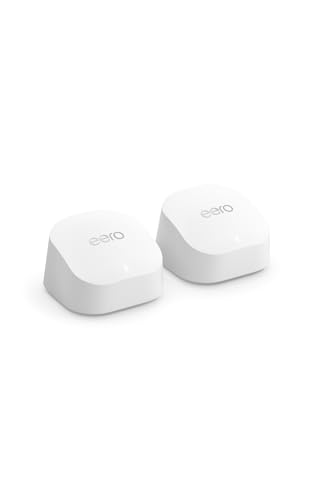
Amazon eero 6+ 2-Pack Mesh System
Best for: 3,000 sq ft homes with many devices
- Coverage Area
- 3,000 Sq Ft (what this guide is about)
- Wi-Fi Standard
- Wi-Fi 6
- Device Capacity
- 75+ devices
- Pack Size
- 2-Pack
- Features
- Mesh
- Port Speed
- Gigabit
View on Amazon: Amazon eero 6+ 2-Pack Mesh System Affiliate link
The eero 6+ covers up to 3,000 square feet with Wi-Fi 6 speeds up to a gigabit. It supports 75 or more devices simultaneously. The system includes two routers. TrueMesh technology routes traffic to reduce dead spots. A built-in hub connects Thread and Zigbee devices. This setup suits homes needing reliable whole-home coverage for multiple users.
Pros
- Covers up to 3,000 square feet
- Supports 75+ devices
- Built-in Thread and Zigbee hub
- Wi-Fi 6 with 160 MHz channel
Cons
- Limited to Wi-Fi 6 standard
- Max speed capped at gigabit
- Requires separate subscription for advanced security
Good fit if
- You need coverage for 3,000 square feet
- You have many smart home devices
- You want simple mesh setup
Skip if
- You require Wi-Fi 7 speeds
- You need speeds above gigabit
- You want advanced security included
Verdict: eero 6+ Mesh System delivers reliable 3,000 square foot coverage for homes with many connected devices. It fits users who prioritize broad mesh coverage and smart home integration over cutting-edge Wi-Fi 7 speeds.

NETGEAR Nighthawk Tri-Band WiFi 7 Router
Best for: Multi-gig internet plans and 2,500 sq ft homes
- Coverage Area
- 2,500 Sq. Ft. (what this guide is about)
- Wi-Fi Standard
- WiFi 7
- Speed Rating
- BE9300
- Frequency Bands
- Tri-Band
- Device Capacity
- 100 devices
- Max Port Speed
- 2.5 Gbps
View on Amazon: NETGEAR Nighthawk Tri-Band WiFi 7 Router Affiliate link
The NETGEAR Nighthawk RS300 is a tri-band WiFi 7 router covering up to 2,500 square feet. It supports up to 100 devices and offers 9.3 Gbps combined speeds. You get a 2.5 Gig WAN port and two 2.5 Gig LAN ports for multi-gig internet plans. The Nighthawk app manages the network. This unit suits homes with fast fiber or cable plans.
Pros
- WiFi 7 standard with 9.3 Gbps total speed
- Tri-band design with dedicated high-speed band
- 2.5 Gig WAN and two 2.5 Gig LAN ports
- Supports up to 100 connected devices
Cons
- 2,500 sq ft coverage is smaller than 3,000 sq ft models
- No mention of built-in modem or gateway
- NETGEAR Armor security requires a paid subscription after trial
Good fit if
- You need WiFi 7 speeds for future-proofing
- You have a multi-gig internet plan
- You want app-based network management
Skip if
- You need coverage larger than 2,500 square feet
- You want a mesh system for multi-story homes
- You prefer included security subscriptions
Verdict: NETGEAR Nighthawk RS300 Tri-Band WiFi 7 Router fits users with fast internet plans who need multi-gig wired ports and app control. It covers 2,500 square feet effectively but lacks the wider range of larger mesh systems.
Specifications side by side
| Spec | Amazon eero 6+ 2-Pack Mesh System | NETGEAR Nighthawk Tri-Band WiFi 7 Router |
|---|---|---|
| Wi-Fi Standard | Wi-Fi 6 | WiFi 7 |
| Speed Rating | not stated | BE9300 |
| Frequency Bands | not stated | Tri-Band |
| Coverage Area | 3,000 sq ft | 2,500 sq ft |
| Device Capacity | 75+ devices | 100 devices |
| Max Port Speed | not stated | 2.5 Gbps |
| Ethernet Ports | not stated | 4 |
| Frequency Band | not stated | Tri-Band |
| Pack Size | 2-Pack | not stated |
| Features | Mesh | not stated |
| Port Speed | Gigabit | Gigabit, 2.5G |
| Dimensions | 3.94 × 3.82 × 2.6 inches | 9.8 × 4 × 9.8 inches |
| Weight | 11 ounces | not stated |
| Size | 2 routers | 9.3 Gbps |
| Color | WHITE | black or white |
| Model | R010001 | RS300-100APS |
Frequently asked questions
Is a 3,000 sq ft router better for large homes?
Yes, if your home exceeds 2,500 square feet. The Amazon eero 6+ 2-Pack covers up to 3,000 square feet. This mesh system supports 75 or more devices. It is ideal for larger spaces with many connected gadgets. You get reliable coverage across more rooms.
Which router handles more simultaneous devices?
The Amazon eero 6+ 2-Pack handles more devices. It supports 75 or more connections simultaneously. This capacity suits homes with many smart devices. The NETGEAR Nighthawk focuses on speed for fewer connections. It covers 2,500 square feet effectively for smaller loads.
Does a 3,000 sq ft router use mesh technology?
Not necessarily, but the top 3,000 sq ft option does. The Amazon eero 6+ is a mesh system with two routers. It uses Wi-Fi 6 for stable connections. The NETGEAR Nighthawk is a single router. It uses newer Wi-Fi 7 technology for faster speeds.
Can I use a 2,500 sq ft router in a 3,000 sq ft home?
You can, but coverage may be weaker in distant rooms. The NETGEAR Nighthawk covers 2,500 square feet. It lacks the wider range of larger mesh systems. For full coverage in a 3,000 square foot home, a mesh system like the eero 6+ is more reliable.
What is the difference in Wi-Fi standards between these options?
The Amazon eero 6+ uses Wi-Fi 6. It includes 160 MHz channels for better bandwidth. The NETGEAR Nighthawk uses Wi-Fi 7. It offers higher combined speeds of 9.3 Gbps. Wi-Fi 7 is newer, but Wi-Fi 6 remains efficient for most homes.
Do I need multiple units for a 3,000 sq ft area?
Yes, a multi-unit system provides better coverage. The Amazon eero 6+ comes as a 2-Pack. Two routers ensure signal reaches further corners. A single router like the NETGEAR Nighthawk may struggle in larger spaces. Mesh systems distribute the signal more evenly across the home.