Tri-Band or Quad-Band Mesh Wifi Systems? Compared by Specs
As an Amazon Associate we earn from qualifying purchases. Links on this page are affiliate links.
You are deciding between a tri band vs quad band mesh wifi system. Both options come in 2-packs and cover large homes. The main difference lies in their Wi-Fi standards and band counts. One uses Wi-Fi 6E with three bands, while the other uses Wi-Fi 7 with four bands. This affects speed, capacity, and wired connectivity. You need to know which specs match your home's needs.
Key differences
| Aspect | TP-Link Deco Tri-Band WiFi 6E 2-Pack | TP-Link Deco Quad-Band Wi-Fi 7 2-Pack |
|---|---|---|
| Wi-Fi Standard | Wi-Fi 6E | Wi-Fi 7 |
| Frequency Band | Tri-Band | Quad-Band |
| Speed Rating | AXE5400 | BE33000 |
| Coverage Area | Up to 5,500 Sq.Ft | Up to 7,800 Sq.Ft |
| Wired Ports | not listed | 4 ports (2x 10G, 2x 2.5G) |
Which one should you choose?
Choose TP-Link Deco Tri-Band WiFi 6E 2-Pack if
- You want a proven Wi-Fi 6E system with dedicated backhaul on the 6 GHz band.
- Your home is under 5,500 square feet.
- You prefer a smaller, lighter device footprint.
Choose TP-Link Deco Quad-Band Wi-Fi 7 2-Pack if
- You need the latest Wi-Fi 7 features like 320 MHz channels.
- You have a home larger than 5,500 square feet.
- You require multi-gigabit wired ports for high-speed devices.
Verdict: Choose the tri-band model if your home is smaller and you want reliable Wi-Fi 6E performance. Choose the quad-band model if you have a large home or need high-speed wired connections. The quad-band system offers more speed and coverage for future-proofing.
Tri-Band vs Quad-Band Mesh Specs
Wi-Fi standard
The TP-Link Deco XE75 uses Wi-Fi 6E technology. This standard adds the 6 GHz band to the traditional 2.4 GHz and 5 GHz bands. It helps reduce interference from older devices. The Deco 7 Elite uses the newer Wi-Fi 7 standard. Wi-Fi 7 introduces features like 320 MHz channels and 4K-QAM. These changes allow for faster data transmission and lower latency. Wi-Fi 7 is the latest generation, offering more advanced capabilities than Wi-Fi 6E. You get future-proof technology with the Deco 7 Elite, while the XE75 remains a solid, proven choice.
Frequency bands
The Deco XE75 is a tri-band system. It combines 2.4 GHz, 5 GHz, and a single 6 GHz band. This setup provides dedicated channels for backhaul and client connections. The Deco 7 Elite is a quad-band system. It includes two separate 6 GHz bands, one 5 GHz band, and one 2.4 GHz band. The extra 6 GHz band allows for more simultaneous high-speed connections. This is useful for homes with many Wi-Fi 7 devices. You get more bandwidth flexibility with the quad-band model. The tri-band system is efficient but has fewer high-speed options.
Speed rating
The Deco XE75 has an AXE5400 speed rating. It offers up to 5,400 Mbps across all bands. The 6 GHz band provides 2,402 Mbps, the 5 GHz band provides 2,402 Mbps, and the 2.4 GHz band provides 574 Mbps. The Deco 7 Elite has a BE33000 rating. It delivers significantly higher speeds, with 11,520 Mbps on each 6 GHz band. The 5 GHz band offers 8,640 Mbps, and the 2.4 GHz band offers 1,148 Mbps. The total potential throughput is much higher on the Wi-Fi 7 system. You will see faster real-world speeds with the Deco 7 Elite.
Coverage area
Both systems cover large areas, but the Deco 7 Elite reaches further. The Deco XE75 2-pack covers up to 5,500 square feet. This is sufficient for most medium to large homes. The Deco 7 Elite 2-pack covers up to 7,800 square feet. The additional coverage comes from the more powerful Wi-Fi 7 radios. If you have a very large home or multiple floors, the Deco 7 Elite provides better reach. The XE75 is adequate for smaller large homes. You need the extra range if your space exceeds 5,500 square feet.
Wired ports
The Deco XE75 specifications do not list the number or speed of its Ethernet ports. You should check the manual for exact port details. The Deco 7 Elite includes four Ethernet ports per node. Two of these are 10 Gbps ports, and two are 2.5 Gbps ports. This allows for high-speed wired connections for devices like gaming consoles or 8K TVs. The 10 Gbps ports support multi-gigabit internet plans. You get significantly better wired connectivity options with the Deco 7 Elite. The XE75 likely has standard Gigabit ports, but the data is not explicit.
Which Mesh System Fits Your Home
Users needing maximum wired speed
The Deco 7 Elite includes two 10 Gbps ports and two 2.5 Gbps ports. This allows for multi-gigabit wired connections that prevent bottlenecks. You get BE33000 speeds with 11,520 Mbps on each 6 GHz band. The quad-band design supports Multi-Link Operation for better stability. This setup handles heavy data loads from gaming consoles or 8K TVs without slowing down.
Budget-conscious buyers wanting efficiency
The Deco XE75 offers AXE5400 tri-band speeds up to 5,400 Mbps. It covers up to 5,500 square feet with three bands working together. The 6 GHz band reduces interference from legacy devices. It supports 200 devices and includes HomeShield for network security. This system provides solid Wi-Fi 6E performance for typical households without the premium cost of the latest Wi-Fi 7 hardware.
Owners of very large homes
The Deco 7 Elite covers up to 7,800 square feet. This exceeds the 5,500 square foot coverage of the Deco XE75. The quad-band architecture uses dedicated bands for backhaul, ensuring stable connections across larger distances. With BE33000 ratings and 320 MHz channels, it maintains high throughput even in expansive layouts. You get stronger signal reach for multi-story or wide-footprint residences.
Quick picks
| # | Product | Best for | Price |
|---|---|---|---|
| 1 | TP-Link Deco Tri-Band WiFi 6E 2-Pack | Large homes needing WiFi 6E backhaul | Check price of TP-Link Deco Tri-Band WiFi 6E 2-Pack on Amazon |
| 2 | TP-Link Deco Quad-Band Wi-Fi 7 2-Pack | large homes needing multi-gigabit wired ports | Check price of TP-Link Deco Quad-Band Wi-Fi 7 2-Pack on Amazon |
The products compared
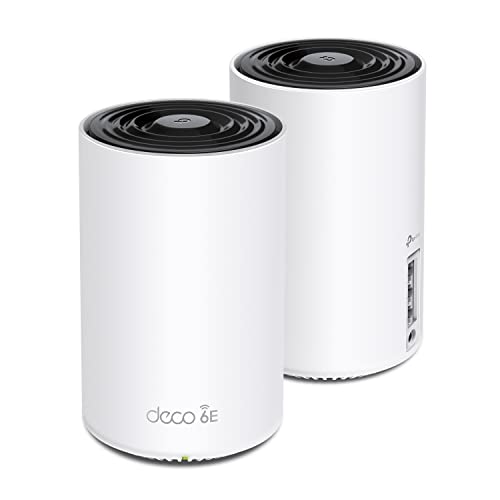
TP-Link Deco Tri-Band WiFi 6E 2-Pack
Best for: Large homes needing WiFi 6E backhaul
- Frequency Band
- Tri-Band (what this guide is about)
- Wi-Fi Standard
- WiFi 6E
- Speed Rating
- AXE5400
- Coverage Area
- up to 5500 Sq.Ft
- Frequency Bands
- Tri-Band
- Pack Size
- 2-Pack
View on Amazon: TP-Link Deco Tri-Band WiFi 6E 2-Pack Affiliate link
This TP-Link Deco XE75 is a tri-band mesh system using WiFi 6E. It covers up to 5,500 square feet and supports 200 devices. The AXE5400 rating includes a dedicated 6 GHz band for backhaul. This reduces interference from legacy devices. You get stable connections between nodes. The system includes HomeShield for basic security and parental controls. It fits homes needing wide coverage with modern standards.
Pros
- Tri-band design with dedicated 6 GHz backhaul
- Covers up to 5,500 square feet
- Supports 200 connected devices
- Includes HomeShield security and parental controls
Cons
- Limited to WiFi 6E, not the newer WiFi 7
- Lower total speed rating compared to quad-band peers
- 2-pack covers only 5,500 sq ft
Good fit if
- You have a large home up to 5,500 square feet
- You want to use the 6 GHz band for backhaul
- You need support for many connected devices
Skip if
- You require the latest WiFi 7 standard
- You need the highest possible speed ratings
- You want a quad-band system for dedicated backhaul
Verdict: The TP-Link Deco XE75 Tri-Band Mesh is a solid choice for large homes needing WiFi 6E coverage. It suits users who prioritize stable backhaul over the absolute latest speed standards.

TP-Link Deco Quad-Band Wi-Fi 7 2-Pack
Best for: large homes needing multi-gigabit wired ports
- Frequency Band
- Quad-Band (what this guide is about)
- Wi-Fi Standard
- WiFi 7
- Speed Rating
- BE33000
- Coverage Area
- 7,800 Sq.Ft.
- Frequency Bands
- Quad-Band
- Pack Size
- 2-pack
View on Amazon: TP-Link Deco Quad-Band Wi-Fi 7 2-Pack Affiliate link
This is a quad-band Wi-Fi 7 mesh system designed for large homes up to 7,800 square feet. It offers BE33000 speeds with dedicated 6GHz backhaul bands. The unit includes two 10G and two 2.5G Ethernet ports for wired connections. It supports over 200 devices simultaneously. This system suits users needing high capacity and multi-gigabit wired speeds for future-proofing their network infrastructure.
Pros
- Quad-band Wi-Fi 7 architecture with dedicated 6GHz backhaul
- Two 10G and two 2.5G Ethernet ports per unit
- Supports over 200 connected devices
- Covers up to 7,800 square feet
Cons
- Larger physical footprint at 9.29 inches in height
- Heavier build at 6.68 pounds per unit
- Premium Wi-Fi 7 features may be unnecessary for basic internet use
Good fit if
- You need multi-gigabit wired connections for gaming or 8K media
- You have a large home requiring extensive coverage
- You want to future-proof your network with Wi-Fi 7
Skip if
- You only require standard gigabit internet speeds
- You have a small apartment with limited space
- You prefer a more compact and lightweight mesh system
Verdict: TP-Link Deco 7 Elite BE95 Quad-Band Mesh is ideal for users demanding maximum wired speeds and high device capacity in large homes.
Specifications side by side
| Spec | TP-Link Deco Tri-Band WiFi 6E 2-Pack | TP-Link Deco Quad-Band Wi-Fi 7 2-Pack |
|---|---|---|
| Wi-Fi Standard | WiFi 6E | WiFi 7 |
| Speed Rating | AXE5400 | BE33000 |
| Coverage Area | up to 5500 Sq.Ft | 7,800 Sq.Ft. |
| Frequency Bands | Tri-Band | Quad-Band |
| Pack Size | 2-Pack | 2-pack |
| Port Speed | not stated | 10 Gbps |
| Device Capacity | 200 devices | over 200 devices |
| Frequency Band | Tri-Band | Quad-Band |
| Use Case | Gaming, Streaming | not stated |
| Features | Mesh, WPA3 | VPN, Mesh |
| Intended Use | Home | Home |
| Dimensions | 4.13 × 4.13 × 6.67 inches | 5.04 × 5.04 × 9.29 inches |
| Weight | 2.69 pounds | 6.68 pounds |
| Size | 2 Pack | 2 Pack |
| Color | Black and White | White |
| Model | Deco XE75(2-pack) | Deco BE95(2-pack) |
Frequently asked questions
What is the main difference between tri-band and quad-band mesh systems?
The primary difference is the number of frequency bands used for communication. Tri-band systems use three bands, typically including one dedicated to backhaul. Quad-band systems add a fourth band, often providing additional dedicated backhaul capacity. This extra band can help manage more simultaneous connections without slowing down your main network performance.
Does a quad-band system always offer faster speeds than a tri-band one?
Not necessarily. Speed depends on the Wi-Fi standard and the specific model. For example, the TP-Link Deco 7 Elite is quad-band and uses Wi-Fi 7, offering high theoretical speeds. The Deco XE75 is tri-band but uses Wi-Fi 6E. Your actual speed depends on your internet plan and device capabilities, not just the band count.
Is Wi-Fi 6E better than Wi-Fi 7 for mesh networking?
Wi-Fi 7 is the newer standard and offers advanced features like multi-link operation. However, Wi-Fi 6E is still highly capable and stable. The Deco XE75 uses Wi-Fi 6E, which is excellent for large homes. The Deco 7 Elite uses Wi-Fi 7 for maximum potential throughput. Choose Wi-Fi 7 if you need the latest tech, otherwise Wi-Fi 6E is sufficient.
Do I need a quad-band system if I have a large home?
It depends on your device count and usage. Both systems listed here are designed for large homes. The quad-band Deco 7 Elite handles high capacity and wired connections well. The tri-band Deco XE75 provides stable coverage for most large homes. If you have many devices or need high-speed wired ports, quad-band may be better.
What are the physical differences between the Deco XE75 and Deco 7 Elite?
The Deco 7 Elite is larger and heavier. It measures 9.29 inches in height and weighs 6.68 pounds. The Deco XE75 is more compact, standing 6.67 inches tall and weighing 2.69 pounds. Both come in 2-packs. The Deco 7 Elite is white, while the XE75 is black and white. Size matters for placement in your home.
Can I connect wired devices to these mesh systems?
Yes, both systems support wired connections. The Deco 7 Elite includes two 10 Gbps ports and two 2.5 Gbps ports. This allows for very fast wired speeds for gaming PCs or servers. The Deco XE75 also supports wired connections, though its specific port speeds are not detailed in the provided data. Wired connections reduce wireless congestion.