Tenda 3-Pack Dual-Band Wi-Fi 5 vs Tenda Nova Tri-Band AC2100 3-Pack: Spec Comparison
As an Amazon Associate we earn from qualifying purchases. Links on this page are affiliate links.
This comparison looks at the Tenda 3 Pack Dual Band Wi-Fi 5 vs Nova Tri Band AC2100 3 pack. Both systems use the Tenda Nova brand and include three units for whole-home coverage. They share Gigabit ports and support up to 90-120 devices. The main difference lies in their frequency bands and speed ratings. One model offers Dual-Band Wi-Fi 5 performance, while the other provides Tri-Band AC2100 speeds. You need to decide which spec profile fits your home size and device load.
Key differences
| Aspect | Tenda 3-Pack Dual-Band Wi-Fi 5 Mesh System | Tenda Nova Tri-Band AC2100 3-Pack |
|---|---|---|
| Wi-Fi Standard | Wi-Fi 5 | Not listed |
| Frequency Band | Dual-Band | Tri-Band |
| Speed Rating | AC1200 | AC2100 |
| Coverage Area | up to 3500 sq.ft. | up to 4000 sq.ft. |
| Device Capacity | up to 90 devices | up to 120 devices |
| Pack Size | 3-Pack | 3-Pack |
Which one should you choose?
Choose Tenda 3-Pack Dual-Band Wi-Fi 5 Mesh System if
- You have a smaller home under 3500 square feet
- You do not need a dedicated backhaul band
- You want a lighter unit at 1.83 pounds
Choose Tenda Nova Tri-Band AC2100 3-Pack if
- You need coverage for up to 4000 square feet
- You have many devices or heavy streaming needs
- You prefer Tri-Band architecture for better backhaul
Verdict: Choose the Dual-Band AC1200 system if your home is smaller and your device count is moderate. The Tri-Band AC2100 model is better for larger spaces or homes with many simultaneous connections. Both provide seamless roaming and secure networks for typical household use.
Specs: Tenda AC1200 vs AC2100
frequency band
The Tenda Nova Tri-Band AC2100 3-Pack uses three frequency bands: 2.4GHz, 5GHz-1, and 5GHz-2. One 5GHz band serves as a dedicated backhaul to reduce lag during heavy streaming. The Tenda 3-Pack Dual-Band Wi-Fi 5 system relies on dual-band technology. It shares the 2.4GHz and 5GHz bands for both client connections and backhaul communication. Tri-band architecture generally offers better performance in busy homes by keeping the backhaul traffic separate from device traffic. This separation helps maintain speed when multiple devices are active. Dual-band systems must split available bandwidth between these functions.
speed rating
The AC2100 model provides a higher combined wireless speed rating than the AC1200 system. The Tenda Nova Tri-Band AC2100 3-Pack is rated for AC2100 speeds. The Tenda 3-Pack Dual-Band Wi-Fi 5 system is rated for AC1200 speeds. Higher speed ratings indicate greater potential throughput for data-intensive tasks. The AC2100 system can handle more data simultaneously across its three bands. The AC1200 system offers sufficient speed for standard browsing and streaming but has less total bandwidth capacity. If you require maximum raw speed for large file transfers or 4K streaming, the higher rating matters.
coverage area
Coverage claims differ between the two mesh systems. The Tenda Nova Tri-Band AC2100 3-Pack covers up to 4,000 square feet. The Tenda 3-Pack Dual-Band Wi-Fi 5 system covers up to 3,500 square feet. The AC2100 system provides 500 more square feet of coverage. This difference may matter for larger homes or properties with many walls. Both systems aim to eliminate dead zones through mesh networking. The slightly larger coverage area of the AC2100 model makes it better suited for bigger floor plans. Smaller homes might not notice the difference, but larger spaces benefit from the extra reach.
device capacity
The number of supported devices varies between the two systems. The Tenda Nova Tri-Band AC2100 3-Pack supports up to 120 devices. The Tenda 3-Pack Dual-Band Wi-Fi 5 system supports up to 90 devices. A higher device capacity is useful for homes with many smart gadgets, phones, and computers. The AC2100 system can handle 30 more connected devices than the AC1200 model. This extra capacity helps prevent network congestion in busy households. If you have a large number of IoT devices or multiple users streaming simultaneously, the higher capacity provides more headroom.
weight
The physical weight of the units differs significantly. The Tenda Nova Tri-Band AC2100 3-Pack units weigh 3.82 pounds each. The Tenda 3-Pack Dual-Band Wi-Fi 5 system units weigh 1.83 pounds each. The AC2100 units are more than double the weight of the AC1200 units. Heavier units may feel more solid and stable on shelves or desks. Lighter units are easier to move and reposition during setup or troubleshooting. The weight difference reflects internal hardware variations, such as antenna counts or power supplies. Both sets of units are compact cubes, but the AC2100 model is noticeably bulkier.
Which Tenda Mesh System Fits You
Budget-conscious small home users
The Tenda 3-Pack Dual-Band Wi-Fi 5 covers up to 3500 square feet. It supports up to 90 devices and uses AC1200 speeds. This model is lighter and smaller. It suits smaller homes where a dedicated backhaul band is unnecessary. You get reliable whole-home coverage without paying for extra bands you may not need.
Heavy streaming households
The Tenda Nova Tri-Band AC2100 3-Pack includes a dedicated backhaul band. This reduces lag when multiple devices stream simultaneously. It covers up to 4000 square feet and supports up to 120 devices. The extra 5GHz band keeps your main network fast. This setup handles heavy traffic better than the dual-band alternative.
Large home owners
If your home exceeds 3500 square feet, the AC2100 model provides up to 4000 square feet of coverage. It supports more devices, up to 120, compared to the 90 limit on the AC1200. The tri-band design ensures stable connections across a larger area. You avoid dead zones in bigger spaces with this higher-capacity system.
Simple setup seekers
The AC1200 system offers straightforward setup via the Tenda Wi-Fi APP. You can add nodes in three simple steps. It provides seamless roaming with a single network name. For users who want basic mesh functionality without complex configurations, this dual-band option delivers easy management and reliable performance for everyday tasks.
The products compared
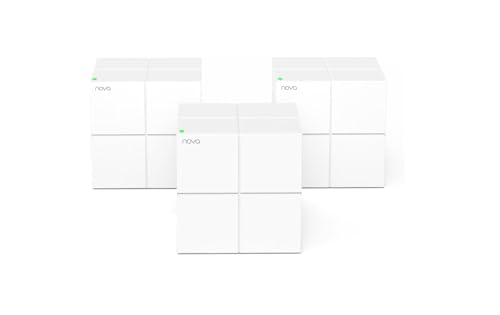
Tenda 3-Pack Dual-Band Wi-Fi 5 Mesh System
Best for: Medium homes with moderate device loads
- Speed Rating
- AC1200
- Coverage Area
- up to 3500 sq.ft.
- Frequency Bands
- Dual-Band
- Pack Size
- 3-Pack
- Device Capacity
- up to 90 devices
- Wi-Fi Standard
- Wi-Fi 5
View on Amazon: Tenda 3-Pack Dual-Band Wi-Fi 5 Mesh System Affiliate link
The Tenda Nova MW6 3-Pack is a Wi-Fi 5 mesh system designed for homes up to 3500 square feet. It delivers AC1200 dual-band speeds and supports up to 90 connected devices using MU-MIMO and beamforming technology. This setup replaces traditional extenders with a single network name. You get gigabit ports for wired connections and app-based management. It suits medium-sized homes needing stable coverage for multiple users.
Pros
- Covers up to 3500 sq.ft with 3 nodes
- Supports up to 90 connected devices
- Uses MU-MIMO and beamforming for stability
- Includes gigabit ports for wired links
- Single network name for seamless roaming
Cons
- Wi-Fi 5 standard limits peak wireless speeds
- Dual-band design shares spectrum for all traffic
- No mention of Wi-Fi 6 or tri-band support
Good fit if
- You need coverage for a 3-6 bedroom home
- You have under 90 devices on your network
- You want a simple app-based setup
Skip if
- You require Wi-Fi 6 speeds
- You have a very large home over 3500 sq.ft
- You need tri-band isolation for high traffic
Verdict: Tenda Nova MW6 3-Pack AC1200 provides reliable whole-home coverage for medium houses with moderate device counts. It is a practical option for users who prioritize easy setup and broad coverage over the latest wireless standards.

Tenda Nova Tri-Band AC2100 3-Pack
Best for: Large homes needing high device capacity
- Speed Rating
- AC2100
- Coverage Area
- up to 4,000 sq.ft.
- Frequency Bands
- Tri-Band
- Pack Size
- 3-Pack
- Port Speed
- Gigabit
- Device Capacity
- up to 120 devices
View on Amazon: Tenda Nova Tri-Band AC2100 3-Pack Affiliate link
The Tenda Nova MW12 is a 3-pack mesh system rated for AC2100 speeds. It uses tri-band technology to dedicate one 5GHz band for backhaul, reducing lag during heavy streaming. The set covers up to 4,000 square feet and supports over 100 devices. Gigabit ports connect your wired devices. It is designed for larger homes that need stable performance across many connected gadgets.
Pros
- Tri-band AC2100 speeds with dedicated backhaul
- Covers up to 4,000 square feet
- Supports over 100 connected devices
- Gigabit Ethernet ports on each unit
Cons
- Uses Wi-Fi 5 (AC) instead of Wi-Fi 6
- Larger physical footprint than compact extenders
- No mention of Wi-Fi 6E or 6GHz support
Good fit if
- You have a home larger than 2,500 square feet
- You connect more than 50 devices simultaneously
- You want dedicated backhaul to reduce streaming lag
Skip if
- You need the latest Wi-Fi 6E speeds
- You have a small apartment under 1,000 square feet
- You prefer a minimal footprint for each node
Verdict: Tenda Nova MW12 3-Pack AC2100 Tri-Band provides reliable whole-home coverage for large households with many devices. It fits buyers who prioritize stable backhaul and capacity over the latest Wi-Fi standard.
Specifications side by side
| Spec | Tenda 3-Pack Dual-Band Wi-Fi 5 Mesh System | Tenda Nova Tri-Band AC2100 3-Pack |
|---|---|---|
| Speed Rating | AC1200 | AC2100 |
| Coverage Area | up to 3500 sq.ft. | up to 4,000 sq.ft. |
| Frequency Bands | Dual-Band | Tri-Band |
| Pack Size | 3-Pack | 3-Pack |
| Port Speed | not stated | Gigabit |
| Device Capacity | up to 90 devices | up to 120 devices |
| Wi-Fi Standard | Wi-Fi 5 | not stated |
| Frequency Band | Dual-Band | Tri-Band |
| Features | Mesh | Mesh |
| Intended Use | Home | Home |
| Dimensions | 3.93 × 3.93 × 3.93 inches | 3.94 × 3.94 × 3.94 inches |
| Weight | 1.83 pounds | 3.82 pounds |
| Size | 3 Pack | not stated |
| Color | white | not stated |
| Model | MW6-3 | MW12-3 |
Frequently asked questions
Which Tenda mesh system supports more connected devices?
The Tenda Nova Tri-Band AC2100 3-Pack supports over 100 devices. The Dual-Band Wi-Fi 5 model supports up to 90 devices. If your household has many smart home gadgets, the AC2100 handles the load better. This higher capacity prevents network congestion during peak usage times.
Does the Tenda Nova AC2100 have a dedicated backhaul?
Yes, the Tri-Band AC2100 includes a dedicated backhaul. It uses one 5GHz band specifically for communication between nodes. This keeps your main internet speed stable. The Dual-Band Wi-Fi 5 system shares bands for both backhaul and client connections, which can reduce available speed.
What is the physical size difference between the two systems?
Both units are roughly cube-shaped with similar dimensions. The Dual-Band nodes measure 3.93 inches per side and weigh 1.83 pounds. The Tri-Band nodes are slightly larger at 3.94 inches and weigh 3.82 pounds. The weight difference suggests more internal hardware in the AC2100 model.
Can I use these systems for large homes with many users?
The Tenda Nova Tri-Band AC2100 3-Pack is designed for large homes with high device counts. It provides reliable coverage for over 100 devices. The Dual-Band Wi-Fi 5 system is better suited for medium homes with moderate device loads. Choose the AC2100 if you need maximum capacity.
Are both systems compatible with Gigabit internet connections?
Yes, both systems feature Gigabit ports. This allows them to handle internet speeds up to 1000 Mbps. You get the full benefit of your internet plan with either choice. The port speed ensures wired devices also receive high-speed connectivity.
Which model uses the latest Wi-Fi standard?
Neither system uses the newest Wi-Fi 6 standard. Both operate on Wi-Fi 5 (AC). The AC2100 offers higher speeds through tri-band technology rather than a newer standard. The Dual-Band model uses AC1200 speeds. Both provide reliable performance for typical home tasks.