NETGEAR or Linksys? WiFi Extenders Compared in 2026
As an Amazon Associate we earn from qualifying purchases. Links on this page are affiliate links.
When you compare NETGEAR vs linksys wifi repeater options, you are looking at two distinct approaches to expanding your home network. Both devices extend coverage for dual-band connections and include Ethernet ports for wired devices. The main difference lies in their technology generation and physical design. One unit uses the newer Wi-Fi 6 standard with a compact wall-plug form factor. The other relies on the older Wi-Fi 5 standard but offers a traditional plug-in design with specific placement tools. You need to decide which specifications better match your current router and home layout.
Key differences
| Aspect | NETGEAR AX1800 Dual-Band WiFi 6 Extender | Linksys AC750 Dual-Band Gigabit Extender |
|---|---|---|
| Wi-Fi Standard | Wi-Fi 6 (802.11ax) | Wi-Fi 5 (802.11ac) |
| Speed Rating | AX1800 | AC750 (N300 + AC433 Mbps) |
| Coverage Area | not listed | Up to 6,500 sq ft |
| Form Factor | Wall plug | Desktop/Plug-in |
| Setup Features | not listed | Push Button Connect, Spot Finder |
Which one should you choose?
Choose NETGEAR AX1800 Dual-Band WiFi 6 Extender if
- You want the latest Wi-Fi 6 standard for better efficiency and speed.
- You need a compact device that plugs directly into a wall outlet to save space.
- Your existing router supports Mesh-compatible design for consistent connectivity.
Choose Linksys AC750 Dual-Band Gigabit Extender if
- You prefer a device with a specified coverage area of up to 6,500 square feet.
- You want simple setup tools like Push Button Connect and Spot Finder technology.
- You are using older devices that do not require Wi-Fi 6 benefits.
Verdict: Choose the NETGEAR unit if you prioritize newer Wi-Fi 6 technology and a space-saving wall plug design. Select the Linksys model if you need a clearly defined coverage range and easy setup features for older Wi-Fi 5 networks. Your decision should depend on whether your current infrastructure benefits more from modern standards or established coverage tools.
NETGEAR vs Linksys Extender Specs
Wi-Fi standard
The NETGEAR AX1800 extender uses Wi-Fi 6 technology, which is the latest standard for home networking. This modern protocol helps manage multiple devices more efficiently and reduces interference in crowded areas. In contrast, the Linksys AC750 relies on the older Wi-Fi 5 (802.11ac) standard. While Wi-Fi 5 remains reliable for basic tasks, it lacks the efficiency and speed improvements of Wi-Fi 6. If you have many connected devices or need lower latency for gaming and streaming, the newer standard on the NETGEAR model offers a clear technical advantage for future-proofing your network setup.
Speed rating
Speed ratings indicate the maximum theoretical throughput of the device. The NETGEAR unit is rated at AX1800, combining speeds on both the 2.4GHz and 5GHz bands for higher overall capacity. The Linksys extender carries an AC750 rating, which is significantly lower. This difference means the NETGEAR device can handle larger data transfers and more simultaneous streams without bottlenecking. For users who stream 4K video or upload large files, the higher speed rating of the NETGEAR model provides better performance potential compared to the entry-level Linksys option.
Coverage area
Linksys explicitly states a coverage area of up to 6,500 square feet for this extender. This specification helps you gauge if the device can reach distant rooms or floors in your home. The NETGEAR product description mentions expanding coverage to additional rooms but does not list a specific square footage. Without a concrete number, it is difficult to compare the exact reach of both units directly. However, the higher speed rating of the NETGEAR model often correlates with better range in modern implementations. Until specific coverage metrics are confirmed for the NETGEAR unit, the Linksys claim provides a tangible benchmark.
Ethernet ports
Both devices include an Ethernet port to connect wired gadgets like smart TVs or desktops. The Linksys model specifies a Gigabit port, ensuring high-speed data transfer for connected devices. The NETGEAR listing confirms one Ethernet port but does not specify the port speed in the provided data. A Gigabit connection is standard for most modern home networking needs, allowing for fast wired speeds. Since the NETGEAR speed is not explicitly defined in the specs, you cannot verify if it matches the Gigabit standard of the Linksys. This leaves the port speed advantage unclear based solely on the available information.
Form factor
Physical placement matters for convenience and aesthetics. The NETGEAR extender features a compact wall plug form factor, meaning it plugs directly into an outlet without blocking adjacent sockets or requiring extra space. This design is ideal for tight areas. The Linksys unit is a standalone box with specific dimensions, measuring roughly 4.76 inches in height. It requires a dedicated outlet or shelf space. If you want to save space and avoid clutter, the wall-plug design of the NETGEAR model is more practical. The Linksys box is larger and may be more visible in your home environment.
Which extender fits your home
Users needing modern Wi-Fi 6 efficiency
The NETGEAR extender supports Wi-Fi 6 standards. This technology handles multiple devices better and reduces interference in busy networks. It offers AX1800 speeds for smoother streaming and video calls. The dual-band design ensures stable connections for everyday tasks. You get a compact wall plug form factor that saves space. A built-in Ethernet port allows wired connections for smart TVs or gaming systems. This setup provides a consistent wireless experience across your home network.
Renters wanting simple plug-and-play setup
This NETGEAR device plugs directly into a wall outlet. You do not need extra adapters or desk space. The compact design fits neatly into any room. It works with compatible routers to create a mesh-like experience. You can place it anywhere without cluttering surfaces. The Ethernet port lets you connect wired devices easily. This simple form factor makes it ideal for quick installation in apartments or small homes where aesthetics and convenience matter most.
Those covering large homes up to 6500 sq ft
The Linksys extender boosts coverage up to 6,500 square feet. It helps eliminate dead zones in patios, garages, and second floors. You get dual-band speeds combining N300 and AC433 Mbps. The Gigabit Ethernet port supports high-speed wired connections. Push Button Connect simplifies the setup process. Spot Finder Technology helps you place it for optimal performance. This model is designed for larger spaces where signal reach is the primary concern.
Buyers prioritizing included warranty and accessories
This Linksys unit comes with a 90-day warranty. It includes all original accessories for immediate use. The manufacturer refurbished condition shows limited or no wear. You get reliable support for the first three months. The device uses standard dual-band Wi-Fi for consistent performance. The Gigabit port ensures fast wired connections. This package offers peace of mind with included warranty coverage and complete accessory sets for a hassle-free start.
The products compared

NETGEAR AX1800 Dual-Band WiFi 6 Extender
Best for: space-saving mesh extension with wired port
- Wi-Fi Standard
- WiFi 6
- Speed Rating
- AX1800
- Frequency Bands
- Dual-Band
- Operating Modes
- Mesh Extender
- Placement
- Wall Plug
- Weight
- 1.26 pounds
View on Amazon: NETGEAR AX1800 Dual-Band WiFi 6 Extender Affiliate link
This NETGEAR AX1800 extender uses WiFi 6 to boost dual-band coverage. Its wall-plug design saves space by integrating directly into an outlet. You get one Ethernet port for wired devices like gaming consoles or smart TVs. It works with compatible routers to create a mesh network. This unit suits you if you need simple, space-saving coverage expansion for everyday streaming and browsing tasks.
Pros
- WiFi 6 dual-band AX1800 performance
- Compact wall-plug form factor
- Built-in Ethernet port for wired devices
- Mesh-compatible design for consistent coverage
Cons
- Only one Ethernet port limits wired connections
- Certified refurbished condition may vary in appearance
- No mention of dedicated backhaul radio for faster mesh performance
Good fit if
- You want a space-saving wall-plug design
- You need to add a wired Ethernet port for a device
- You use a compatible router for mesh networking
Skip if
- You require multiple Ethernet ports for wired devices
- You prefer a brand-new unit over refurbished
- You need tri-band speeds for heavy mesh traffic
Verdict: NETGEAR AX1800 Wall-Plug WiFi 6 Extender fits you if you need a compact, space-saving way to add wired connectivity and mesh coverage to a compatible router.
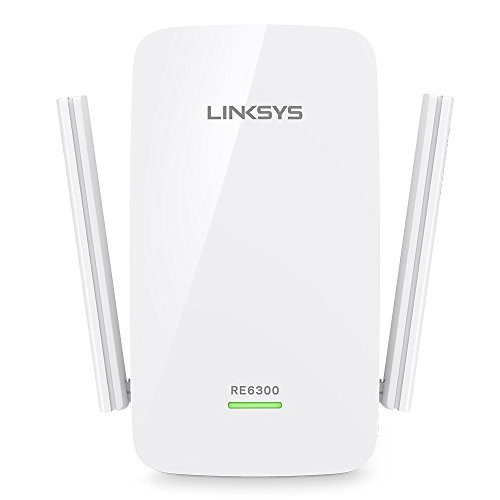
Linksys AC750 Dual-Band Gigabit Extender
Best for: basic dead-zone elimination with wired port
- Speed Rating
- AC750 (N300 + AC433 Mbps)
- Frequency Bands
- Dual-Band
- Coverage Area
- Up to 6,500 sq ft
- Ethernet Ports
- Gigabit
- Operating Modes
- Range Extender, Repeater
- Dimensions
- 3.43 × 2.36 × 4.76 inches
View on Amazon: Linksys AC750 Dual-Band Gigabit Extender Affiliate link
This Linksys AC750 range extender boosts Wi-Fi signal coverage up to 6,500 square feet. It delivers dual-band speeds of N300 plus AC433 Mbps to help eliminate dead zones. The device includes a Gigabit Ethernet port for wired connections. You can use Push Button Connect for simple setup or Spot Finder Technology for optimal placement. It operates as both a range extender and repeater to support your home network needs.
Pros
- Dual-band AC750 speed rating (N300 + AC433 Mbps)
- Gigabit Ethernet port for wired device connections
- Coverage area up to 6,500 square feet
- Spot Finder Technology for optimal placement
Cons
- Lower AC750 speed rating compared to newer WiFi 6 models
- Older AC standard lacks modern efficiency features
- Renewed condition with only 90-day warranty
Good fit if
- You need basic coverage for a small to medium home
- You want a simple plug-in extender with wired port
- You prefer Linksys brand reliability for legacy devices
Skip if
- You require WiFi 6 speeds for high-bandwidth tasks
- You want a mesh system for whole-home seamless roaming
- You need a full manufacturer warranty for peace of mind
Verdict: Linksys AC750 Dual-Band Extender fits users who need basic dead-zone elimination with a wired port. It suits those who do not require modern WiFi 6 performance.
Specifications side by side
| Spec | NETGEAR AX1800 Dual-Band WiFi 6 Extender | Linksys AC750 Dual-Band Gigabit Extender |
|---|---|---|
| Wi-Fi Standard | WiFi 6 | not stated |
| Speed Rating | AX1800 | AC750 (N300 + AC433 Mbps) |
| Frequency Bands | Dual-Band | Dual-Band |
| Coverage Area | not stated | Up to 6,500 sq ft |
| Ethernet Ports | not stated | Gigabit |
| Operating Modes | Mesh Extender | Range Extender, Repeater |
| Placement | Wall Plug | not stated |
| Frequency Band | Dual-Band | Dual-Band |
| Features | Mesh | not stated |
| Port Speed | not stated | Gigabit |
| Weight | 1.26 pounds | 6.4 ounces |
| Dimensions | not stated | 3.43 × 2.36 × 4.76 inches |
| Color | White | For Canada Only |
| Model | EAX15-100NAS | RE6300-RM |
| Size | not stated | re6300-rm3 For US Only |
Frequently asked questions
Does the NETGEAR AX1800 support Wi-Fi 6?
Yes, this extender supports Wi-Fi 6. It uses the AX1800 speed rating for modern performance. This standard helps manage multiple devices efficiently. You get reduced interference in busy networks. The dual-band design ensures stable connections for your devices.
What is the size of the Linksys RE6300?
The Linksys RE6300 measures 3.43 inches in length, 2.36 inches in width, and 4.76 inches in height. It weighs 6.4 ounces. This compact form factor allows it to fit easily into standard wall outlets without blocking adjacent sockets.
Does the NETGEAR extender have an Ethernet port?
Yes, the NETGEAR AX1800 includes a wired Ethernet port. This feature allows you to connect devices directly via cable. It provides a stable link for gaming consoles or smart TVs. The compact design saves space while offering this connectivity option.
Is the Linksys extender dual-band?
Yes, the Linksys RE6300 is a dual-band extender. It operates on both 2.4GHz and 5GHz frequencies. This setup helps reduce congestion by separating device traffic. It is suitable for basic dead-zone elimination in your home network.
Which extender is better for wired connections?
Both extenders include Ethernet ports for wired devices. The NETGEAR AX1800 offers Wi-Fi 6 efficiency alongside its port. The Linksys RE6300 provides a Gigabit port for faster wired speeds. Your choice depends on whether you need Wi-Fi 6 or Gigabit wired performance.
What is the model number for the NETGEAR extender?
The model number for the NETGEAR AX1800 is EAX15-100NAS. It is available in a white color. The unit weighs 1.26 pounds. This specific model is designed for space-saving mesh extension with a wired port.
Can I use the Linksys extender for video calls?
The Linksys RE6300 is designed for basic dead-zone elimination. It supports dual-band connections for general use. While it may handle video calls, it lacks Wi-Fi 6 efficiency. For smoother video calls, the NETGEAR AX1800 offers better multi-device management.
Does the NETGEAR extender require a separate power adapter?
The NETGEAR AX1800 is a wall-plug extender. It does not require a separate power adapter. You plug it directly into a wall outlet. This design keeps your setup tidy and saves space. The compact form factor integrates seamlessly into your home decor.