Eero vs DBIT Mesh Wifi Systems: Which Brand Fits You?
As an Amazon Associate we earn from qualifying purchases. Links on this page are affiliate links.
Choosing between the eero Pro 7 and the DBIT AX1800 requires understanding their core specs. This eero vs DBIT mesh wifi system comparison highlights key differences in technology and capacity. Both brands offer three-pack solutions for whole-home coverage. The main difference lies in their Wi-Fi generation. Eero uses the latest Wi-Fi 7 standard with tri-band support. DBIT relies on Wi-Fi 6 with dual-band architecture. Your internet plan and device count will dictate which system fits your needs better.
Key differences
| Aspect | Amazon eero Pro 7 Tri-Band Mesh System (3-Pack) | DBIT AX1800 WiFi 6 Mesh System 3-Pack |
|---|---|---|
| Wi-Fi Standard | Wi-Fi 7 | Wi-Fi 6 |
| Frequency Bands | Tri-Band | Dual-Band |
| Speed Rating | Up to 3.9 Gbps | AX1800 (1.8 Gbps) |
| Port Speed | 5 GbE | Gigabit |
| Device Capacity | 600+ devices | 150+ devices |
| Coverage Area | 6,000 sq. ft. | 6,500 sq. ft. |
Which one should you choose?
Choose Amazon eero Pro 7 Tri-Band Mesh System (3-Pack) if
- You have a gigabit internet plan exceeding 1 Gbps
- You need to connect more than 150 smart devices
- You want the latest Wi-Fi 7 features like MLO
Choose DBIT AX1800 WiFi 6 Mesh System 3-Pack if
- You use standard gigabit or lower internet speeds
- You have fewer than 150 connected devices
- You prefer a dual-band system for simpler management
Verdict: The eero Pro 7 suits users with high-speed internet plans and heavy device loads who want future-proof Wi-Fi 7 technology. The DBIT AX1800 is a practical choice for homes with standard gigabit speeds and moderate device counts. Both systems provide reliable whole-home coverage, but their underlying hardware targets different network demands.
Eero vs DBIT Mesh Comparison
Wi-Fi standard
The eero Pro 7 uses Wi-Fi 7, the latest generation of wireless technology. This standard introduces multi-link operation, allowing devices to connect across multiple bands simultaneously for lower latency and higher reliability. The DBIT AX1800 relies on Wi-Fi 6. While Wi-Fi 6 remains robust and efficient for most households, it lacks the advanced bandwidth aggregation features of Wi-Fi 7. If you have a high-speed internet plan and compatible devices, the eero Pro 7 offers a more future-proof foundation. The DBIT system is sufficient for standard streaming and browsing but does not support the newest protocol.
Frequency band
Frequency bands determine how data travels between your router and devices. The eero Pro 7 is a tri-band system, meaning it uses three separate radio bands to handle traffic. This dedicated backhaul band ensures that mesh nodes communicate with each other without slowing down your connected devices. The DBIT AX1800 is a dual-band system, sharing two bands for both device connections and node-to-node communication. In homes with many simultaneous users, the eero Pro 7’s extra band reduces congestion. The DBIT system works well for lighter usage but may struggle with heavy loads due to shared bandwidth.
Speed rating
Speed ratings indicate the maximum theoretical throughput of the wireless network. The eero Pro 7 supports wireless speeds up to 3.9 Gbps, leveraging the higher bandwidth of Wi-Fi 7. This is ideal for large file transfers and 4K/8K streaming. The DBIT AX1800 offers AX1800 speeds, combining 574 Mbps on the 2.4 GHz band and 1201 Mbps on the 5 GHz band. While adequate for HD streaming and gaming, the DBIT system’s total capacity is significantly lower than the eero Pro 7. If you need maximum raw speed for bandwidth-intensive tasks, the eero Pro 7 is the stronger choice.
Coverage area
Coverage area defines how much space the mesh system can effectively blanket with Wi-Fi. The eero Pro 7 covers up to 6,000 square feet with its three-pack configuration. The DBIT AX1800 extends to 6,500 square feet with its three units. This slight difference means the DBIT system might reach slightly further in large, open floor plans or sprawling single-story homes. However, both systems are designed for whole-home coverage. For most standard houses, the difference is negligible. If you have a very large property, the DBIT’s marginally higher coverage rating provides a small advantage.
Device capacity
Device capacity tells you how many gadgets can connect simultaneously without performance drops. The eero Pro 7 supports over 600 devices, making it suitable for smart homes with dozens of lights, cameras, and sensors. The DBIT AX1800 handles up to 150 devices. While 150 is plenty for typical families, the eero Pro 7 scales much better for heavy IoT environments. If you plan to add many smart devices over time, the eero Pro 7 provides more headroom. The DBIT system is best for users with moderate connectivity needs.
Number of ports
Ethernet ports allow wired connections for gaming consoles, smart TVs, or desktop PCs. The eero Pro 7 features two auto-sensing 5 GbE ports per unit, supporting internet plans up to 5 Gbps. This allows for extremely fast wired backhaul and high-speed device connections. The DBIT AX1800 includes Gigabit Ethernet ports, with two per unit in the three-pack. Gigabit ports are standard and sufficient for most internet plans under 1 Gbps. However, they cannot handle multi-gigabit speeds. If you have a fiber connection over 1 Gbps, the eero Pro 7’s 5 GbE ports are essential.
Which Mesh System Fits Your Needs
Users needing the highest speed and device capacity
The eero Pro 7 supports Wi-Fi 7 and tri-band connectivity. It handles internet plans up to 5 Gbps with wireless speeds reaching 3.9 Gbps. This system supports over 600 devices across 6,000 square feet. If you require maximum bandwidth and next-generation reliability for a large home, this model provides the necessary performance headroom.
Budget-conscious buyers wanting solid whole-home coverage
The DBIT AX1800 uses Wi-Fi 6 dual-band technology. It covers up to 6,500 square feet and supports over 150 devices. While it offers Gigabit ports and AX1800 speeds, it provides a reliable foundation for streaming and smart home use. This system is a practical choice if you prioritize broad coverage and efficient bandwidth allocation over the latest Wi-Fi standard.
Those seeking advanced security and app features
The eero Pro 7 integrates TrueMesh software for optimal connection management. It offers an optional eero Plus subscription for advanced security, ad blocking, and parental controls. This system is backward compatible with previous eero generations. If you value integrated software features and enhanced digital security options alongside high-speed performance, the eero system is the better fit for your network.
The products compared

Amazon eero Pro 7 Tri-Band Mesh System (3-Pack)
Best for: high-speed internet and large homes
- Wi-Fi Standard
- Wi-Fi 7
- Speed Rating
- 3.9 Gbps
- Coverage Area
- 6,000 sq ft
- Frequency Bands
- Tri-Band
- Pack Size
- 3-Pack
- Port Speed
- 5 Gbps
View on Amazon: Amazon eero Pro 7 Tri-Band Mesh System (3-Pack) Affiliate link
The eero Pro 7 is a Wi-Fi 7 mesh system designed for high-bandwidth homes and small businesses. It supports internet plans up to 5 Gbps and delivers wireless speeds of 3.9 Gbps. The 3-pack covers up to 6,000 square feet and handles 600+ devices. You get two 5 GbE ports for wired connections. Its tri-band design and Multi-Link Operation ensure stable connectivity across multiple floors.
Pros
- Wi-Fi 7 standard with Multi-Link Operation
- Supports internet plans up to 5 Gbps
- Two auto-sensing 5 GbE Ethernet ports
- Covers up to 6,000 square feet
- Supports 600+ connected devices
Cons
- Advanced security features require an eero Plus subscription
- Larger physical footprint at 7.09 inches tall
- Base price is higher than Wi-Fi 6 models
Good fit if
- You have a gigabit or multi-gigabit internet plan
- You need to connect more than 100 devices simultaneously
- You want the latest Wi-Fi 7 performance standards
Skip if
- You only need basic coverage for a small apartment
- You want advanced security features without a subscription
- You prefer a more compact, minimalist router design
Verdict: eero Pro 7 Tri-Band Wi-Fi 7 is the right choice for users with high-speed internet plans who need robust coverage for large homes or small offices. Its 5 GbE ports and Wi-Fi 7 speeds handle heavy traffic without slowing down.
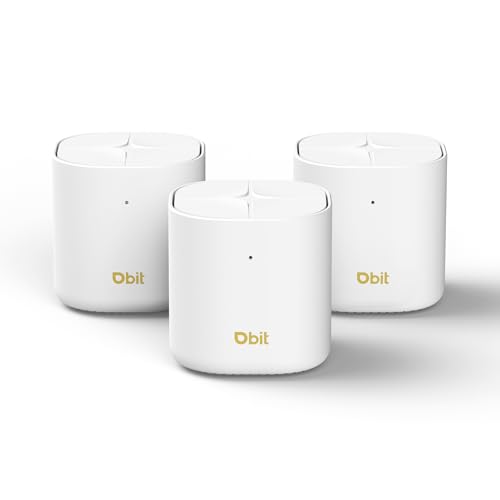
DBIT AX1800 WiFi 6 Mesh System 3-Pack
Best for: Large homes with moderate device counts
- Wi-Fi Standard
- WiFi 6
- Speed Rating
- AX1800
- Coverage Area
- 6,500 sq. ft.
- Frequency Bands
- Dual-Band
- Pack Size
- 3-Pack
- Port Speed
- Gigabit
View on Amazon: DBIT AX1800 WiFi 6 Mesh System 3-Pack Affiliate link
The DBIT AX1800 3-pack covers up to 6,500 square feet and supports over 150 devices. It uses Wi-Fi 6 with dual-band speeds up to 1.8 Gbps. The set includes three units with gigabit Ethernet ports for wired backhaul. You can manage the network via a mobile app or physical mesh buttons. This system replaces your current router and works with any ISP modem.
Pros
- Wi-Fi 6 standard with OFDMA and MU-MIMO for reduced latency
- Covers up to 6,500 sq. ft. with three units
- Supports 150+ connected devices simultaneously
- Includes six gigabit Ethernet ports across the 3-pack
- WPA3 encryption and automatic firmware updates for security
Cons
- Dual-band configuration limits total throughput compared to tri-band systems
- No mention of Wi-Fi 6E or 6GHz band support
- Device capacity capped at 150, which may limit very large smart homes
Good fit if
- You need whole-home coverage for a large house up to 6,500 sq. ft.
- You have many smart home devices but stay under 150 connections
- You want a system that works with any existing ISP modem
Skip if
- You require tri-band speeds for heavy 4K streaming and gaming
- You need to connect more than 150 devices at once
- You want Wi-Fi 6E performance on the 6GHz band
Verdict: The DBIT AX1800 3-Pack Mesh System offers solid Wi-Fi 6 coverage for large homes with moderate device counts. It fits users who prioritize broad square footage coverage and gigabit wired ports over ultra-high throughput.
Specifications side by side
| Spec | Amazon eero Pro 7 Tri-Band Mesh System (3-Pack) | DBIT AX1800 WiFi 6 Mesh System 3-Pack |
|---|---|---|
| Wi-Fi Standard | Wi-Fi 7 | WiFi 6 |
| Speed Rating | 3.9 Gbps | AX1800 |
| Coverage Area | 6,000 sq ft | 6,500 sq. ft. |
| Frequency Bands | Tri-Band | Dual-Band |
| Pack Size | 3-Pack | 3-Pack |
| Port Speed | 5 Gbps | Gigabit |
| Device Capacity | 600+ | 150+ devices |
| Frequency Band | Tri-Band | Dual-Band |
| Features | Mesh | Mesh, Seamless Roaming |
| Dimensions | 5.79 × 3.11 × 7.09 inches | 4.33 × 4.33 × 4.41 inches |
| Weight | 1.68 pounds | 2.58 pounds |
| Size | 3-pack | not stated |
| Color | WHITE | White |
| Model | ME10001 | D-MAX5 |
Frequently asked questions
Which mesh system covers larger areas?
The eero Pro 7 covers up to 6,000 square feet. This makes it suitable for large homes or small offices. The DBIT AX1800 also targets large homes but does not list a specific square footage. You should choose the eero system if you need verified maximum coverage area for extensive spaces.
What is the difference in Wi-Fi standards?
The eero Pro 7 uses Wi-Fi 7 technology. This offers newer features like multi-link operation for better reliability. The DBIT AX1800 uses Wi-Fi 6. This is a proven standard that provides solid performance for moderate device counts. Wi-Fi 7 is the newer, faster option.
Do both systems include three access points?
Yes, both packages include three units. The eero Pro 7 is a 3-Pack. The DBIT AX1800 is also a 3-Pack. This configuration helps ensure whole-home coverage. You get multiple nodes to place in different rooms with either brand.
Which system is better for high-speed internet plans?
The eero Pro 7 is better for high-speed plans. It supports internet speeds up to 5 Gbps. It also handles heavy traffic without slowing down. The DBIT AX1800 focuses on broad coverage rather than ultra-high throughput. Choose eero if you have a gigabit-plus plan.
How do the sizes of the devices compare?
The eero Pro 7 is taller and narrower. It measures 7.09 inches in height. The DBIT AX1800 is shorter and wider. It measures 4.41 inches in height. Both are white. Your choice may depend on how much vertical space you have for each node.
Is one system heavier than the other?
The DBIT AX1800 is heavier. Each unit weighs 2.58 pounds. The eero Pro 7 unit weighs 1.68 pounds. The weight difference is small. You might notice it when mounting devices or moving them to different rooms. The eero units are lighter.