6 Best Alternatives to the Eero Pro 7 2-Pack Cellular (2026)
As an Amazon Associate we earn from qualifying purchases. Links on this page are affiliate links.
The eero Pro 7 2-Pack with Cellular Backup offers robust Wi-Fi 7 coverage and integrated failover protection for medium-sized homes. You might look for eero pro 7 2 pack cellular alternatives if you need different coverage areas, higher port speeds, or simply prefer a different brand ecosystem. This list highlights systems that share key specifications with the original while offering distinct advantages for your specific network needs.
Each alternative was selected because its published specs overlap with the Eero Pro 7’s core capabilities, such as device capacity, Wi-Fi generation, or pack size. You will find options ranging from budget-friendly Wi-Fi 6 systems to premium Wi-Fi 7 models with larger square footage coverage. Some choices prioritize wired backhaul speeds, while others focus on smart home integration or broader coverage for denser environments. By comparing these concrete specifications, you can identify the mesh system that best matches your home’s layout and your device count without relying on cellular backup if that feature is not essential for your setup.
How each alternative compares
TP-Link Deco X55 AX3000 2-Pack
The TP-Link Deco X55 uses Wi-Fi 6 instead of Wi-Fi 7. It covers up to 4,500 square feet with two units. This exceeds the eero Pro 7’s 4,000 square foot rating. It lacks cellular backup entirely. You get AX3000 speeds rather than the eero’s 3.9 Gbps wireless rate. The system supports wired connections for stability. It suits homes that do not need cellular failover. It is a budget option for basic whole-home coverage. You sacrifice next-generation Wi-Fi 7 features for lower cost and wider area coverage. Choose this if you prioritize square footage and price over cellular redundancy.
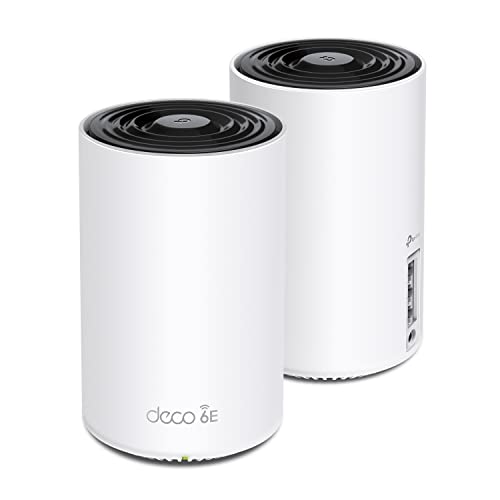
TP-Link Deco Tri-Band WiFi 6E 2-Pack
The TP-Link Deco XE75 offers Wi-Fi 6E tri-band performance. It provides AXE5400 speeds, which differ from the eero’s Wi-Fi 7 standard. It covers a similar area but does not include cellular backup. You gain access to the 6 GHz band for less interference. The system is designed for users who want modern speeds without failover protection. It lacks the 5 Gbps ports found in the eero Pro 7. It is a solid choice for homes with high bandwidth needs. You give up cellular redundancy for dedicated tri-band channels. Pick this if you value 6 GHz Wi-Fi over internet backup capabilities.
Amazon eero Pro 7 Tri-Band Mesh System (2-Pack)
The Amazon eero Pro 7 Tri-Band Mesh System removes cellular backup. It keeps the Wi-Fi 7 standard and high device capacity. It supports Thread and Zigbee for smart home integration. This model is ideal for dense smart homes. You lose the automatic cellular failover feature present in the original. The coverage area is similar, but the lack of backup changes its use case. It fits users who do not need internet redundancy. You get the same core Wi-Fi 7 performance without the extra hardware. Choose this if you want pure Wi-Fi 7 without cellular connectivity options.
Amazon eero 6 2-Pack Mesh System
The Amazon eero 6 2-Pack uses Wi-Fi 6 instead of Wi-Fi 7. It covers 3,000 square feet, which is less than the eero Pro 7’s 4,000 square feet. It supports 75+ devices, significantly fewer than the Pro 7’s 400+. It lacks cellular backup and high-speed ports. This system is for average-sized homes. You get simpler setup and smart home integration. It is a budget-friendly option for smaller spaces. You sacrifice speed, coverage, and device capacity for lower cost. Pick this if you have a small home and do not need Wi-Fi 7 or cellular backup.
Amazon eero Pro 6E 2-Pack
The eero Pro 6E 2-Pack offers Wi-Fi 6E performance. It covers large homes and supports 100+ devices. It includes a 2.5 Gbps port for wired backhaul. It lacks cellular backup and Wi-Fi 7 speeds. The system is designed for heavy bandwidth users. You get strong wired connectivity without the latest wireless standard. It does not match the eero Pro 7’s 5 Gbps ports. It is a solid choice for homes needing 2.5 Gbps connections. You give up Wi-Fi 7 and cellular redundancy for reliable wired backhaul. Choose this if you prioritize wired speed over wireless advancements.
NETGEAR Orbi 770 WiFi 7 2-Pack
The NETGEAR Orbi 770 Series offers Wi-Fi 7 performance. It covers 5,500 square feet, exceeding the eero Pro 7’s 4,000 square feet. It supports large homes with many devices. It lacks cellular backup and high-speed ports. The system is designed for high device capacity. You get wider coverage without failover protection. It does not match the eero’s wireless speed rating. It is a good choice for large spaces. You sacrifice cellular redundancy and port speed for larger coverage area. Pick this if you need wide coverage for a large home without internet backup.
Quick picks
Our 7 picks

eero Pro 7 2-Pack with Cellular Backup
Best for: homes needing cellular internet backup
- Wi-Fi Standard
- Wi-Fi 7
- Speed Rating
- Up to 3.9 Gbps
- Coverage Area
- 4,000 sq. ft.
- Pack Size
- 2-pack
- Port Speed
- 5 Gbps
- Device Capacity
- 400+
View on Amazon: eero Pro 7 2-Pack with Cellular Backup Affiliate link
The eero Pro 7 2-Pack delivers Wi-Fi 7 performance with coverage for up to 4,000 square feet. It supports over 400 devices and offers wireless speeds up to 3.9 Gbps. Two 5 Gbps Ethernet ports handle high-bandwidth plans. The system includes eero Signal 4G LTE cellular backup to maintain connectivity during outages. It works well for homes needing robust whole-home coverage with reliable failover options.
Pros
- Wi-Fi 7 standard for next-generation speed and reliability
- Two auto-sensing 5 Gbps Ethernet ports for wired connections
- Supports 400+ connected devices across the network
- Includes eero Signal 4G LTE cellular backup for outages
- Backward compatible with previous eero generations and Echo devices
Cons
- Coverage area of 4,000 sq ft is smaller than some competitors
- Annual eero Plus subscription required for cellular connectivity
- Maximum wireless speed of 3.9 Gbps is lower than some tri-band rivals
Good fit if
- You need cellular backup to stay online during internet outages
- You have a home under 4,000 square feet
- You want a system that supports over 400 connected devices
Skip if
- You require coverage for spaces larger than 4,000 square feet
- You want to avoid recurring subscription fees for backup features
- You need wired ports faster than 5 Gbps
Verdict: eero Pro 7 2-Pack with Cellular Backup is ideal for users who prioritize network resilience through integrated cellular backup. It suits medium-sized homes with high device counts that need reliable failover protection.

TP-Link Deco X55 AX3000 2-Pack
Best for: budget-conscious whole-home Wi-Fi 6 coverage
- Wi-Fi Standard
- WiFi 6
- Speed Rating
- AX3000
- Coverage Area
- up to 4500 Sq.Ft
- Pack Size
- 2-Pack
- Port Speed
- Gigabit
- Device Capacity
- up to 150 devices
View on Amazon: TP-Link Deco X55 AX3000 2-Pack Affiliate link
The TP-Link Deco X55 is a two-pack Wi-Fi 6 mesh system rated AX3000. It covers up to 4,500 square feet and supports 150 devices. Each unit includes three Gigabit Ethernet ports for wired backhaul. It uses the Deco app for setup and management. This system suits you if you need solid whole-home coverage without the cost of Wi-Fi 7 hardware.
Pros
- Covers up to 4,500 square feet
- Supports up to 150 connected devices
- Includes three Gigabit Ethernet ports per unit
- Uses AI-driven mesh for network optimization
Cons
- Limited to Wi-Fi 6 standard
- Lower speed rating than Wi-Fi 7 alternatives
- No cellular backup option included
Good fit if
- You want reliable Wi-Fi 6 coverage
- You need wired Ethernet ports on nodes
- You prefer a simple app setup
Skip if
- You require Wi-Fi 7 speeds
- You need cellular internet backup
- You want tri-band performance
Verdict: The TP-Link Deco X55 AX3000 Wi-Fi 6 Mesh is a capable two-pack system for homes under 4,500 square feet. It fits you if you value wired connectivity and device capacity over the latest Wi-Fi 7 standards.
TP-Link Deco Tri-Band WiFi 6E 2-Pack
Best for: Wi-Fi 6E coverage without cellular backup
- Wi-Fi Standard
- WiFi 6E
- Speed Rating
- AXE5400
- Coverage Area
- up to 5500 Sq.Ft
- Frequency Bands
- Tri-Band
- Pack Size
- 2-Pack
- Device Capacity
- 200 devices
View on Amazon: TP-Link Deco Tri-Band WiFi 6E 2-Pack Affiliate link
The TP-Link Deco XE75 is a two-pack mesh system using Wi-Fi 6E. It offers tri-band speeds up to 5,400 Mbps and covers up to 5,500 square feet. The 6 GHz band acts as a dedicated backhaul to reduce interference. It supports 200 devices and includes basic security features like network scanning. You get stable connections for multiple users without needing cellular backup.
Pros
- Wi-Fi 6E tri-band design with 5,400 Mbps total speed
- 6 GHz band provides dedicated backhaul for stable node connections
- Covers up to 5,500 square feet with two units
- Supports up to 200 connected devices simultaneously
- Includes free HomeShield security features like IoT identification
Cons
- No built-in cellular backup for internet outages
- Does not support Wi-Fi 7 for future-proofing
- Lacks wired backhaul options for maximum stability
Good fit if
- You want fast Wi-Fi 6E speeds in a medium to large home
- You need a simple setup with app-based management
- You have many devices but do not require cellular internet backup
Skip if
- You need cellular connectivity for internet redundancy
- You want the latest Wi-Fi 7 standard
- You require wired backhaul for dedicated network stability
Verdict: The TP-Link Deco XE75 AXE5400 Tri-Band Mesh is a solid choice for users who prioritize Wi-Fi 6E performance and broad coverage without the need for cellular failover.

Amazon eero Pro 7 Tri-Band Mesh System (2-Pack)
Best for: Dense smart homes with Thread devices
- Wi-Fi Standard
- Wi-Fi 7
- Coverage Area
- 4,000 sq ft
- Frequency Bands
- Tri-Band
- Pack Size
- 2-Pack
- Device Capacity
- 400+
View on Amazon: Amazon eero Pro 7 Tri-Band Mesh System (2-Pack) Affiliate link
The Eero Pro 7 2-pack delivers Wi-Fi 7 performance with tri-band architecture and multi-link operation. It covers up to 4,000 square feet and supports over 400 devices. This system includes a smart home hub for Thread, Matter, and Zigbee devices. It suits users needing high capacity and modern connectivity standards for dense smart homes.
Pros
- Tri-band Wi-Fi 7 with multi-link operation
- Supports 400+ connected devices
- Covers up to 4,000 square feet
- Built-in Thread, Matter, and Zigbee hub
Cons
- Lower 4,000 sq ft coverage than competitors
- Ad blocking requires eero Plus subscription
- No cellular backup included in this pack
Good fit if
- You have a dense smart home with many devices
- You need Thread and Zigbee hub functionality
- You want Wi-Fi 7 multi-link operation
Skip if
- You need coverage larger than 4,000 sq ft
- You want included cellular backup
- You prefer free security features
Verdict: Eero Pro 7 2-Pack Wi-Fi 7 fits users with large smart homes needing Thread and Zigbee support. It offers high device capacity but smaller coverage than the Orbi 770.

Amazon eero 6 2-Pack Mesh System
Best for: Average homes needing simple setup and smart home hub
- Wi-Fi Standard
- Wi-Fi 6
- Speed Rating
- up to 900 Mbps
- Coverage Area
- up to 3,000 sq ft.
- Pack Size
- 2-pack
- Device Capacity
- 75+ devices
- Features
- Mesh
View on Amazon: Amazon eero 6 2-Pack Mesh System Affiliate link
The Amazon eero 6 2-pack provides Wi-Fi 6 coverage for spaces up to 3,000 square feet. It supports internet plans up to 900 Mbps and handles 75+ connected devices. This system includes a built-in Zigbee hub for Alexa smart home control. It is designed for straightforward setup and automatic security updates. You should choose this if you need reliable whole-home coverage without complex configuration.
Pros
- Wi-Fi 6 standard for improved device capacity
- Covers up to 3,000 square feet with two units
- Built-in Zigbee hub for Alexa smart home integration
- Supports over 75 connected devices simultaneously
Cons
- Lower speed rating of 900 Mbps compared to Wi-Fi 6E or 7 alternatives
- Limited to Wi-Fi 6, lacking the speed benefits of newer standards
- No mention of cellular backup or satellite support in the data
Good fit if
- You have a home up to 3,000 square feet
- You want simple setup with automatic updates
- You use Alexa for smart home devices
Skip if
- You need speeds above 900 Mbps
- You require Wi-Fi 6E or Wi-Fi 7 performance
- You need cellular backup for internet outages
Verdict: Amazon eero 6 2-Pack Mesh System offers solid Wi-Fi 6 coverage for average-sized homes. It fits users who prioritize easy setup and smart home integration over raw speed.

Amazon eero Pro 6E 2-Pack
Best for: Large homes needing 2.5 Gbps wired backhaul
- Wi-Fi Standard
- Wi-Fi 6E
- Speed Rating
- 2.3 Gbps
- Coverage Area
- 4,000 sq. ft.
- Pack Size
- 2-pack
- Port Speed
- 2.5 Gbps
- Device Capacity
- 100+
View on Amazon: Amazon eero Pro 6E 2-Pack Affiliate link
The eero Pro 6E is a Wi-Fi 6E mesh system designed for homes up to 4,000 square feet. It supports over 100 connected devices and delivers wireless speeds up to 1.6 Gbps. A 2.5 Gbps Ethernet port allows you to handle gigabit-plus internet plans. This system uses TrueMesh technology to route traffic efficiently. It is a solid choice if you need reliable coverage and high bandwidth for multiple users.
Pros
- Wi-Fi 6E standard with access to the 6 GHz band
- 2.5 Gbps Ethernet port for wired speeds up to 1 Gbps
- Supports over 100 connected devices simultaneously
- Coverage extends up to 4,000 square feet
- TrueMesh technology reduces dead spots and drop-offs
Cons
- Lower device capacity compared to competitors supporting 200+ devices
- No cellular backup included in the base 2-pack configuration
- Lacks the Wi-Fi 7 standard found in newer high-end models
Good fit if
- You have a home larger than 3,000 square feet
- You need to connect more than 50 devices to your network
- You have internet plans exceeding 1 Gbps and want to utilize the 2.5 Gbps port
Skip if
- You require cellular internet backup for reliability during outages
- You want the latest Wi-Fi 7 speeds for future-proofing
- You have a small apartment under 1,500 square feet
Verdict: The eero Pro 6E 2-Pack Mesh System provides strong Wi-Fi 6E performance and a 2.5 Gbps port for heavy bandwidth users. It fits homes needing coverage for over 100 devices but lacks the cellular backup or Wi-Fi 7 upgrades found in some alternatives.

NETGEAR Orbi 770 WiFi 7 2-Pack
Best for: Large homes needing high device capacity
- Wi-Fi Standard
- Wi-Fi 7
- Speed Rating
- 11 Gbps
- Coverage Area
- 5,500 sq ft
- Frequency Bands
- Tri-Band
- Pack Size
- 2-Pack
- Port Speed
- 2.5 Gbps
View on Amazon: NETGEAR Orbi 770 WiFi 7 2-Pack Affiliate link
The NETGEAR Orbi 770 Series is a Wi-Fi 7 mesh system designed for homes up to 5,500 square feet. It delivers speeds up to 11 Gbps using tri-band technology to maintain performance across multiple devices. The system supports up to 100 connected devices and includes enhanced backhaul to reduce slowdowns. You get whole-home coverage with a router and satellite, making it suitable for larger layouts where speed and capacity are priorities.
Pros
- Wi-Fi 7 standard for next-generation speeds
- Tri-band design with enhanced backhaul
- Supports up to 100 connected devices
- Covers up to 5,500 square feet
Cons
- Lower total speed rating than some competitors
- No cellular backup included in the 2-pack
- Security suite requires a separate subscription
Good fit if
- You need coverage for large homes over 3,000 square feet
- You have many devices connected simultaneously
- You want the latest Wi-Fi 7 technology
Skip if
- You require built-in cellular backup for internet outages
- You need speeds exceeding 11 Gbps
- You want a budget-friendly mesh solution
Verdict: The NETGEAR Orbi 770 Series 2-Pack offers solid Wi-Fi 7 performance for large homes with many devices, though it lacks the higher speed ratings and cellular backup found in some alternatives.
Specifications side by side
| Spec | eero Pro 7 2-Pack with Cellular Backup | TP-Link Deco X55 AX3000 2-Pack | TP-Link Deco Tri-Band WiFi 6E 2-Pack | Amazon eero Pro 7 Tri-Band Mesh System (2-Pack) | Amazon eero 6 2-Pack Mesh System | Amazon eero Pro 6E 2-Pack | NETGEAR Orbi 770 WiFi 7 2-Pack |
|---|---|---|---|---|---|---|---|
| Wi-Fi Standard | Wi-Fi 7 | WiFi 6 | WiFi 6E | Wi-Fi 7 | Wi-Fi 6 | Wi-Fi 6E | Wi-Fi 7 |
| Speed Rating | Up to 3.9 Gbps | AX3000 | AXE5400 | not stated | up to 900 Mbps | 2.3 Gbps | 11 Gbps |
| Coverage Area | 4,000 sq. ft. | up to 4500 Sq.Ft | up to 5500 Sq.Ft | 4,000 sq ft | up to 3,000 sq ft. | 4,000 sq. ft. | 5,500 sq ft |
| Frequency Bands | not stated | not stated | Tri-Band | Tri-Band | not stated | not stated | Tri-Band |
| Pack Size | 2-pack | 2-Pack | 2-Pack | 2-Pack | 2-pack | 2-pack | 2-Pack |
| Port Speed | 5 Gbps | Gigabit | not stated | not stated | not stated | 2.5 Gbps | 2.5 Gbps |
| Device Capacity | 400+ | up to 150 devices | 200 devices | 400+ | 75+ devices | 100+ | 100 |
| Frequency Band | not stated | not stated | Tri-Band | not stated | not stated | not stated | Tri-Band |
| Use Case | not stated | not stated | Gaming, Streaming | not stated | not stated | not stated | not stated |
| Features | not stated | Mesh | Mesh, WPA3 | not stated | Mesh | Mesh | Mesh |
| Intended Use | not stated | not stated | Home | not stated | not stated | not stated | not stated |
| Placement | not stated | Indoor | not stated | not stated | not stated | not stated | not stated |
| Dimensions | not stated | 4.33 × 4.33 × 4.49 inches | 4.13 × 4.13 × 6.67 inches | not stated | 3.91 × 3.82 × 2.42 inches | 5.47 × 5.47 × 2.21 inches | not stated |
| Weight | not stated | 4.41 pounds | 2.69 pounds | not stated | 1.32 pounds | 1.41 pounds | not stated |
| Size | 2-pack | 2 Pack | 2 Pack | 2-pack | 2 routers | not stated | 2 Pack |
| Color | not stated | white | Black and White | WHITE | WHITE | WHITE | White |
| Model | not stated | Deco X55(2-pack) | Deco XE75(2-pack) | not stated | N010111 | S010001 | RBE772-100APS |
Frequently asked questions
Which alternative offers the best Wi-Fi 7 performance?
The NETGEAR Orbi 770 2-Pack is the top choice for Wi-Fi 7. It covers up to 5,500 square feet with high device capacity. This system suits large homes needing robust modern standards. It lacks the cellular backup feature found in the eero Pro 7, but delivers strong Wi-Fi 7 speeds for dense smart homes.
Is there a budget-friendly option without Wi-Fi 7?
The TP-Link Deco X55 AX3000 2-Pack is the best budget alternative. It uses Wi-Fi 6 technology rather than the newer Wi-Fi 7 standard. This system covers up to 4,500 square feet. It fits users who value wired connectivity and device capacity over the latest speed ratings and cellular failover protection.
Which system supports Thread and Zigbee smart home devices?
The Amazon eero Pro 7 Tri-Band Mesh System (2-Pack) supports Thread and Zigbee. This badge makes it ideal for dense smart homes. It offers high device capacity for connected gadgets. While it lacks cellular backup, it provides robust Wi-Fi 7 coverage for users prioritizing smart home integration and modern mesh performance.
What is the best option for homes under 3,000 square feet?
The Amazon eero 6 2-Pack Mesh System is ideal for average-sized homes. It provides solid Wi-Fi 6 coverage for up to 3,000 square feet. This system fits users who prioritize easy setup and smart home integration. It supports over 75 devices, making it a practical choice for smaller households without needing high-end specs.
Which alternative provides a 2.5 Gbps port for wired backhaul?
The eero Pro 6E 2-Pack includes a 2.5 Gbps port. This feature supports heavy bandwidth users needing strong wired connectivity. It provides Wi-Fi 6E performance for large homes. While it lacks cellular backup or Wi-Fi 7 upgrades, it handles over 100 devices effectively for users prioritizing port speed and device capacity.
Does any alternative offer Wi-Fi 6E without cellular backup?
The TP-Link Deco Tri-Band WiFi 6E 2-Pack offers Wi-Fi 6E performance. It is a solid choice for users who prioritize this standard without needing cellular failover. This system provides tri-band speeds rated at AXE5400. It suits homes where broad coverage and modern Wi-Fi standards are more important than internet redundancy.