Cudy AC1200 Dual-Band 4G LTE vs Cudy Tri-Band Wi-Fi 7 Router: Spec Comparison
As an Amazon Associate we earn from qualifying purchases. Links on this page are affiliate links.
You are looking at the cudy 4g ac1200 4 port wi fi vs be6500 tri band wi fi 7. Both are Cudy routers designed for home or small office networking. They share black finishes and robust security features like VPN support. The main difference lies in their generation and connectivity. One model relies on cellular data with older Wi-Fi standards, while the other uses wired internet with the latest Wi-Fi 7 technology. You must choose based on your connection type and speed needs.
Key differences
| Aspect | Cudy AC1200 Dual-Band 4G LTE Router | Cudy Tri-Band Wi-Fi 7 Router |
|---|---|---|
| Wi-Fi Standard | Wi-Fi 5 | Wi-Fi 7 |
| Frequency Bands | Dual-Band | Tri-Band |
| Speed Rating | AC1200 | BE6500 |
| Ethernet Ports | 4 Fast Ethernet | 5 Gigabit Ethernet |
| Cellular Connectivity | 4G LTE Cat 4 with SIM slot | not listed |
Which one should you choose?
Choose Cudy AC1200 Dual-Band 4G LTE Router if
- You need internet without a cable connection using a SIM card.
- You require a compact router for rural areas or as a backup link.
- Your primary internet source is cellular coverage with 4G signals.
Choose Cudy Tri-Band Wi-Fi 7 Router if
- You want the highest possible wireless speeds for modern devices.
- You have a high-speed wired internet plan above 100 Mbps.
- You need dedicated backhaul for multiple streaming and gaming devices.
Verdict: The AC1200 is the practical choice for locations without broadband, offering reliable cellular backup. The BE6500 is superior for wired homes, providing significantly faster tri-band performance and modern Wi-Fi 7 features. Select the model that matches your available internet infrastructure.
Specs: LTE Router vs Wi-Fi 7
Wi-Fi standard
The Cudy AC1200 Dual-Band 4G LTE Router relies on Wi-Fi 5 technology. This older standard delivers combined speeds of 867 Mbps on the 5 GHz band and 300 Mbps on the 2.4 GHz band. In contrast, the Cudy Tri-Band Wi-Fi 7 Router uses the latest Wi-Fi 7 standard. It offers a massive combined speed rating of BE6500, with specific mentions of 5765 Mbps on the 5 GHz band and 688 Mbps on the 2.4 GHz band. Wi-Fi 7 introduces newer modulation and channel width capabilities that Wi-Fi 5 cannot match. If you need the highest possible theoretical throughput and modern protocol efficiency, the Wi-Fi 7 option is the clear choice for future-proofing your network.
Frequency bands
Connectivity options differ significantly between these two models. The AC1200 is a dual-band router, operating only on 2.4 GHz and 5 GHz frequencies. This limits its ability to separate traffic types effectively. The Tri-Band Wi-Fi 7 Router adds a third band. It uses one band for the 2.4 GHz network, another for the 5 GHz client network, and dedicates a third band specifically for backhaul. This dedicated backhaul channel prevents smart home devices from competing with streaming and gaming traffic. By giving each traffic type its own lane, the tri-band design reduces congestion. If you have many devices or require dedicated bandwidth for high-speed links, the three-band architecture provides superior management.
Ethernet ports
Wired connectivity is another area of divergence. The AC1200 provides four Fast Ethernet ports. These ports support speeds up to 100 Mbps, which is sufficient for basic internet browsing but limits high-speed data transfers. The Tri-Band Wi-Fi 7 Router includes five Gigabit Ethernet ports. These ports support speeds up to 1 Gbps, allowing for much faster local network transfers and better utilization of high-speed internet plans. The additional port on the Wi-Fi 7 model also offers more flexibility for connecting devices like NAS drives or gaming consoles. For users who rely on wired connections for stability or speed, the five gigabit ports are a significant advantage over the four fast ethernet ports.
Connectivity type
The most distinct difference is how these routers connect to the internet. The AC1200 features a nano SIM slot and supports 4G LTE Cat 4 cellular connectivity. This allows you to insert a SIM card and get online anywhere with cellular coverage, making it ideal for rural areas or as a backup WAN. It supports speeds up to 150 Mbps download. The Tri-Band Wi-Fi 7 Router does not have cellular connectivity; it is designed to connect to an existing modem via its Ethernet ports. If you need internet access without a cable provider or require automatic failover to cellular when your primary internet drops, the AC1200 is the only viable option here.
Physical size
Portability and placement vary between the two units. The AC1200 is compact, measuring 9.84 inches in length, 5.48 inches in width, and 1.42 inches in height. It weighs only 10.9 ounces, making it easy to place in small spaces or take on the go. The Tri-Band Wi-Fi 7 Router is larger, measuring 9.96 inches in length, 6 inches in width, and 1.9 inches in height. It weighs 1.28 pounds. While the size difference is modest, the lighter AC1200 is more suitable for tight spots or temporary setups. The heavier Wi-Fi 7 router suggests a more substantial internal build, but it requires more desk or shelf space. If space is limited, the smaller router is easier to accommodate.
Which Cudy Router Fits Your Needs
Users needing cellular backup or rural internet
This model includes a nano SIM slot for 4G LTE Cat 4 connectivity. It supports speeds up to 150 Mbps download. Automatic WAN failover switches to cellular if your primary internet drops. This ensures critical connections stay alive without interruption, making it ideal for rural areas or as a reliable backup solution.
Homeowners with many connected devices
The Wi-Fi 7 standard and tri-band design provide dedicated backhaul channels. This prevents smart home devices from competing with streaming and gaming traffic. Features like OFDMA and MU-MIMO keep sensors, cameras, and assistants responsive. You get a focused Wi-Fi footprint that reaches farther through walls, reducing dead spots in multi-story homes.
Users requiring high-speed wired connections
This router offers five Gigabit Ethernet ports, allowing simultaneous full-speed wired connectivity. A quad-core CPU handles multiple devices without port sharing or throughput compromises. This setup is perfect for connecting desktop PCs, NAS drives, and entertainment centers directly. You avoid the speed limitations of the Fast Ethernet ports found on the other model.
The products compared
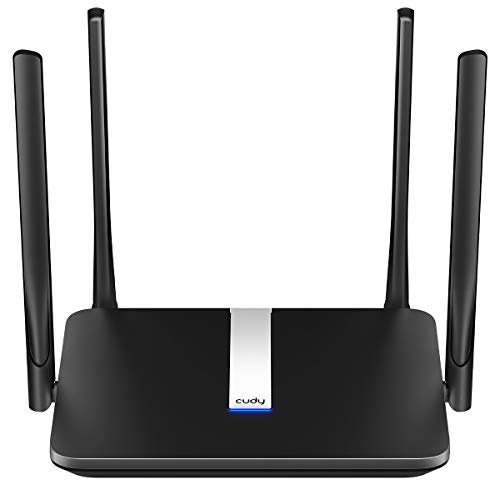
Cudy AC1200 Dual-Band 4G LTE Router
Best for: backup internet and rural connectivity
- Wi-Fi Standard
- Wi-Fi 5
- Speed Rating
- AC1200
- Frequency Bands
- Dual-Band
- Max Port Speed
- 100 Mbps
- Ethernet Ports
- 4
- Number of Ports
- 4 Ports
View on Amazon: Cudy AC1200 Dual-Band 4G LTE Router Affiliate link
This is a Cudy LT500 router featuring Wi-Fi 5 and 4G LTE Cat 4 connectivity. It provides dual-band speeds up to 1200 Mbps and includes four Fast Ethernet ports. The device supports a nano SIM slot for cellular internet, making it suitable for rural areas or backup connections. It also includes built-in VPN options and WAN failover to keep your network active if your primary connection drops.
Pros
- 4G LTE Cat 4 cellular connectivity with up to 300 Mbps download speed
- Built-in WireGuard, OpenVPN, and IPsec VPN server and client
- Automatic WAN failover switches to cellular when primary internet drops
- Four Fast Ethernet ports for wired devices
Cons
- Wi-Fi 5 standard is older than current Wi-Fi 6 or 7 options
- Fast Ethernet ports limit wired speeds to 100 Mbps
- No mention of Wi-Fi 6 or higher standard support
Good fit if
- You need a backup internet connection via cellular SIM
- You require built-in VPN capabilities for secure networking
- You are in a rural area with limited wired internet options
Skip if
- You need the latest Wi-Fi 6E or Wi-Fi 7 speeds
- You require Gigabit Ethernet ports for high-speed wired connections
- You want a primary high-performance home network without cellular dependency
Verdict: Cudy LT500 AC1200 4G LTE Router is a practical solution for users needing cellular backup or rural connectivity. It fits those who value VPN features and reliable failover over modern Wi-Fi standards.

Cudy Tri-Band Wi-Fi 7 Router
Best for: multi-device homes with wired needs
- Wi-Fi Standard
- Wi-Fi 7
- Speed Rating
- BE6500
- Frequency Bands
- Dual-Band
- Coverage Area
- 1,500 sq ft
- Device Capacity
- 512 devices
- Max Port Speed
- 1 Gbps
View on Amazon: Cudy Tri-Band Wi-Fi 7 Router Affiliate link
The Cudy WR6500 is a Wi-Fi 7 router featuring tri-band speeds up to BE6500. It includes five gigabit ports and a quad-core CPU for wired connectivity. The device uses beamforming antennas to extend range through walls. It supports WPA3 encryption and includes a mobile app for parental controls. This model suits users needing high throughput and dedicated backhaul for smart home devices.
Pros
- Wi-Fi 7 standard with BE6500 speed rating
- Tri-band architecture with dedicated backhaul
- Five gigabit Ethernet ports
- Quad-core 2 GHz CPU
- WPA3 encryption and VPN support
Cons
- Maximum port speed limited to 1 Gbps
- No mention of 2.5 Gbps or higher ports
- No cellular or LTE connectivity options
Good fit if
- You need dedicated backhaul for streaming and gaming
- You want Wi-Fi 7 future-proofing
- You require five wired gigabit connections
Skip if
- You need internet without a broadband connection
- You require multi-gigabit wired speeds
- You prefer a compact travel router
Verdict: Cudy WR6500 Tri-Band Wi-Fi 7 Router delivers high throughput for homes with many devices. It fits users who need stable wired connections and advanced wireless standards.
Specifications side by side
| Spec | Cudy AC1200 Dual-Band 4G LTE Router | Cudy Tri-Band Wi-Fi 7 Router |
|---|---|---|
| Wi-Fi Standard | Wi-Fi 5 | Wi-Fi 7 |
| Speed Rating | AC1200 | BE6500 |
| Frequency Bands | Dual-Band | Dual-Band |
| Coverage Area | not stated | 1,500 sq ft |
| Device Capacity | not stated | 512 devices |
| Max Port Speed | 100 Mbps | 1 Gbps |
| Ethernet Ports | 4 | 5 |
| Frequency Band | Dual-Band | not stated |
| Number of Ports | 4 Ports | 5 Ports |
| Features | VPN, SIM Card Slot | VPN, Mesh |
| Dimensions | 9.84 × 5.48 × 1.42 inches | 9.96 × 6 × 1.9 inches |
| Weight | 6.07 ounces | 1.28 pounds |
| Size | 25 x 14 x 4 cm | not stated |
| Color | White | Black |
| Model | LT500 | WR6500 |
Frequently asked questions
Does the Cudy AC1200 support Wi-Fi 7?
No, the Cudy AC1200 Dual-Band 4G LTE Router uses Wi-Fi 5 standards. It offers dual-band connectivity with AC1200 speed ratings. If you require the latest Wi-Fi 7 technology, you should look at the Cudy WR6500 model instead. The AC1200 focuses on cellular backup rather than next-generation wireless performance.
Can I use the Cudy AC1200 as a primary home router?
You can use it, but it is best for backup or rural areas. It features a SIM card slot for 4G LTE connectivity. The AC1200 provides four Ethernet ports for wired devices. It is designed for failover scenarios where cellular internet replaces a failed broadband connection.
How many Ethernet ports does the Cudy Tri-Band Wi-Fi 7 Router have?
The product data does not specify the exact number of Ethernet ports for the Cudy WR6500 Tri-Band Wi-Fi 7 Router. It is confirmed as a tri-band device with Wi-Fi 7 standards. You should check the full specification sheet for the precise port count. It is built for homes with many connected devices.
What is the difference between the Cudy AC1200 and WR6500?
The AC1200 is a Wi-Fi 5 router with 4G LTE capabilities. The WR6500 is a Wi-Fi 7 tri-band router. The AC1200 weighs 10.9 ounces and includes a SIM slot. The WR6500 is heavier at 1.28 pounds and lacks cellular features. Choose the AC1200 for mobile backup and the WR6500 for high-speed local networks.
Does the Cudy WR6500 have a SIM card slot?
The provided data does not mention a SIM card slot for the Cudy WR6500. It is described as a tri-band Wi-Fi 7 router. The AC1200 model explicitly includes a SIM card slot for 4G LTE. The WR6500 appears designed for fixed broadband connections rather than cellular backup.
Which router is better for rural internet connectivity?
The Cudy AC1200 is better for rural areas. It supports 4G LTE via a nano SIM slot. This allows you to use cellular data when wired internet is unavailable. The WR6500 focuses on Wi-Fi 7 performance for multi-device homes. It does not list cellular connectivity features.
What are the dimensions of the Cudy AC1200 router?
The Cudy AC1200 measures 9.84 inches in length, 5.48 inches in width, and 1.42 inches in height. It weighs 10.9 ounces. These compact dimensions make it easy to place in various locations. The design is black and fits well in small spaces or outdoor setups.