AX3000 vs AC1200 Wifi Routers: Which Should You Buy?
As an Amazon Associate we earn from qualifying purchases. Links on this page are affiliate links.
When you compare the AX3000 vs AC1200 wifi router options, you face a choice between home performance and portability. Both devices offer dual-band connectivity and gigabit wired ports for stable internet connections. The main difference lies in their intended use and Wi-Fi generation. One model targets stationary home networking with modern Wi-Fi 6 standards, while the other focuses on a compact, travel-friendly design with older AC technology. Your decision depends on whether you need coverage for a house or a mobile setup.
Key differences
| Aspect | TP-Link AX3000 Dual-Band Wi-Fi 6 Router | GL.iNet Opal Dual-Band Travel Router |
|---|---|---|
| Wi-Fi Standard | Wi-Fi 6 | Not listed (AC1200 implies Wi-Fi 5) |
| Speed Rating | AX3000 | AC1200 |
| Max Port Speed | Gigabit | 1 Gbps |
| Frequency Bands | Dual-Band | Dual-Band |
| Size and Portability | Standard desktop size (9.45 x 2.87 x 13 inches) | Compact travel size (1.18 x 3.35 x 4.65 inches) |
| Antenna Design | 4 high-gain external antennas | Retractable antennas |
Which one should you choose?
Choose TP-Link AX3000 Dual-Band Wi-Fi 6 Router if
- You need a primary router for a home with multiple devices and want the efficiency of Wi-Fi 6.
- You prefer a stationary device with fixed external antennas for consistent coverage.
- You want built-in features like OFDMA to reduce latency during simultaneous streaming and gaming.
Choose GL.iNet Opal Dual-Band Travel Router if
- You travel frequently and need a lightweight, pocket-friendly router that fits in a bag.
- You want to convert public Wi-Fi networks into private, secure connections using VPN support.
- You need a compact device with retractable antennas for temporary setups or small spaces.
Verdict: The AX3000 model is the better choice for permanent home installations where Wi-Fi 6 efficiency and stable external antennas matter. The AC1200 travel router suits users who prioritize portability and the ability to create secure networks on the go. Select the option that matches your primary environment, whether that is a fixed house or a mobile lifestyle.
AX3000 vs AC1200 Router Specs
Speed Rating
The TP-Link Archer AX55 carries an AX3000 speed rating, delivering up to 2402 Mbps on the 5 GHz band and 574 Mbps on the 2.4 GHz band. This combination supports high-bandwidth activities like 4K streaming and large file downloads with minimal buffering. In contrast, the GL.iNet Opal travel router holds an AC1200 rating, offering 867 Mbps on the 5 GHz band and 300 Mbps on the 2.4 GHz band. While sufficient for basic browsing and email, the lower total throughput of the Opal may struggle with multiple heavy users or demanding media streams in a larger home environment.
Wi-Fi Standard
Wi-Fi generation significantly impacts efficiency and latency. The TP-Link router utilizes Wi-Fi 6 (802.11ax) technology, which introduces Orthogonal Frequency Division Multiple Access (OFDMA). This feature allows multiple devices to share a single channel simultaneously, reducing latency and jitter during peak usage times. It also supports Target Wake Time, helping connected devices conserve battery power. The GL.iNet Opal relies on the older Wi-Fi 5 (802.11ac) standard. While reliable for standard connections, it lacks the advanced channel management and power-saving features of Wi-Fi 6, potentially leading to slower response times when many devices are active.
Coverage Area
Coverage depends on antenna design and signal processing. The TP-Link Archer AX55 includes four high-gain external antennas and uses Beamforming technology to direct signals toward specific devices rather than broadcasting blindly. This setup aims to provide strong, reliable Wi-Fi throughout a typical home. The GL.iNet Opal features retractable antennas designed for portability. While they can be extended for better reception, the compact form factor and lower transmit power limit its range compared to a dedicated home router. The Opal is better suited for small spaces or travel, whereas the TP-Link is built to cover more square footage.
Port Count
Wired connectivity options vary between the two devices. The TP-Link Archer AX55 is a standard home router with multiple Gigabit LAN ports, allowing you to connect several wired devices like gaming consoles or smart TVs simultaneously. The GL.iNet Opal provides two Gigabit LAN ports and one Gigabit WAN port. This configuration is functional but limited for a home network with many wired peripherals. The Opal’s port count is adequate for a laptop and a console, but the TP-Link offers more flexibility for expanding a wired home network without needing additional switches.
Build and Portability
Physical design dictates where and how you can use each router. The TP-Link Archer AX55 is a stationary device measuring 13 inches in length, weighing 1.66 pounds, with a larger heat sink for cooling during extended use. It is not designed for movement. The GL.iNet Opal is a compact travel router, measuring just 4.65 inches in length and weighing only 10.6 ounces. Its lightweight, pocket-friendly design makes it ideal for travel, hotels, or cafes. If you need a router that stays in one location, the TP-Link is the choice. If you need to carry your network with you, the Opal wins.
Which AX3000 or AC1200 router fits you
Home users with multiple devices needing stability
The TP-Link Archer AX55 uses Wi-Fi 6 and OFDMA to manage multiple clients efficiently. Its AX3000 rating delivers 2402 Mbps on 5 GHz and 574 Mbps on 2.4 GHz. Four external antennas and beamforming extend coverage throughout your home. Target Wake Time improves battery life for connected devices, ensuring a responsive experience for gaming and streaming simultaneously.
Travelers needing a compact, secure portable router
The GL.iNet Opal is designed for portability, weighing only 10.6 ounces. It fits easily in a pocket for trips. It converts public Wi-Fi into a private network with pre-installed OpenVPN and WireGuard support. The compact design includes retractable antennas for improved signal reception. It features gigabit LAN and WAN ports for reliable wired connections while on the go.
Users wanting voice control and network security
This TP-Link router supports Amazon Alexa for voice control of your network settings. It includes TP-Link HomeShield for basic network security, IoT device identification, and parental controls. The improved cooling design with a larger heat sink prevents throttling during extended use. It works with major internet service providers, requiring only a modem for connection.
Budget-conscious buyers prioritizing portability over speed
The GL.iNet Opal offers AC1200 speeds with 300 Mbps on 2.4 GHz and 867 Mbps on 5 GHz. While slower than Wi-Fi 6 options, it handles web browsing and emails well. Its lightweight, pocket-friendly form factor makes it ideal for travel. The physical toggle switch allows easy enabling of VPN features, providing privacy without complex software setup on the device itself.
Quick picks
| # | Product | Best for | Price |
|---|---|---|---|
| 1 | TP-Link AX3000 Dual-Band Wi-Fi 6 Router | Home users upgrading to Wi-Fi 6 | Check price of TP-Link AX3000 Dual-Band Wi-Fi 6 Router on Amazon |
| 2 | GL.iNet Opal Dual-Band Travel Router | travelers securing public Wi-Fi | Check price of GL.iNet Opal Dual-Band Travel Router on Amazon |
The products compared
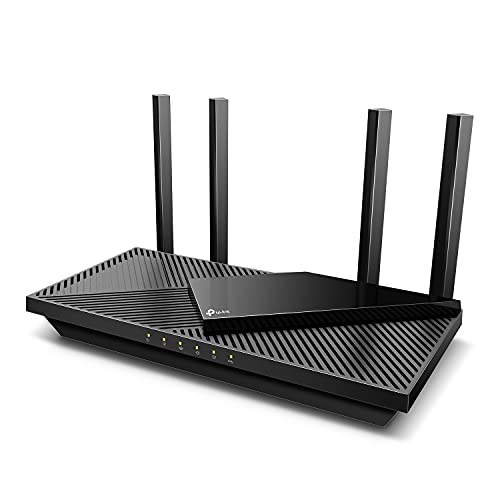
TP-Link AX3000 Dual-Band Wi-Fi 6 Router
Best for: Home users upgrading to Wi-Fi 6
- Speed Rating
- AX3000 (what this guide is about)
- Wi-Fi Standard
- Wi-Fi 6
- Frequency Bands
- Dual-Band
- Max Port Speed
- Gigabit
- Features
- VPN, MU-MIMO
- Intended Use
- Home
View on Amazon: TP-Link AX3000 Dual-Band Wi-Fi 6 Router Affiliate link
The TP-Link Archer AX55 is a dual-band AX3000 Wi-Fi 6 router designed for home use. It delivers up to 2402 Mbps on the 5 GHz band and 574 Mbps on the 2.4 GHz band. Four high-gain external antennas and beamforming technology help extend coverage. It includes Target Wake Time to improve device battery life and supports VPN server and client features. This router suits users needing modern Wi-Fi 6 speeds and reliable connectivity for multiple devices.
Pros
- Wi-Fi 6 standard with AX3000 speed rating
- Four high-gain external antennas for expanded coverage
- Target Wake Time for improved battery efficiency
- Supports VPN server and client functions
- Compatible with Amazon Alexa for voice control
Cons
- Only dual-band support lacks the 6 GHz band
- Requires a separate modem for most ISPs
- No mention of tri-band capability for dedicated backhaul
Good fit if
- You want Wi-Fi 6 speeds for streaming and gaming
- You need reliable coverage across a standard home layout
- You want to use VPN features for network security
Skip if
- You require tri-band performance for large homes
- You need a 6 GHz band for less interference
- You want an all-in-one modem and router unit
Verdict: TP-Link Archer AX55 AX3000 is a solid choice for households upgrading to Wi-Fi 6, offering strong dual-band speeds and good coverage through antenna design. It fits users who prioritize modern standards and VPN support over tri-band capacity.
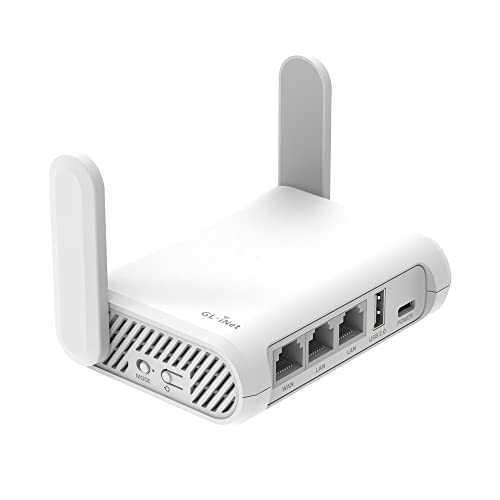
GL.iNet Opal Dual-Band Travel Router
Best for: travelers securing public Wi-Fi
- Speed Rating
- AC1200 (what this guide is about)
- Frequency Bands
- Dual-Band
- Max Port Speed
- Gigabit
- Ethernet Ports
- 3
- Use Case
- Travel
- Features
- VPN, OpenWrt
View on Amazon: GL.iNet Opal Dual-Band Travel Router Affiliate link
This compact AC1200 router is built for travel. It delivers dual-band speeds up to 300 Mbps on 2.4GHz and 867 Mbps on 5GHz. The device includes one Gigabit WAN port and two Gigabit LAN ports. It weighs only 10.6 ounces and features retractable antennas. You will find it ideal for converting public Wi-Fi into a private, secure connection while on the go.
Pros
- Dual-band AC1200 speeds with 867 Mbps on 5GHz
- Full Gigabit WAN and LAN ports
- Built-in OpenVPN and WireGuard support
- Lightweight 10.6-ounce portable design
- Retractable antennas for better signal reception
Cons
- AC1200 speed rating is lower than AX3000 standards
- Does not support easy tethering
- Physical toggle switch requires initial admin panel setup
Good fit if
- You need a portable router for travel
- You want to secure public Wi-Fi connections
- You require built-in VPN capabilities
Skip if
- You need high-performance mesh networking for a large home
- You require Wi-Fi 6 (AX) speeds
- You want a stationary home base router
Verdict: GL.iNet Opal AC1200 Travel Router is a specialized tool for travelers who need secure, portable internet access. It fits users prioritizing VPN integration and portability over raw home network speed.
Specifications side by side
| Spec | TP-Link AX3000 Dual-Band Wi-Fi 6 Router | GL.iNet Opal Dual-Band Travel Router |
|---|---|---|
| Wi-Fi Standard | Wi-Fi 6 | not stated |
| Speed Rating | AX3000 | AC1200 |
| Frequency Bands | Dual-Band | Dual-Band |
| Max Port Speed | Gigabit | Gigabit |
| Ethernet Ports | not stated | 3 |
| Frequency Band | Dual-Band | Dual-Band |
| Use Case | not stated | Travel |
| Features | VPN, MU-MIMO | VPN, OpenWrt |
| Port Speed | Gigabit | Gigabit |
| Intended Use | Home | not stated |
| Dimensions | 13 × 9.45 × 2.87 inches | 4.65 × 1.18 × 3.35 inches |
| Weight | 1.66 pounds | 10.6 ounces |
| Size | AX3000 | Compact |
| Color | Black | White |
| Model | Archer AX55 | SFT1200 |
Frequently asked questions
Is AX3000 faster than AC1200?
Yes. The AX3000 router delivers significantly higher theoretical speeds than the AC1200 model. The TP-Link Archer AX55 provides up to 2402 Mbps on the 5 GHz band and 574 Mbps on the 2.4 GHz band. This combination supports high-bandwidth activities like 4K streaming and large file transfers more effectively than the lower-rated AC1200 option.
Can I use an AC1200 router for home networking?
It is possible, but not ideal for most homes. The GL.iNet Opal is designed primarily as a travel router. It is compact and lightweight, weighing only 10.6 ounces. While it offers dual-band connectivity, it lacks the raw home network speed and coverage needed for a typical household with multiple connected devices.
What is the difference between Wi-Fi 6 and Wi-Fi 5?
Wi-Fi 6 is the newer standard used by the AX3000 router, while AC1200 models typically use Wi-Fi 5. The TP-Link Archer AX55 uses Wi-Fi 6 and OFDMA to manage multiple clients efficiently. This allows for better performance when many devices connect simultaneously, reducing lag and improving overall network stability.
Is the TP-Link Archer AX55 good for upgrading to Wi-Fi 6?
Yes, it is a solid choice for households making this upgrade. It offers strong dual-band speeds and good coverage through its antenna design. The router fits users who prioritize modern standards and VPN support over tri-band capacity. Its gigabit ports ensure stable wired connections for devices that require them.
Does the GL.iNet Opal support VPN?
Yes, VPN integration is a key feature of this device. The GL.iNet Opal is a specialized tool for travelers who need secure, portable internet access. It prioritizes VPN integration and portability over raw home network speed. This makes it suitable for securing public Wi-Fi connections while on the go.
Which router is better for home users?
The TP-Link Archer AX55 is better for home users. It is intended for home use and offers Wi-Fi 6 technology. Home users with multiple devices needing stability will benefit from its AX3000 rating. The four gigabit ports provide ample wired connectivity for desktops or smart TVs in a residential setting.
Is the AC1200 router portable?
Yes, it is designed for portability. The GL.iNet Opal has compact dimensions and weighs just 10.6 ounces. Its small size makes it easy to carry in a bag. This form factor suits travelers who need a reliable, secure internet connection in hotels or other locations away from home.