AC1200 or AX1800 WiFi Extenders? Compared by Specs
As an Amazon Associate we earn from qualifying purchases. Links on this page are affiliate links.
When you search for AC1200 vs AX1800 wifi repeater options, you are comparing two distinct generations of wireless technology. Both devices serve as dual-band extenders that plug into wall outlets or use Ethernet to boost your home signal. They share similar goals of eliminating dead zones and supporting everyday streaming. The main difference lies in their underlying standards. One uses the older Wi-Fi 5 protocol, while the other adopts the newer Wi-Fi 6 standard. This shift impacts speed, efficiency, and how the device handles multiple connected devices in your network.
Key differences
| Aspect | TP-Link AC1200 Dual-Band Wi-Fi Extender | NETGEAR AX1800 Dual-Band WiFi 6 Extender |
|---|---|---|
| Wi-Fi Standard | Wi-Fi 5 | Wi-Fi 6 |
| Speed Rating | AC1200 | AX1800 |
| Antenna Count | 2 external | not listed |
| Ethernet Port Type | Fast Ethernet | Ethernet (1 port) |
| Operating Mode | Range Extender | Mesh Extender |
Which one should you choose?
Choose TP-Link AC1200 Dual-Band Wi-Fi Extender if
- You prefer a device with visible external antennas for potentially better directional signal adjustment.
- You need a simple range extender that works with EasyMesh-compatible routers for whole-home coverage.
- You are satisfied with Wi-Fi 5 speeds for basic browsing and streaming tasks.
Choose NETGEAR AX1800 Dual-Band WiFi 6 Extender if
- You want the efficiency and modern features of the newer Wi-Fi 6 standard.
- You seek a compact wall-plug design that saves desk or shelf space.
- You require a mesh-certified extender for seamless connectivity with compatible routers.
Verdict: Choose the TP-Link AC1200 if you value external antennas and straightforward range extension with established Wi-Fi 5 technology. Select the NETGEAR AX1800 if you prioritize the newer Wi-Fi 6 standard and a compact wall-plug form factor for modern mesh networks.
AX1800 vs AC1200 Extender Specs
Speed Rating
The NETGEAR EAX15 carries an AX1800 speed rating, indicating support for the newer Wi-Fi 6 standard with higher theoretical throughput. In contrast, the TP-Link RE315 holds an AC1200 rating, which aligns with the older Wi-Fi 5 generation. This means the NETGEAR unit is designed for faster data handling in dense environments. You get significantly more bandwidth potential with the AX1800 model compared to the AC1200 option. The difference in ratings reflects the underlying wireless technology generation and maximum link speeds available to connected devices.
Wi-Fi Standard
Product B uses Wi-Fi 6 technology, offering improved efficiency and reduced congestion when multiple devices connect simultaneously. Product A relies on Wi-Fi 5, which is reliable but lacks the advanced modulation techniques of the newer standard. Wi-Fi 6 allows for better performance in homes with many smart devices. You benefit from lower latency and more stable connections with the AX1800 extender. The TP-Link device works well for basic tasks but does not offer the same level of modern wireless optimization found in the NETGEAR unit.
Antenna Count
The TP-Link RE315 includes two external adjustable antennas, which you can position to optimize signal direction and strength. The NETGEAR EAX15 uses a wall-plug form factor, and the data does not specify external antennas, suggesting internal designs. External antennas on the TP-Link allow for manual adjustment to target specific dead zones. This physical feature gives the AC1200 extender a tangible advantage in customizing coverage direction. The compact design of the NETGEAR unit prioritizes space savings over adjustable hardware.
Ethernet Ports
Both extenders provide a single wired connection for devices that benefit from a stable link. The TP-Link RE315 features a Fast Ethernet port, suitable for standard home networking speeds. The NETGEAR EAX15 includes one Ethernet port, though the specific speed rating is not listed in the provided data. For most wired devices like smart TVs or gaming consoles, both ports offer a reliable alternative to wireless connections. You get similar wired functionality from both units, making this a neutral comparison point for connectivity needs.
Device Capacity
The TP-Link RE315 is specified to support up to 32 connected devices, which covers typical small home needs. The NETGEAR EAX15 data does not list a specific device capacity limit. This means you cannot verify if the NETGEAR unit handles more or fewer simultaneous connections than the TP-Link. If you have a moderate number of devices, the TP-Link provides a clear benchmark for capacity. For larger setups, the lack of data for the NETGEAR model leaves this aspect uncertain based on the available specifications.
Choose the Right Extender for You
Users wanting modern Wi-Fi 6 performance
The NETGEAR EAX15 uses Wi-Fi 6 with an AX1800 rating. This standard offers better efficiency and speed for multiple devices. Its mesh-compatible design ensures consistent connectivity across your home. You get reliable dual-band support for streaming and video calls without the lag often seen in older Wi-Fi 5 setups.
Those needing Ethernet ports and external antennas
The TP-Link RE315 includes a fast Ethernet port for wired connections. It features two adjustable external antennas for optimized signal direction. This model supports Adaptive Path Selection to maintain strong links as you move. It is ideal if you require dedicated wired ports or prefer adjustable antenna placement for specific dead zones.
Buyers preferring compact wall-plug designs
The NETGEAR unit plugs directly into a wall outlet. This compact form factor saves desk or shelf space. It maintains dual-band Wi-Fi 6 performance in a small footprint. You can place it conveniently in any room without cluttering your living area while still extending your network coverage effectively.
Quick picks
| # | Product | Best for | Price |
|---|---|---|---|
| 1 | TP-Link AC1200 Dual-Band Wi-Fi Extender | EasyMesh router users needing AC1200 coverage | Check price of TP-Link AC1200 Dual-Band Wi-Fi Extender on Amazon |
| 2 | NETGEAR AX1800 Dual-Band WiFi 6 Extender | Space-saving Wi-Fi 6 coverage with one wired port | Check price of NETGEAR AX1800 Dual-Band WiFi 6 Extender on Amazon |
The products compared
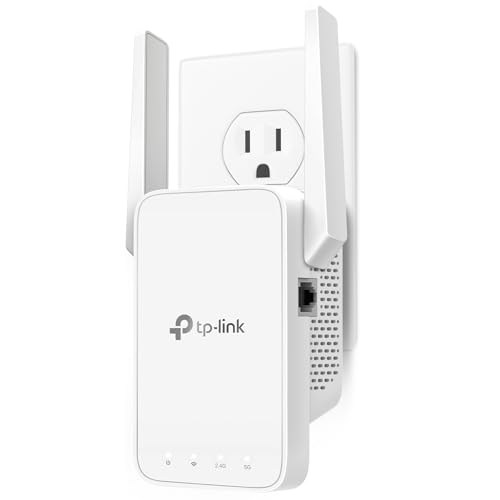
TP-Link AC1200 Dual-Band Wi-Fi Extender
Best for: EasyMesh router users needing AC1200 coverage
- Speed Rating
- AC1200 (what this guide is about)
- Frequency Bands
- Dual-Band
- Coverage Area
- Up to 1600 sq ft
- Ethernet Ports
- 1 x Fast Ethernet
- Operating Modes
- Range Extender
- Antenna Count
- 2
View on Amazon: TP-Link AC1200 Dual-Band Wi-Fi Extender Affiliate link
This is a TP-Link AC1200 Wi-Fi 5 extender. It offers 867 Mbps on 5 GHz and 300 Mbps on 2.4 GHz. It covers up to 1500 square feet with two external antennas. The unit supports up to 32 devices. It includes one Fast Ethernet port. It uses Adaptive Path Selection for seamless connections. It is compatible with EasyMesh routers but not Deco systems.
Pros
- Dual-band Wi-Fi 5 with 1.2 Gbps total bandwidth
- Covers up to 1500 square feet for 32 devices
- Includes one Fast Ethernet port for wired connections
- Compatible with EasyMesh routers for whole-home connectivity
Cons
- Only supports Wi-Fi 5, not the newer Wi-Fi 6
- Ethernet port is Fast Ethernet, not Gigabit speed
- Not compatible with Deco mesh systems
Good fit if
- You need to extend coverage to 1500 square feet
- You have an EasyMesh-compatible router
- You want to connect wired devices via Ethernet
Skip if
- You require Wi-Fi 6 speeds
- You use a Deco mesh system
- You need Gigabit Ethernet ports
Verdict: The TP-Link RE315 AC1200 Dual-Band Extender is a solid choice for users with EasyMesh routers who need reliable coverage for 32 devices. It fits homes up to 1500 square feet where Wi-Fi 5 is sufficient.

NETGEAR AX1800 Dual-Band WiFi 6 Extender
Best for: Space-saving Wi-Fi 6 coverage with one wired port
- Speed Rating
- AX1800 (what this guide is about)
- Wi-Fi Standard
- WiFi 6
- Frequency Bands
- Dual-Band
- Operating Modes
- Mesh Extender
- Placement
- Wall Plug
- Weight
- 1.26 pounds
View on Amazon: NETGEAR AX1800 Dual-Band WiFi 6 Extender Affiliate link
This NETGEAR mesh extender uses the Wi-Fi 6 standard for AX1800 dual-band performance. It plugs directly into a wall outlet, saving floor space. A single Ethernet port allows wired connections for devices like smart TVs. The mesh-compatible design works with compatible routers to extend coverage. It suits homes needing reliable connectivity in additional rooms without cluttering surfaces.
Pros
- Wi-Fi 6 (AX1800) dual-band speed
- Compact wall plug form factor
- Built-in Ethernet port for wired devices
- Mesh-compatible design for consistent coverage
Cons
- Only one Ethernet port available
- Certified Refurbished condition
- No mention of dedicated backhaul radio
Good fit if
- You need to save desk or shelf space
- You want to connect a wired device like a TV
- You are upgrading to Wi-Fi 6 standards
Skip if
- You require multiple wired Ethernet connections
- You prefer new, unrefurbished hardware
- You need a dedicated backhaul band
Verdict: NETGEAR AX1800 Wall Plug Extender fits users who need a space-saving Wi-Fi 6 solution with one wired port for a specific device.
Specifications side by side
| Spec | TP-Link AC1200 Dual-Band Wi-Fi Extender | NETGEAR AX1800 Dual-Band WiFi 6 Extender |
|---|---|---|
| Wi-Fi Standard | not stated | WiFi 6 |
| Speed Rating | AC1200, 1.2 Gbps | AX1800 |
| Frequency Bands | Dual-Band | Dual-Band |
| Coverage Area | Up to 1600 sq ft | not stated |
| Ethernet Ports | 1 x Fast Ethernet | not stated |
| Operating Modes | Range Extender | Mesh Extender |
| Antenna Count | 2 | not stated |
| Placement | not stated | Wall Plug |
| Frequency Band | Dual-Band | Dual-Band |
| Features | not stated | Mesh |
| Intended Use | Home | not stated |
| Dimensions | 3.5 × 2.05 × 4.89 inches | not stated |
| Weight | 6.1 ounces | 1.26 pounds |
| Size | 1 Count (Pack of 1) | not stated |
| Color | White | White |
| Model | RE315 | EAX15-100NAS |
Frequently asked questions
Does AC1200 or AX1800 work better with mesh routers?
The TP-Link RE315 AC1200 extender is explicitly designed for users with EasyMesh routers. It provides reliable coverage for up to 32 devices in homes up to 1500 square feet. While the NETGEAR EAX1800 also supports mesh compatibility, the TP-Link model is the specific choice for those already invested in the EasyMesh ecosystem for seamless integration.
Which extender is smaller and more space-saving?
The NETGEAR EAX15 is a wall-plug extender designed for space-saving. It weighs 1.26 pounds and plugs directly into the outlet without requiring extra floor space. In comparison, the TP-Link RE315 has physical dimensions of 2.05 by 3.5 by 4.89 inches and weighs 6.1 ounces, making it slightly larger and less compact than the wall-mount NETGEAR option.
Can I use these extenders for gaming or streaming?
The NETGEAR AX1800 extender supports Wi-Fi 6, which offers better efficiency and higher theoretical throughput. This makes it suitable for bandwidth-heavy tasks like gaming or 4K streaming. The TP-Link AC1200 uses Wi-Fi 5, which is sufficient for general use but may not handle high-demand connections as efficiently as the newer Wi-Fi 6 standard.
How many devices can these extenders support simultaneously?
The TP-Link RE315 AC1200 extender is rated to handle up to 32 connected devices. This capacity makes it a solid choice for households with moderate smart home setups. The data does not specify a device limit for the NETGEAR AX1800, so you should check its manual for exact capacity details if you have many connected gadgets.
Do these extenders have Ethernet ports for wired devices?
The NETGEAR EAX15 includes one wired Ethernet port, allowing you to connect a specific device like a smart TV or console directly. The provided specifications for the TP-Link RE315 do not mention an Ethernet port, so it likely relies solely on wireless connection. If you need a wired link, the NETGEAR model is the practical option.
What is the difference between Wi-Fi 5 and Wi-Fi 6?
Wi-Fi 5, used by the AC1200 TP-Link, is an older standard that provides reliable performance for basic tasks. Wi-Fi 6, used by the AX1800 NETGEAR, is newer and offers improved speed and efficiency for multiple devices. Wi-Fi 6 handles network congestion better, making it more future-proof for modern homes with many connected devices.
Which extender is better for a large apartment?
The TP-Link RE315 AC1200 is rated for homes up to 1500 square feet. This makes it a suitable choice for medium-sized apartments or small homes. If your space exceeds this size, you might need a more powerful solution. The NETGEAR AX1800 covers similar areas but offers faster Wi-Fi 6 speeds for a better experience in larger spaces.